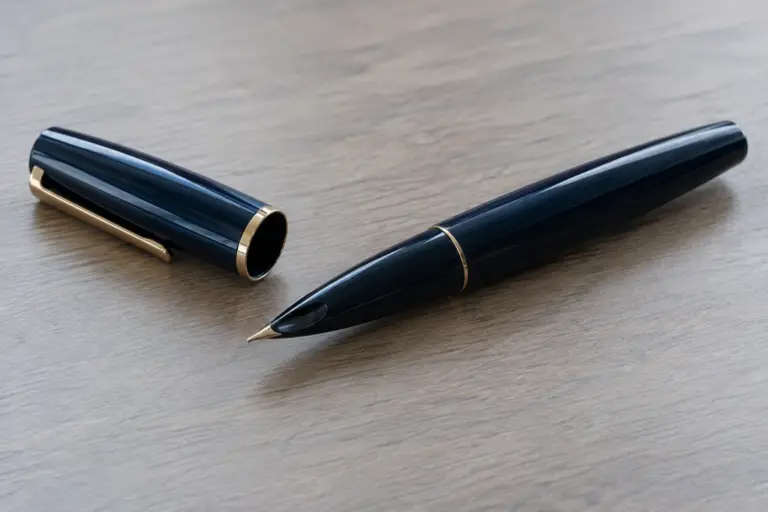
To identify a replacement fountain pen nib unit, first establish exactly which pen you have and which part needs replacing. Record the model and, if relevant, its generation; then compare the parts included in the offer with the assembly on your pen. A matching-looking metal nib or the same advertised width is not enough. Before ordering, obtain an explicit answer that the offered part fits your particular pen, and confirm whether you can install it or must use a service provider. If the identity, fit, or installation method remains uncertain, leave it uncertain rather than testing the part by force.
Identify What the Offered Part Actually Includes
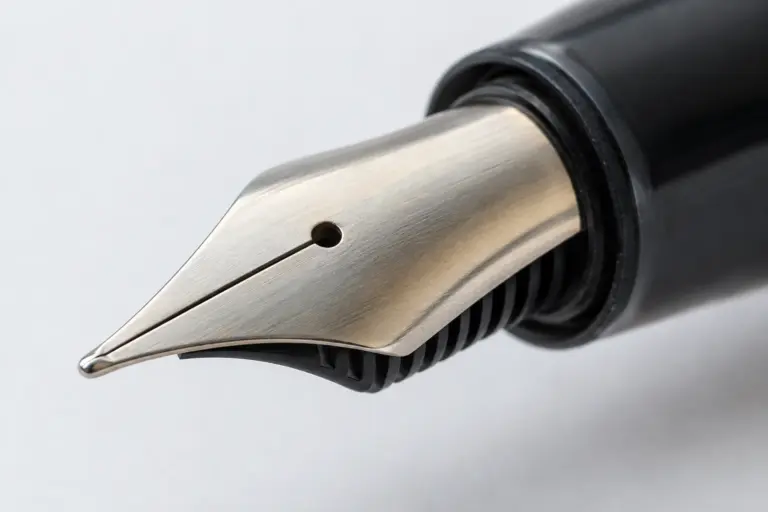
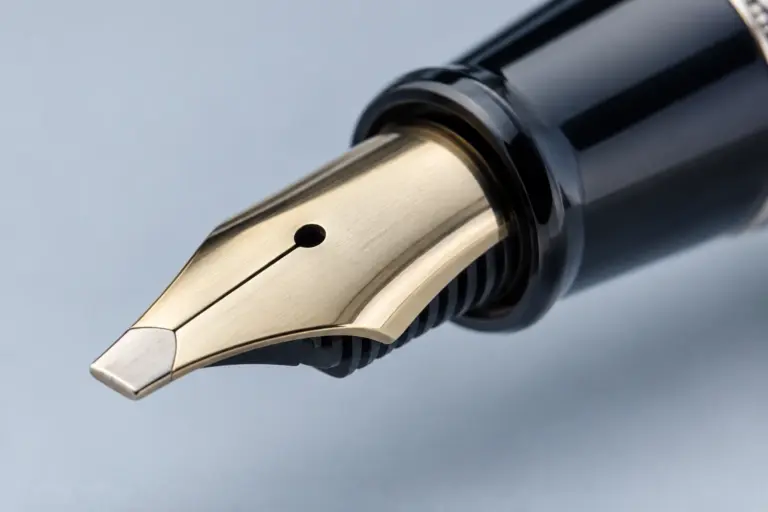
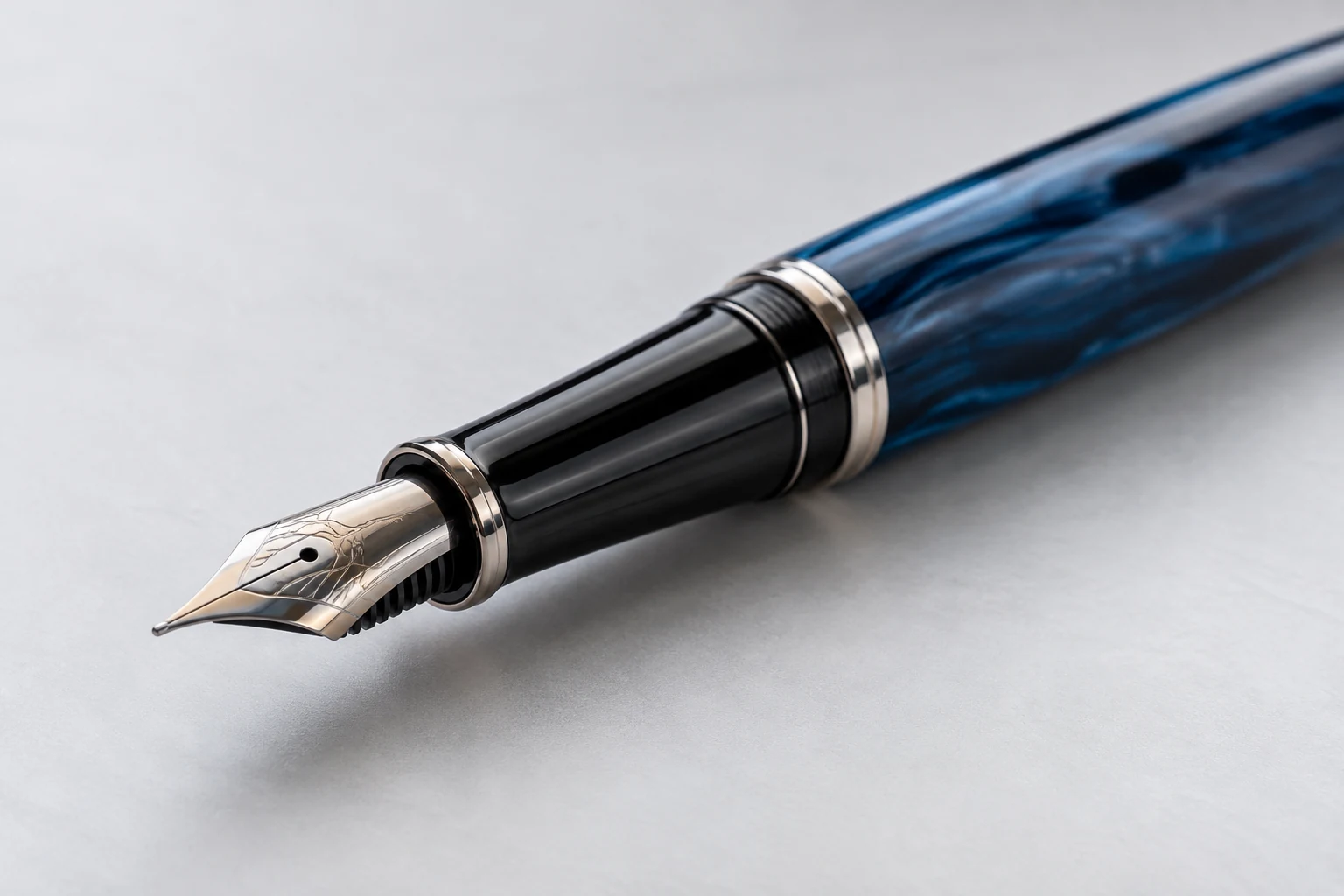
Start by separating the writing tip you can see from the assembly the pen needs. A bare nib is the shaped metal piece that touches the paper. A nib-and-feed pair includes that metal piece and the component beneath it that carries ink toward the tip. A nib unit may also include a housing around those parts; a complete grip section includes the part you hold while writing. These are different offers. A listing for a bare nib does not promise a feed or housing, and a listing for a housed unit does not necessarily include a grip section.
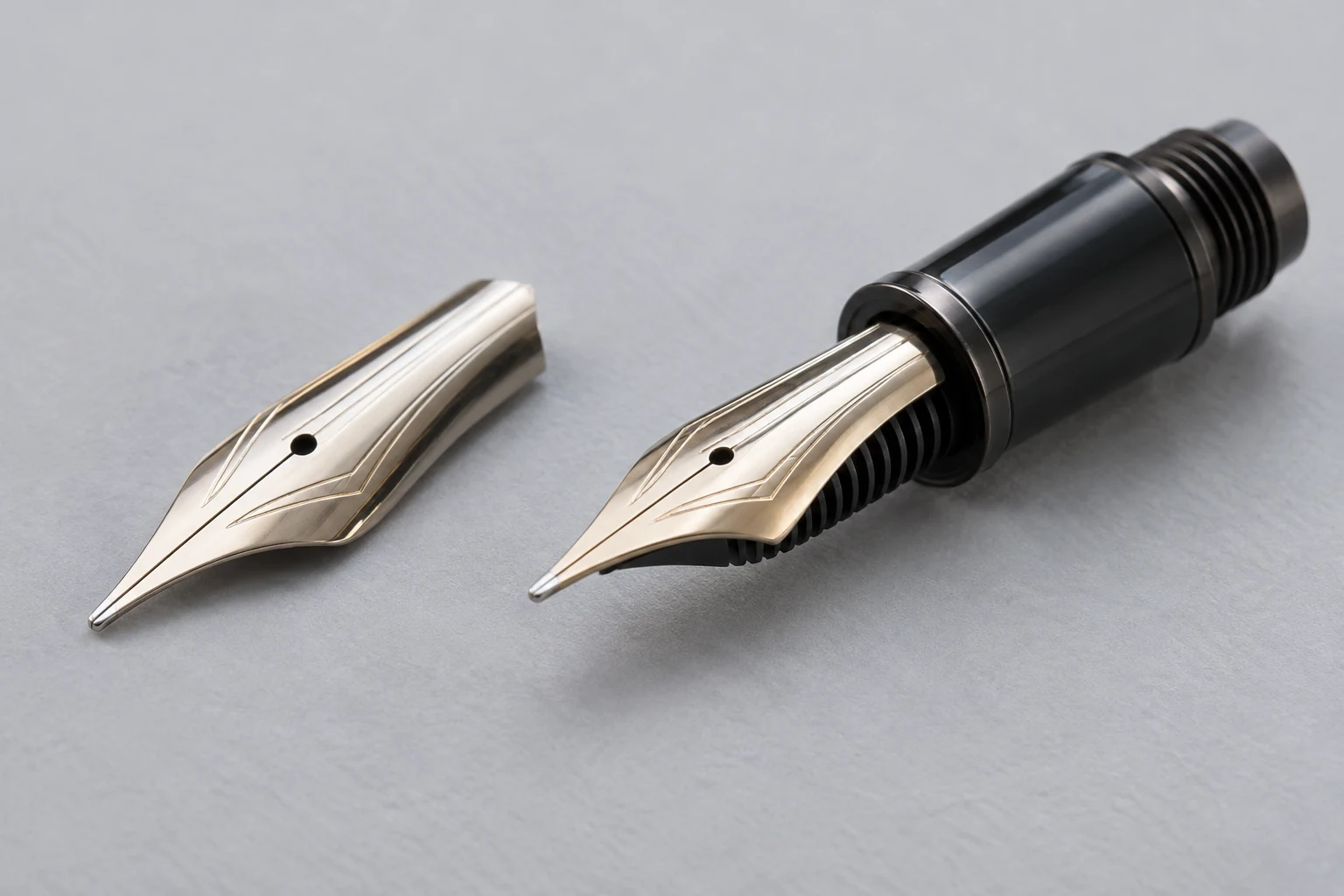
The distinction matters even when your goal is simply to change writing width. Imagine two offers advertised as fine nibs. One contains only a fine metal nib; the other contains a fine nib, feed, and housing. They may offer the same nominal line width, but they do not supply the same replacement assembly. If your pen requires the second assembly, choosing the first offer leaves you with an unanswered question about the missing components. Conversely, buying more assembled parts than you need does not establish that they will fit your pen.
Make a record of both sides of the comparison. For the pen, note the nib, feed, housing, and grip section you can identify without taking anything apart to investigate. For the offer, write down only the components the listing explicitly says it includes, along with its part code if one is given. If a photograph shows a component but the description does not make clear whether it is included, ask the seller rather than treating the picture as a contents list. If you cannot tell whether a piece is a separate housing or part of the grip, mark that detail unknown.
Use the part-identification worksheet below as your own working record, not as a maker-issued fit guide. It keeps the exact pen model and generation, the offered code, included components, stated compatibility, and unresolved questions together. A blank or “unknown” entry is useful: it shows precisely what you need to ask before making a purchase decision.
| Check | Record or question to resolve |
|---|---|
| Pen identity | Record the exact model and generation; mark either unknown if unconfirmed. |
| Current assembly | Record what is present: nib, feed, housing, and grip section; mark anything unverified. |
| Offered assembly | Record which components the listing explicitly includes; mark unstated components unknown. |
| Part codes | Record the pen’s current part code, if known, and the offered part code; mark missing codes unknown. |
| Stated compatibility | Copy the stated model and generation coverage; note who made the claim. |
| Mounting and installation | Record the stated replacement method and who is authorized to fit this assembly; mark unanswered questions unresolved. |
| Outstanding questions | List any identity, component, fit, or installation details still needing an explicit answer. |
Match the Pen, Generation, and Mounting Method
Find the pen’s exact model before trying to match a replacement. Check its documentation and any identifying markings you can read without altering the pen. If those do not settle the question, give the maker or a qualified supplier clear photographs and ask them to identify it. Record the generation as well where it matters to the offered part. If you can establish the model but not the generation, keep the two findings separate; a confident model name does not fill in an unknown generation.
Next, compare the offered part code and its stated coverage with that pen identity. Does the maker or supplier say the code is for your exact model and, where applicable, generation? Is that statement about the same assembly the offer includes? Record who makes the compatibility claim. A search result, a seller’s broad category, or a photo resembling your pen may help you form a question, but none answers it on its own.
Treat width and nominal size as descriptions of a nib, not as proof of an assembly match. Two offers can both say “fine” while supplying different surrounding parts. Likewise, a similar outline, a shared manufacturer, or the same nominal nib number does not establish that the feed, housing, thread, or seating matches. If the listing states only a nib width, the assembly fit remains unconfirmed.
Check the stated mounting or replacement method separately. Ask what the instructions say for this pen and this offered part—not what happened when someone changed a nib on another model. A replaceable metal tip and a complete unit that mounts in a grip are different propositions. Do not conclude that the assembly on your pen unscrews merely because another pen’s unit does. If the method is not stated, record it as an open question rather than attempting to discover it by turning or pulling the assembly.
LAMY’s nib guide illustrates why the scope of a claim matters. It makes a general claim about combining a LAMY fountain pen with LAMY nib tips, but explicitly excepts the LAMY 2000. That exception must remain part of the answer, even if a broader formulation elsewhere sounds less qualified. Moreover, guidance about an interchangeable tip does not by itself establish that an offered complete nib unit, housing, or grip section fits your pen.
Parker’s support guidance offers a different, narrower test: a nib-exchange request calls for a nib from the same pen family, giving a Sonnet Medium-to-Sonnet Fine change as its example. That tells a Parker owner not to substitute a nib from another family for that exchange. It does not resolve every possible model, generation, or assembly question within a family; those details still need a specific answer for the part being offered.
Get a Compatibility Answer Before Ordering or Fitting
Once you have the record, send the actual maker or a qualified service provider a focused request. Include clear photographs of the pen and its current nib assembly, plus photographs or the listing for the offered part. Provide the exact pen model and known generation, the current part code if you know it, and the offered code. State which components the offer says it includes. This gives the respondent a defined comparison rather than a question based only on appearance.
For example, you could write:
> “I have a [model], generation [known generation or unknown]. The code on my current part is [code or unknown]; the offered part is [code]. The offer says it includes [listed components]. I’ve attached clear photos of my pen’s current nib assembly and the offered part. Is this specific assembly compatible with my pen and generation? Does it replace the parts shown, and who should install it? If you cannot confirm from this information, what further identification do you need?”
Record the answer beside the worksheet entries, including who gave it and what they actually confirmed. An answer such as “both are fine nibs” settles width, not assembly compatibility. “It looks similar” leaves the model and mounting questions open. Follow up with the unanswered question: for instance, whether that offered code includes the required housing, covers your generation, or uses the mounting method specified for your pen. Do not turn a partial answer into permission to buy or fit the part.
Availability and installation are separate decisions. Parker says it provides a nib-exchange service and sells most fountain pen nibs and rollerball sections, but does not sell other spare parts. “Most” does not guarantee that the particular nib you need is available, and the statement does not authorize owner installation of every part Parker sells. Ask about both supply and the appropriate route for your particular pen. Another maker’s replaceable tip claim likewise cannot supply installation instructions for a different assembly.
Use the resulting answers to make a decision:
- Order the part when the exact pen identity, offered assembly, and stated model-and-generation compatibility are confirmed, and you know the approved installation route. Confirmation that a part fits is not, by itself, confirmation that you should fit it yourself.
- Use the specified service route when the maker or qualified provider identifies the part but directs the exchange or fitting to a service provider. Arrange that route before ordering a loose component that you may not be able to use.
- Pause and seek qualified help when the model, generation, included components, compatibility, or mounting method remains unresolved. Send the photos, codes, and precise remaining question to the maker or a qualified service provider; if necessary, ask whether they can identify the pen or part from an in-person inspection.
The safe stop point is before an unsupported fit experiment. Do not unscrew an assembly that may be friction-fit, push an oversized feed into place, or use pliers to see whether a nearly matching part will seat. Identify the assembly first, verify its stated match to the exact pen, and then confirm how it is meant to be installed.
Continue reading
More pen and paper guidance