
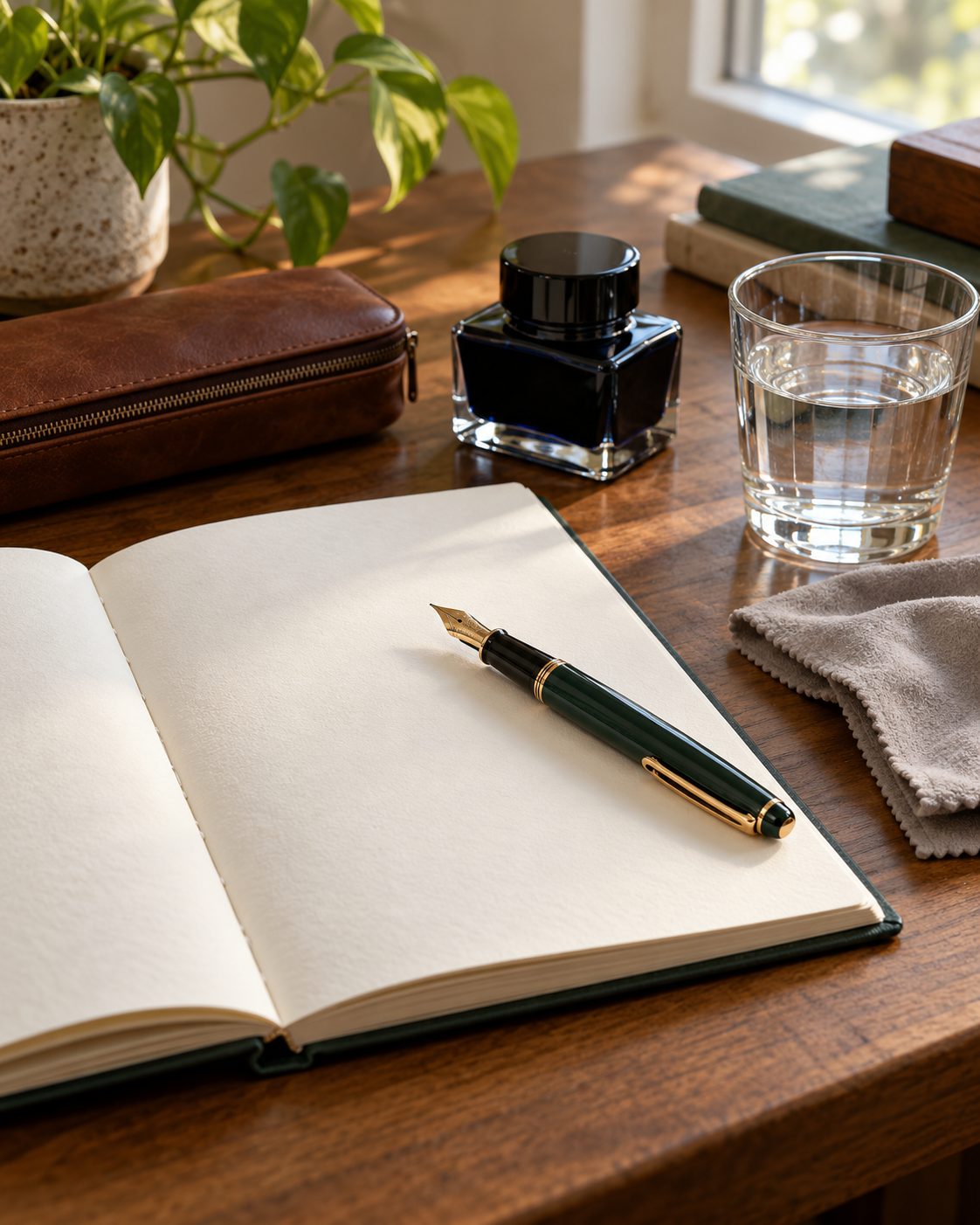
I write Nib and Page for people who want a fountain pen to work well in their actual writing routine.
A pen, ink, and paper form a combination. I describe each part and the task it serves before suggesting a choice. For maintenance, the guides begin with reversible checks and identify when nib work or a repair belongs with a specialist. Product popularity is not treated as a quality test.
Editorial approach
Start with the writing conditions
A useful comparison asks about handwriting size, paper, ink behavior, grip comfort, budget, and how much maintenance the owner wants. Specifications and observed experience must be labeled separately.
Cleaning and troubleshooting move from the least invasive step toward a clear stopping point. If a particular pen, ink, or paper was not tested, I say so rather than implying firsthand results.
How the guides are written
Three working principles
Describe the combination
Consider nib, ink, and paper together instead of promising one universal writing result.
Name the evidence
Separate manufacturer specifications, documented tests, and ordinary user variation.
Protect the pen
Use reversible owner checks first and leave grinding, forceful disassembly, and difficult vintage work to specialists.
Corrections and questions
If a source, instruction, or safety boundary needs attention, email [email protected] with the page URL and the detail to review.