To pack pens and ink for long-term travel, start with the writing you expect to do—not a standard number of pens or cartridges. Choose a pen you can use and maintain away from home, bring refills you have verified will fit it, and protect both pen and ink against handling and spills. If you fly, decide whether each pen should travel clean and empty or inked under its own instructions, then check the liquid rules for every relevant checkpoint. Once you arrive, inspect the kit before filling or writing, and keep a refill and care plan for the weeks or months ahead.
Estimate the Writing and Refills the Trip Will Require
List what you will actually write: daily notes, work, letters, or occasional entries. Note how many weeks or months you will be away, whether you will have the paper you normally use, and when you could next obtain a confirmed-compatible refill. A trip with regular writing and no dependable ink source calls for a different reserve from one with occasional writing and a verified place to buy refills. The Pen Addict frames travel packing around writing needs and the choice between high-capacity fillers and a few pens with spare cartridges; these are useful questions, not quantities to copy from another traveler’s bag.
Use your own consumption as the starting point. If you have recorded how long a cartridge, converter fill, or other normal fill lasts under your usual writing, compare that interval with the time until your next reliable refill opportunity. Allow a margin if you expect to write more or supply is uncertain. If you have no record, avoid converting a guessed number of pages into an exact ink requirement. Instead, decide what you can reasonably carry and where you can obtain more if your first estimate runs short. Neither a cartridge count nor a bottle size works for everyone.
Pick an everyday pen for the main task. A backup earns its space if losing the first pen would interrupt necessary writing, or if it performs a task the first cannot comfortably handle. More pens may be enjoyable, but they also mean more items to account for at every stop. The Pen Addict notes the consequence of losing a pen that would be difficult to replace. That is a reason to consider leaving a particularly hard-to-replace pen at home, not a claim that another brand is automatically safer.
Before buying or packing reserves, check the instructions for each actual pen. Pen Boutique directs owners to the pen’s instructions for acceptable cartridge and converter sizes. Verify the specified refill and, where practical, its fit before departure; a familiar-looking cartridge label is not proof that it fits every pen. If compatible refills may be hard to find during the stay, carry a reserve suited to your own estimated interval or identify a confirmed source in advance. Record which refill belongs to which pen if the kit contains more than one system. That small check turns “I brought ink” into a workable plan for writing throughout the trip.
Choose the Pens and Prepare Them for a Flight
Choose pens you can comfortably write with and maintain using the supplies and workspace you expect to have. Consider the cost of losing one alongside its writing function: a replaceable everyday pen may be the sensible travel choice when an unusually difficult-to-replace pen adds worry without solving a writing need. Make that decision before preparing reservoirs, so you do not pack ink or cartridges for a pen that stays home.
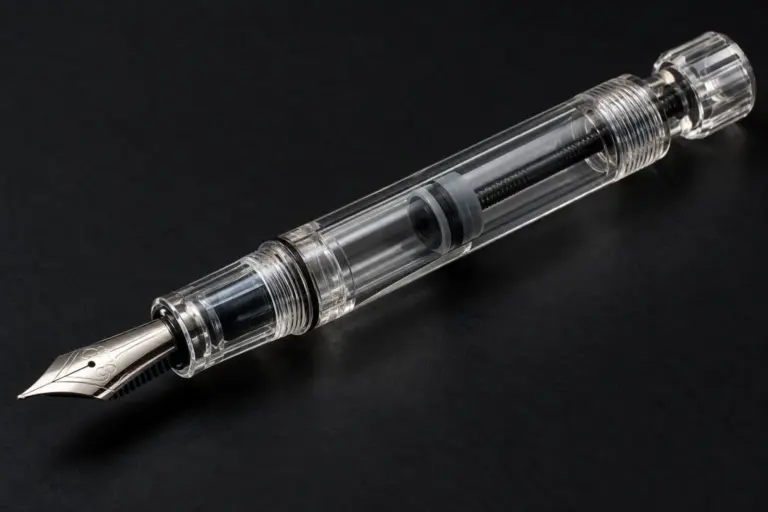
For a flight, read the instructions for the exact model before applying general travel advice. Pilot’s Plunger-Type Fountain Pen Use and Care Guide, for example, says not to use the pen covered by that guide on a plane because changes in air pressure can cause ink to leak or gush out. That warning concerns in-flight use of the covered pen; it is not a rule for all fountain pens, and general packing precautions do not override it. If your pen is covered by such a warning, keep it protected during the flight and wait for an appropriate location on the ground before filling it or opening a valve for use. Confirm which controls and restrictions apply to your model before departure.
If the model’s instructions allow your intended preparation, Goulet Pens offers two ways to travel:
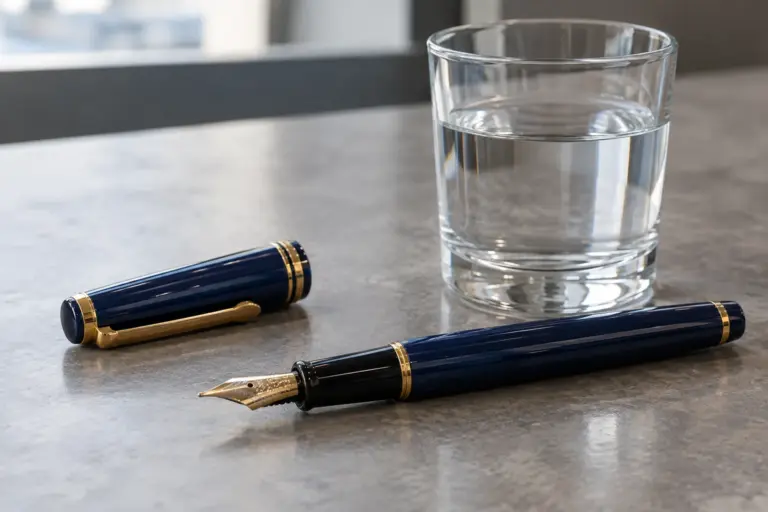
- Clean and empty: Choose this when you do not need that pen ready to write immediately after the journey. Goulet recommends cleaning it and keeping it empty before flying as a way to avoid carrying ink in the pen. Pack the compatible refill you will need later under the applicable baggage rules.
- Inked: Choose this when you need the pen ready after travel and its instructions permit it. Goulet advises keeping an inked pen as full as you can and storing it nib-up in flight. Fill only to the endpoint allowed by your normal filling procedure; do not force an overfill in an attempt to follow travel advice. Goulet also suggests a zip bag to contain a possible leak.
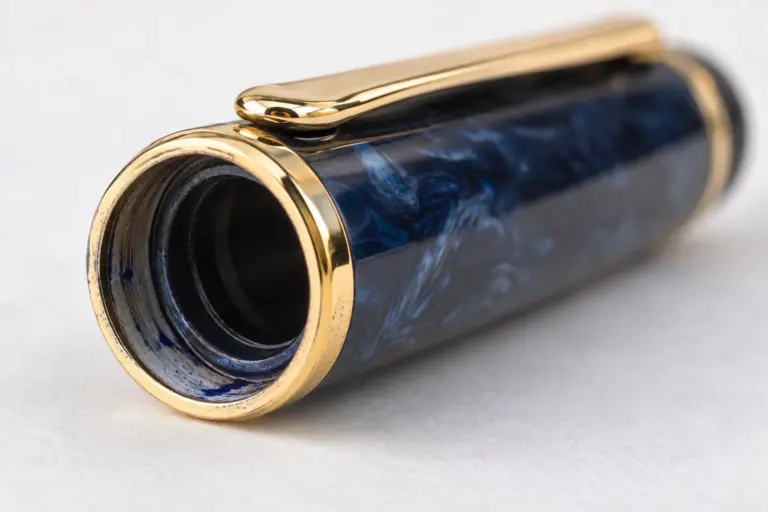
Cap and physically protect either pen. An empty pen still needs protection from knocks during bag handling; an inked pen also needs spill containment. Check any model-specific cap, knob, or valve instructions while you have the manual and a suitable workspace, rather than trying an unfamiliar control at altitude. Decide separately when you will first need to write and where you can safely fill or check the pen after landing. “Travel inked” need not mean “write during the flight,” particularly when the pen’s own instructions rule that out.
Pack Compatible Spare Ink for the Route’s Checkpoints
Match the spare ink to the refill plan, then choose its container. Cartridges must fit the actual pen; bottled or vialed ink should be identified as suitable for that fountain pen and available in a container appropriate to the journey. Keep its ink identification and stated container capacity legible. Pack for the interval you estimated, rather than assuming a particular cartridge or bottle will last a set number of weeks.
If using a sample vial, inspect its cap and sealing surfaces before filling or packing it. In an account of sample vials, The Pen Addict warns that a missing, broken, or displaced cap seal makes a leak likely and that wrapping will not fix that defective closure. The same account notes that some sound vials have no separate gasket. Look at how your container is designed to seal: do not reject every gasket-free vial, but do not rely on a damaged cap. Use a sound closure or another suitable container instead. Close it according to its design, without treating the author’s observation about resistance on particular vial caps as a reason to force every cap.
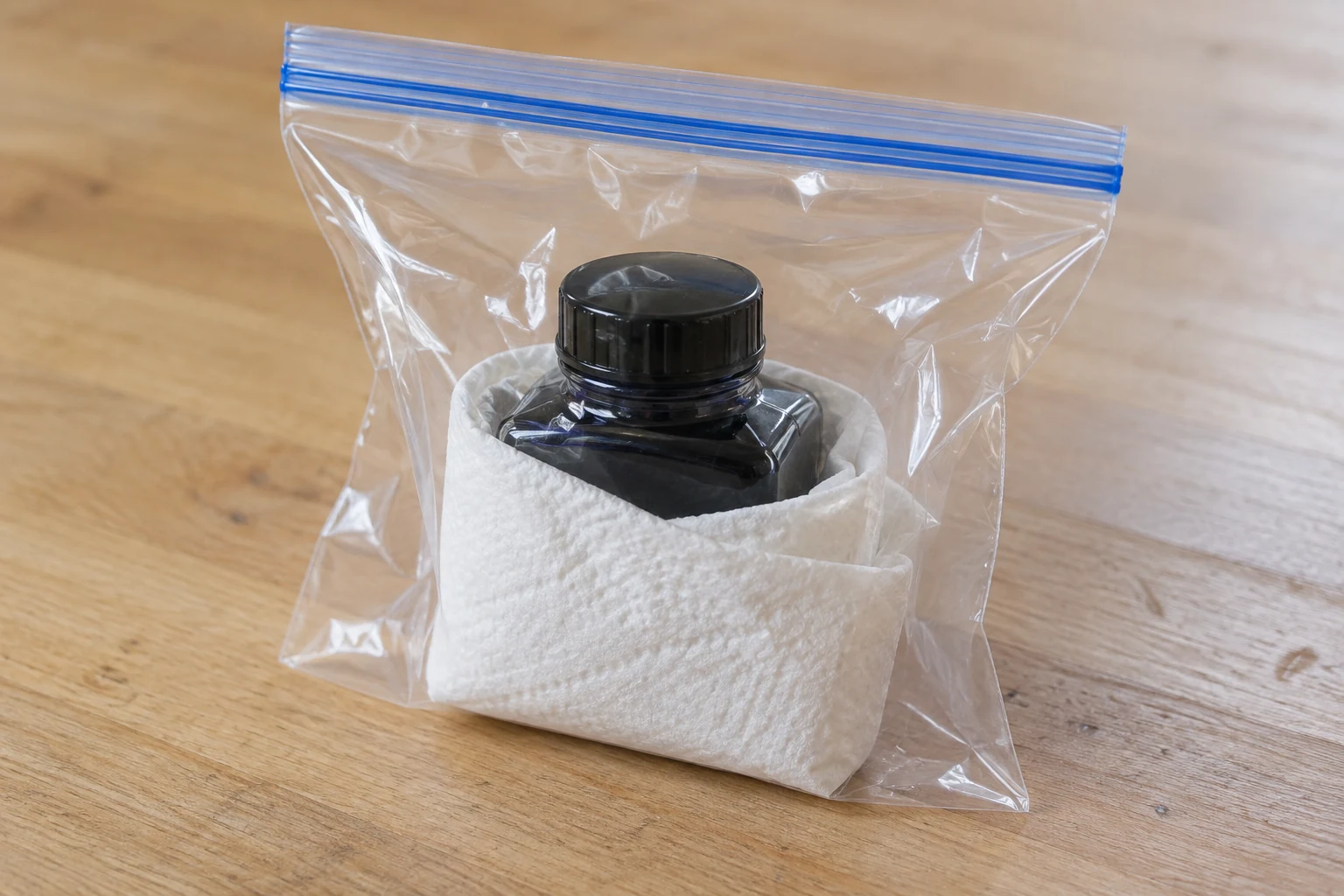
Protect the closed container in layers with different jobs. An absorbent paper towel can catch some ink if there is a spill; cushioning helps guard against knocks and luggage pressure; a closed bag helps confine a leak to the bag. The Pen Addict suggests a paper towel, cushioning, and a bag for bottles or vials, while Goulet Pens advises packing bottles well. Place the protected ink where other luggage will not crush it. These measures reduce the consequences of a problem; they do not repair a faulty seal or guarantee an intact bottle.
Before assigning any ink to carry-on or checked baggage, check the current security authority and carrier rules for your actual departure, connections, and return. Find the permitted container capacity, any shared liquids-bag limit, how the bag must be presented for screening, and what the carrier permits in checked baggage. Check other liquids you intend to carry at the same time. Do not assume that fountain pen ink—or an inked pen—has a blanket exemption at every checkpoint.
As a bounded US carrier example, JetBlue’s published 3-1-1 carry-on guidance specifies bottles of 3.4 oz/100 ml or less and one clear, quart-sized plastic zip-top bag per customer. Its guidance says the contents must fit comfortably, the bag must seal completely, and it must be taken out of the carry-on and placed in a screening bin. The stated bottle limit concerns the container’s size, not just how much ink remains inside it; toiletries and other liquids also need room in the permitted bag. This is JetBlue’s guidance, not a substitute for checking the authority and carrier on every leg of your route.
If a container exceeds an applicable carry-on limit, choose a route that is actually permitted: verify the carrier’s checked-baggage rules before checking it, use a permitted smaller container that still suits your refill plan, or arrange a confirmed source of compatible ink at the destination. Keep the two decisions separate. A container may comply with a liquid limit yet still need cushioning and leak containment; careful wrapping does not make an oversized container permissible at a checkpoint. Review the plan again if you acquire ink while away.
Protect the Pens in Transit and Inspect Them on Arrival
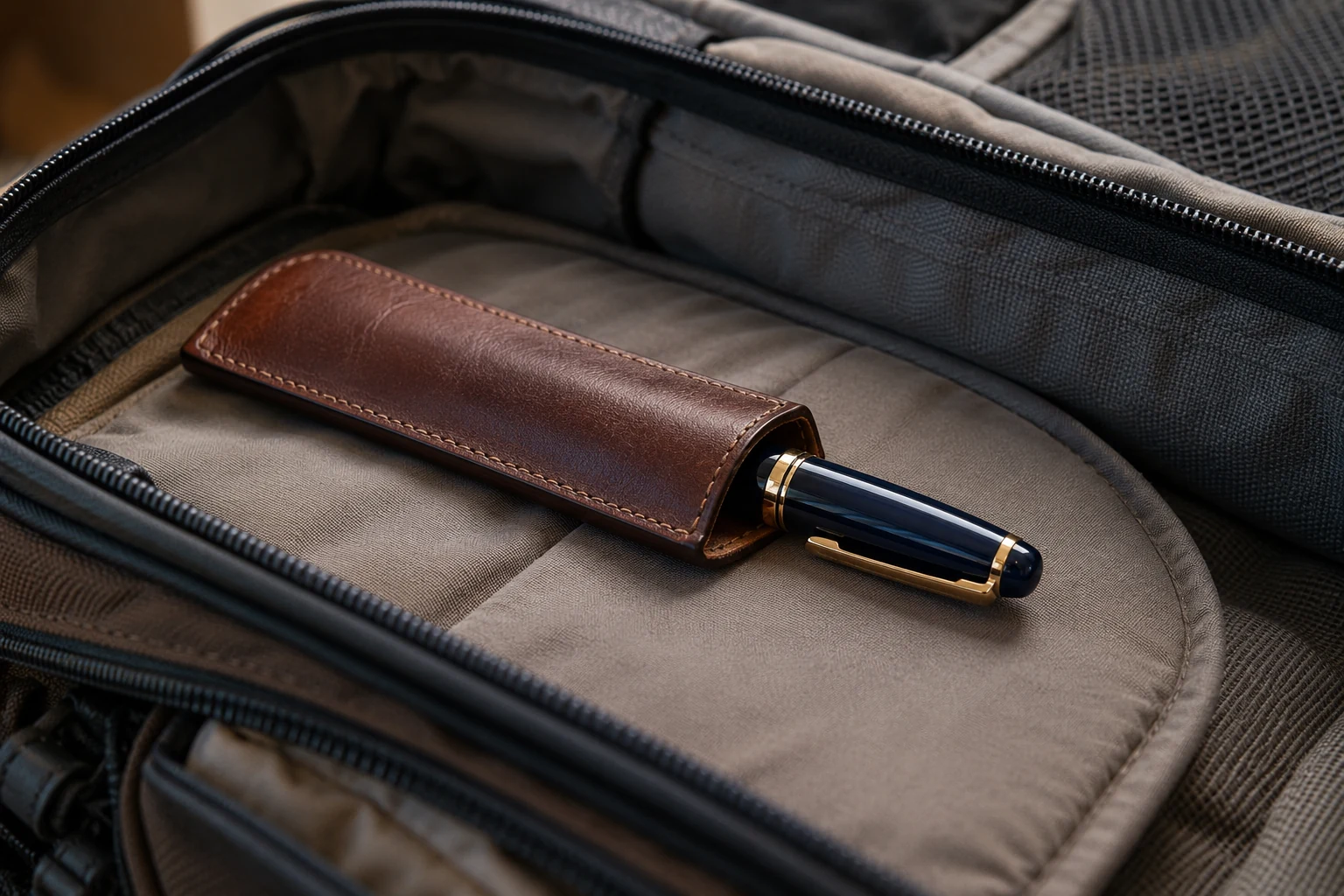
Put each pen in a fitted case or sleeve that keeps it apart from keys, hard objects, and pressure inside the bag. The Pen Addict describes using cases or sleeves for pen travel. A case addresses handling damage; it is not an airtight substitute for a leak-containment bag. If an inked pen needs to stay nib-up during a flight, choose a bag position you can manage accordingly, with the pen accessible enough to check without disturbing the rest of the kit.
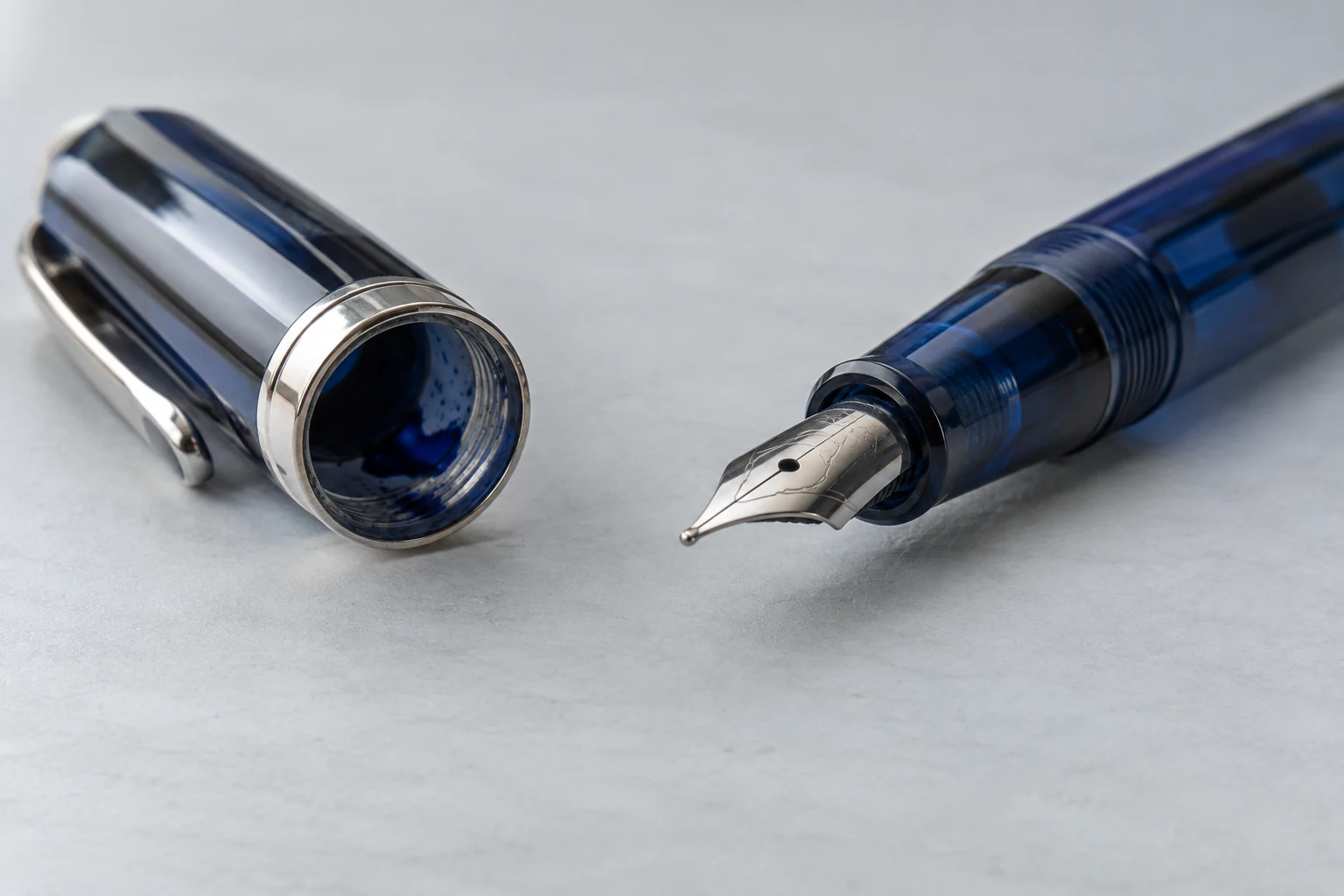
Close each pen as its own instructions require. Pilot’s guide for its plunger-type pen, for example, directs owners to keep the cap and knob screwed tight when not writing and warns that dropping the pen may cause it to malfunction. Apply those directions to a pen covered by that guide; do not force an unfamiliar knob on a different model. Before leaving a seat, room, or stop, check that the pen case and spare ink are present and closed. A simple count of the pens you brought can help if you have several.
For a train or car journey without an airport checkpoint, keep the same case, closure, spill-containment, and refill planning. Do not automatically impose an airport carry-on liquids rule on a journey with no such checkpoint. The physical risks of a crushed vial or a loose pen still deserve attention.
At your destination, set the closed kit on a stable surface protected against a possible ink stain. Look through or around the outer bag for moisture, external ink, or broken material before opening it. Open a suspect bag carefully so any collected ink stays on the protected surface. If it is appropriate to check the pen under its instructions, hold the nib up and uncap it cautiously over a tissue. This is a controlled inspection, not a reason to dismantle the pen.
If you find ink on the outside, clean it by a method suitable for that pen and material. An arrival check does not call for bathing the whole pen or applying an unverified cleaner to its cap. Do not keep filling from a broken bottle, and do not force a damaged or leaking precision part. If the pen remains leaky or appears damaged, stop using it and seek the maker’s guidance rather than treating a new refill as the repair.
Once the kit passes inspection, fill an empty pen with confirmed-compatible ink using its model’s procedure. Make an ordinary brief writing check, then note how much compatible reserve remains. If you used a cartridge sooner than expected, that observation improves the plan for the rest of the stay: use your confirmed supply source or adjust what you carry on the next leg. Keep labels and working closures with their containers so the next refill is as clear as the first.
Maintain the Kit During the Stay and Repack for Home
After each refill at a suitable workspace, close the ink container by its design and retain its label. Store it according to its maker’s directions. For bottled ink, LAMY advises a cool place protected from direct sunlight and says to keep its glass bottle tightly sealed; follow the instructions for your own ink and container where they differ. Return the spare ink to a protected spot rather than leaving an open bottle among everyday travel items.
Use and cap the everyday pen normally under its instructions. Give a backup a separate idle plan if it may sit unused for much of a long trip. Pilot’s plunger-type guide directs owners who do not use the covered pen regularly to drain its ink, then clean the inside by filling and draining it with clean water several times. For another pen, consult its own directions for draining, cleaning, drying, and storage; check those directions before changing ink color as well. Do not leave a filled backup untouched for months merely because it was packed as insurance.
Two travelers with the same trip length can reasonably choose different kits. For steady writing over several weeks, one might take a regular pen, verified compatible cartridges, and a reserve based on their own normal use, with a confirmed way to obtain more if needed. Another might prefer a bottled-ink or plunger-filler setup, accepting the need for a suitable place on the ground to refill and for more active cleaning or idle-pen care. Neither choice establishes a universal cartridge count or bottle volume; the deciding inputs are writing use, refill access, and willingness to maintain the pen.
Before going home, repeat the closure and damage check, count the compatible refills left, and reconsider how each pen should travel. Check the actual return route’s security and carrier rules, especially the capacity and packing status of any ink container acquired during the stay. The compact kit to account for is a usable pen, its verified refill, a protective case, spill containment, an absorbent wipe, any model-appropriate cleaning supplies you need, and a confirmed destination supply plan when your carried reserve will not cover the stay. That plan cannot promise a leak-free trip, but it leaves you able to write, inspect, refill, and repack without guessing at each stage.