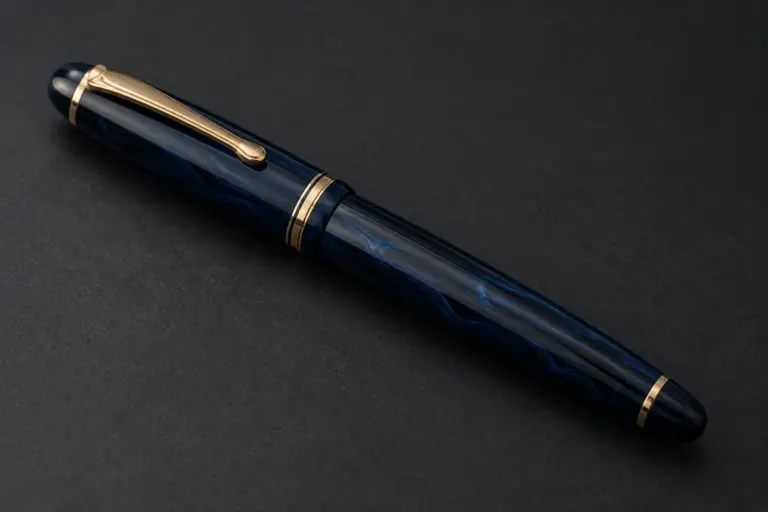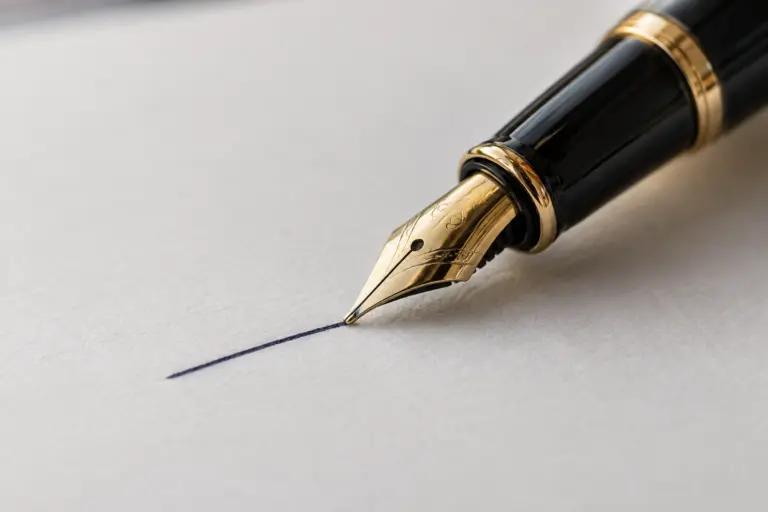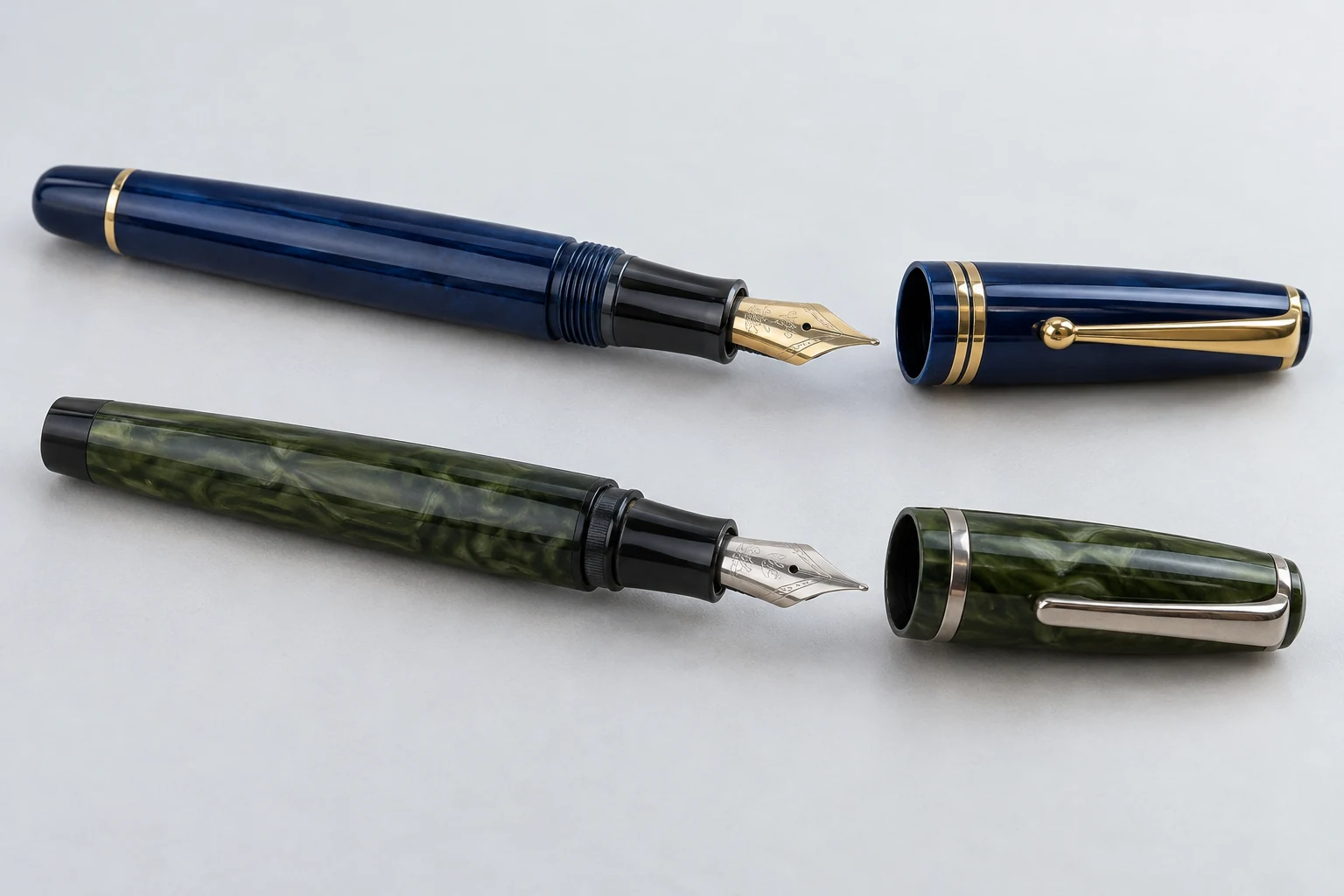
The main difference is the action you repeat whenever you write: a screw cap twists off and on, while a snap cap pulls off and pushes back on. Goulet Pens defines the first by mating threads and the second by a pull-and-push fit, usually accompanied by a click. If you write in brief bursts throughout the day, that repeated motion may matter more to you than the name of the closure. Neither name, however, tells you whether a particular pen will stay ready to write after a pause, whether its cap can be posted, or how a worn closure will behave.
How Each Cap Attaches and Releases
A screw cap is held by threads on the cap and pen body that fit together. To remove it, you rotate the cap until those threads disengage; to replace it, you bring the cap back to the body and twist it into place. That is the attachment and motion in Goulet Pens’ definition, not a promise about how many turns any particular pen takes.
In use, the distinction is easy to recognize. Hold the pen body and turn the cap rather than pulling it straight away. When recapping, bring the two parts together squarely and begin the twist gently. If the cap does not start smoothly, back off and realign it rather than using extra pressure. If it binds or appears to cross-thread, stop. That handling advice follows from the need to mate the threads; it is not a claim that every screw cap is fragile.
A snap cap uses a different action. Goulet Pens describes it as removed and replaced by pulling and pushing it on the pen body, usually with a clicking sound. Hold the body, pull the cap off, then push it back through its normal engagement when finished. The click can be a useful cue on a pen that normally makes one, but “usually” matters: the glossary does not make an audible click a requirement for every pen described as a snap cap.
For either design, pay attention to how the actual pen closes rather than trying to make it match an expected sound or feel. A cap advertised as a slip cap deserves its own check: do not assume that label promises an audible snap. Likewise, a retractable pen, whose writing point is extended and withdrawn without removing a cap, does not present the screw-versus-snap choice discussed here. Those distinctions keep the comparison focused on pens you uncap and recap.
The practical choice begins here. If a direct pull and push feels natural in your hand, the snap action may suit you. If you prefer a deliberate twist and are comfortable bringing threads together before closing, the screw action may suit you. Those are preferences inferred from the motions Goulet describes, not evidence that either closure is universally easier.
What Changes Across Short Writing Sessions
Imagine using a pen to add a few lines to notes, putting it down, and returning several times during the day. With a snap cap, each pause asks for a pull to begin writing and a push to recap. With a screw cap, each pause asks for rotation in both directions. Because a pull-and-push action does not include the thread-turning step, a snap cap may feel more convenient for frequent brief sessions. That is a practical inference from the defined actions, not a timed speed result. The turns required by a screw cap, the effort required by a snap cap, and the comfort of either action depend on the particular pen and the writer.
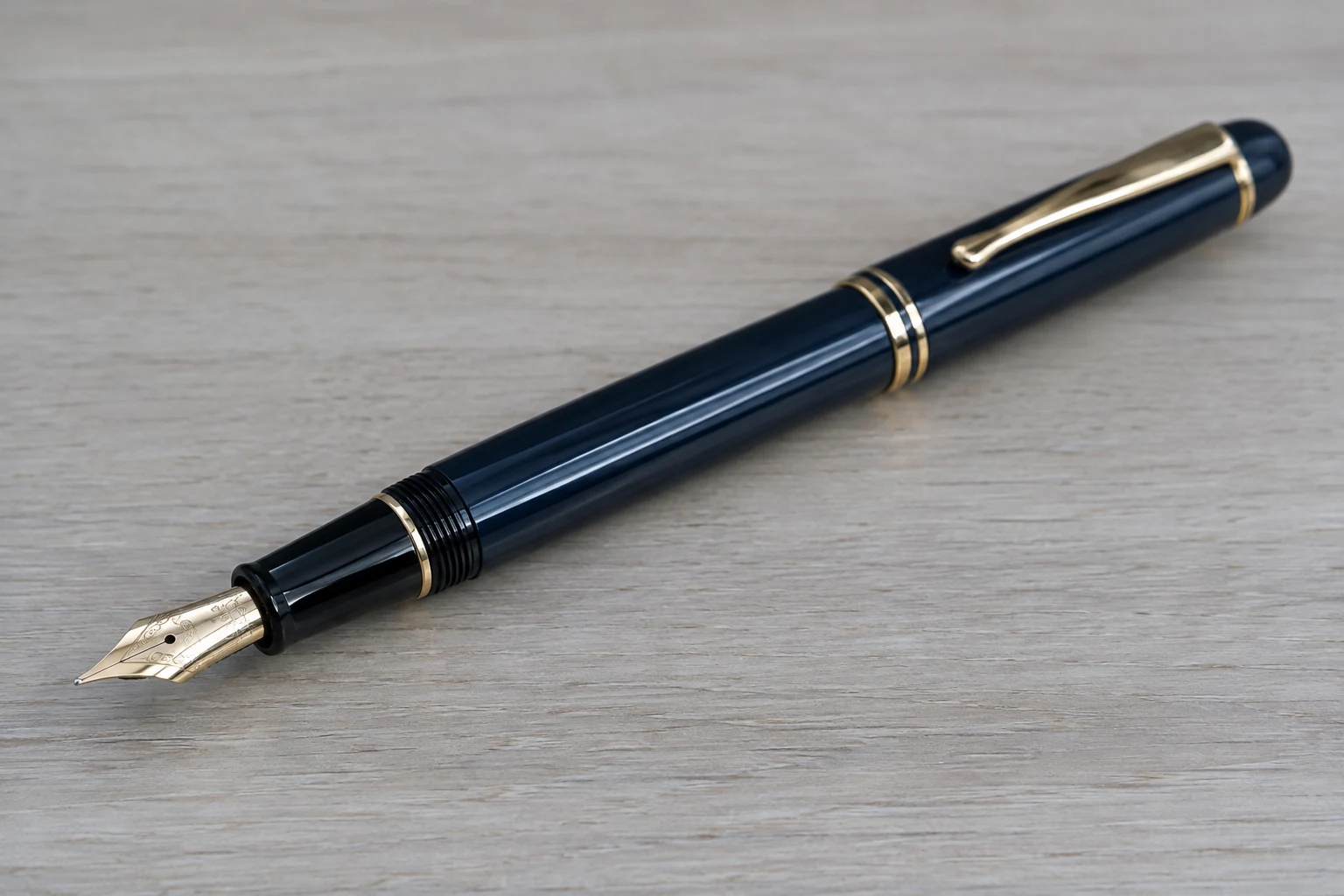
Consider your grip as well as the sequence of motions. Can you hold the body securely while pulling the snap cap off without an awkward tug? Can you rotate the screw cap comfortably while keeping the pen steady? If you can handle a pen before choosing it, opening and closing it several times in the way you would during a normal day is more informative for this decision than treating either label as a shortcut for hand comfort. Do not substitute a forceful demonstration for a normal closing action.
Recapping is where careful handling matters most. On a screw-cap pen, present the cap straight to the body and let the threads engage gently. Resistance that feels like binding is a reason to stop, not to tighten harder. On a snap-cap pen, push only through its ordinary designed engagement. If a part looks bent or misaligned, or the cap will not seat as it normally should, do not force it past the obstruction. These are different motions, but the same sensible limit applies: unusual force is not a feature to work around.
There is also the question of where the cap goes while you write. Posting means placing the cap on the back end of the pen barrel, as Goulet Pens defines it. That is separate from how the cap attaches over the writing end. A screw cap is not automatically meant to post, and a snap cap is not automatically comfortable when posted. For either one, check whether the maker permits posting on that model. If it does, consider whether the pen feels comfortable in your grip with the cap at the back; if it does not, set the cap aside rather than pressing it onto a finish the maker says should not be posted.
For the short-session writer, the useful question is therefore more specific than “Which cap is faster?” It is: which full routine—uncapping, keeping track of the cap, writing, and recapping—fits the way you hold and use this pen? A direct action may be preferable when interruptions are frequent. A twisting action may be just as welcome if its alignment and rotation feel comfortable to you. Neither preference requires a claim that one design wins a speed contest.
What the Closure Cannot Tell You About the Pen
The cap label identifies an attachment action. It does not, by itself, establish what seals around the nib inside a particular cap or what condition those sealing parts are in. Consequently, threads are not proof that a screw-cap pen is airtight, and a push-and-pull engagement is not proof that a snap-cap pen will dry out. Goulet Pens’ glossary definitions describe how the caps are removed and replaced; they give no dry-out duration or sealing result for a specific model.
If ink readiness after a pause is your deciding concern, look for evidence about the model you intend to use, rather than ranking closure types by assumption. Check what its maker says about the cap’s construction and intended care, and account for the condition of the individual pen, including any seals. A closure that attaches in its expected way and a cap that seals effectively are related questions, but they are not interchangeable questions. Without model-specific evidence, this comparison cannot tell you how long your ink will remain ready to write.
Condition also changes the decision. A normal twist or push is one thing; a cap that has become loose, is visibly damaged, or suddenly needs unusual force is another. Do not treat that behavior as an invitation to tighten harder, bend a component, add lubricant, or dismantle concealed cap parts. Consult the maker’s instructions or an appropriate service provider instead. The screw-versus-snap label does not diagnose the cause, supply a universal repair, or establish which design will last longer.
If your days consist of many brief writing sessions, choose a snap cap when its direct pull-and-push action feels better and the particular cap seats normally. Choose a screw cap when you prefer twisting and its threads align and close smoothly. The material tradeoff is the motion you repeat: direct engagement versus rotation and alignment. If posting, ink readiness, or an abnormal closure is decisive, settle that question with evidence and guidance for the actual pen—not with the cap type alone.