If you are still writing with a fountain pen, close it normally and keep it in a protected place between sessions. If you are putting it away for extended nonuse, remove the ink, clean and dry the permitted parts, and store it ready for a fresh fill. The right path depends on when you expect to write again and on the instructions for your pen and ink—not on a single number of days that applies to every pen.
The useful distinction is whether the pen remains in your writing rotation. A properly closed daily writer should be easy to pick up again; a pen you no longer expect to use needs a different kind of preparation. Start by identifying the model, filling system and ink. That information will guide how you close and position the pen now, and how you empty or restart it later.
Choose the Storage Path by When You Will Actually Write
Ask what will happen next. Will you use this pen between regular writing sessions, carry it to another place, or leave it unused for an extended period? Carrying a pen is a transport question, not the same as leaving it put away; flight procedures are outside this storage routine.
For a daily writer that remains in use, keep it inked, close it as directed and give it a protected, accessible place. For an occasional writer leaving your rotation, plan to remove its ink and follow its filling system’s cleaning and drying instructions before putting it away. Sailor includes extended storage without use among the occasions for cleaning a fountain pen. These are different jobs: closing the first pen preserves its readiness between sessions, while cleaning the second avoids leaving old ink in a pen you may not pick up for some time.
Before deciding to leave a pen filled, identify its exact model, the ink inside it and any relevant maker instructions. A cap’s design may matter, but its claims belong to the pen that has that design. Platinum describes its named Slip & Seal cap mechanism as preventing ink from drying in the pen by limiting moisture loss. The #3776 Century manual says its nib seal was designed for two years, but also warns that ink may block depending on the use environment and how the pen is used. That is a bounded design statement, not a guaranteed two-year period without care for a #3776 Century—or a promise for a different capped pen.
If you cannot tell whether the next use will be soon and long nonuse is plausible, consult the maker’s advice for that model and ink rather than treating a closed cap as the entire care plan. Note the decision you make. It will be much easier to restart a pen later if you know whether you left it filled or prepared it empty.
Close and Protect a Pen That Remains in Use
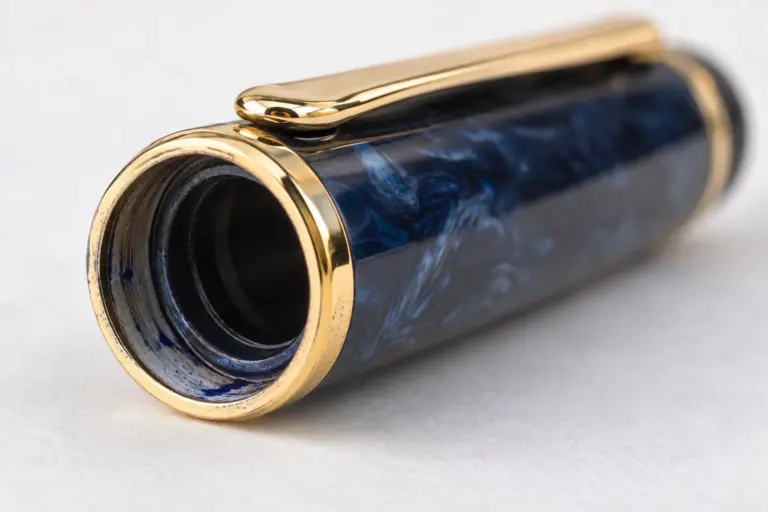
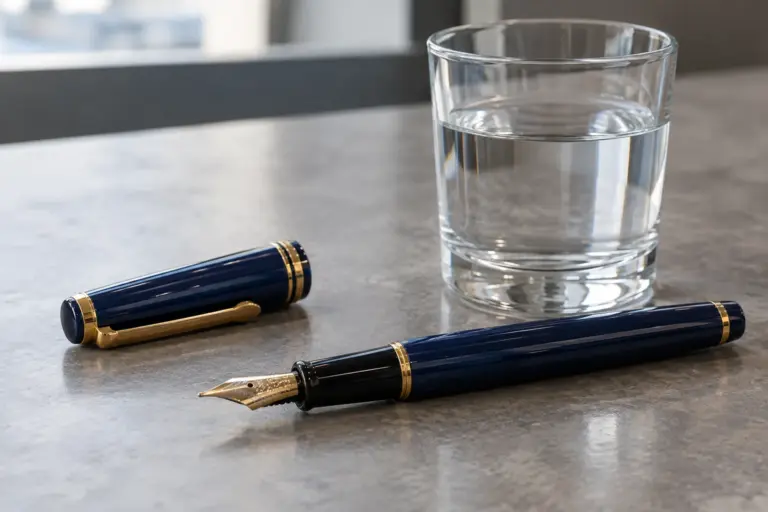
After writing, close the cap in its normal way. Pilot advises closing a fountain pen’s cap to help prevent ink from drying and to protect the nib. Check that the closure is complete without applying extra force. If your pen is retractable rather than capped, fully retract it under that model’s directions. Neither a cap nor a retracting mechanism should need to be forced as part of ordinary putaway.
Next, follow the orientation guidance that applies to your pen. Waterman recommends storing its fountain-pen nib point up when the pen is not in use. That gives a Waterman owner a clear instruction; it does not establish a nib-up rule for every other model. If your maker specifies a position, use it. Otherwise, do not rearrange or force a pen into a position merely to imitate advice written for a different one.
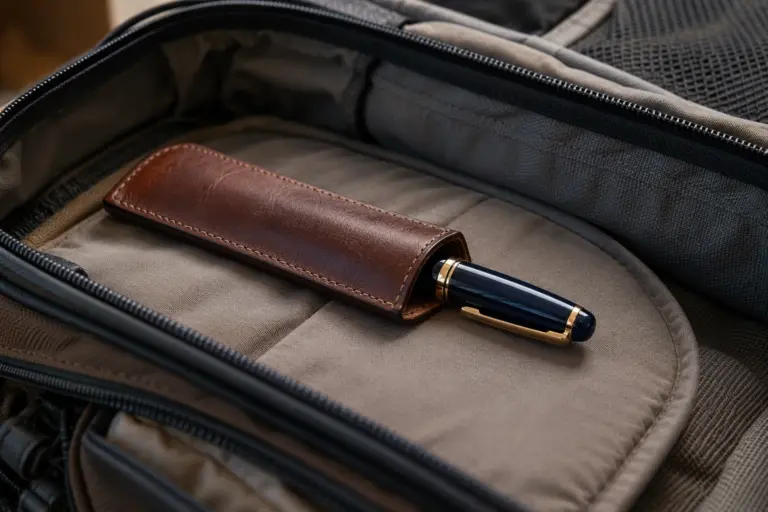
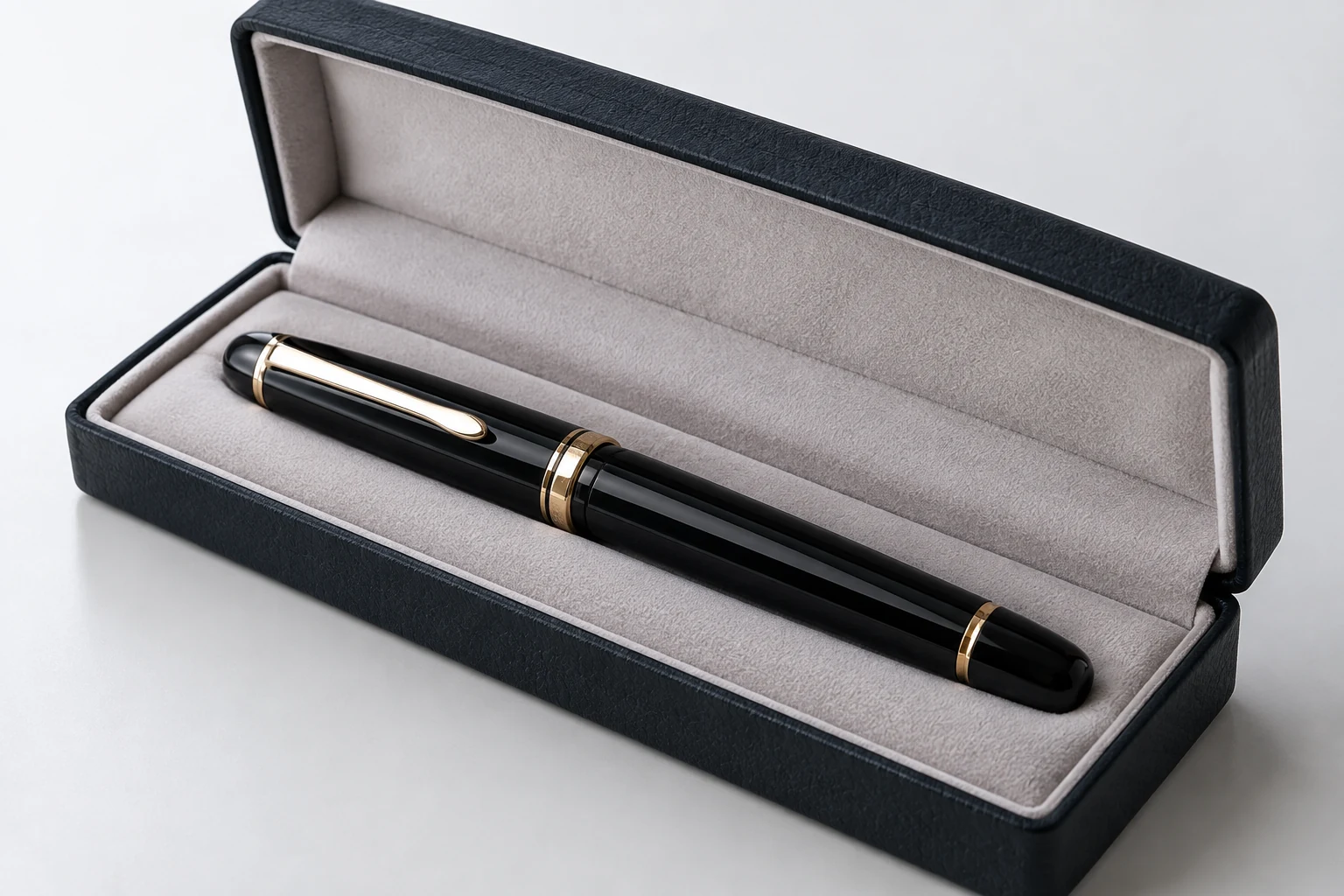
Choose a location where the pen is protected while still fitting the way you use it. For example, the Pilot Screw Type Fountain Pen / Use and Care Guide says to keep the pen away from excessive heat, cold and direct sunlight, as well as out of children’s reach. Apply the conditions in your own pen’s instructions to the actual place you have chosen. A normal desk putaway and a long stay in an exposed spot are not equivalent, even when the cap is closed. You need not buy a special organizer: the aim is a place that protects the pen and lets you find it for its next session.
If you rotate several pens, add a short care record beside or with each one. Record the pen and nib, the ink it contains, whether it is filled/active or empty, and the date of that care decision. For example: “Blue pen, fine nib — [ink name] — filled/active — capped [date].” This is an inventory note, not a claim that the ink will remain ready until any particular date. It prevents a later guess about what is inside the pen or whether it was already cleaned.
The active-storage result is deliberately modest: a normally closed pen in a suitable place, identified and available for the next writing session. If it stops being part of that routine, revisit the storage choice instead of letting an inked pen quietly become a long-idle one.
Remove the Ink Before Extended Nonuse
Identify the filling system before trying to take anything apart. A cartridge, a removable converter and a built-in filler do not all empty in the same way. Consult the instructions for the exact model, and keep the nib and feed in their normal owner-level assembly. Preparing a pen for storage is not a reason to pull them out.
Cartridge pen. Deal with the installed cartridge as its maker directs when preparing the pen for nonuse. Do not assume an empty cartridge is best left in place: Platinum’s #3776 Century manual warns that a cartridge left without ink for a long time may become hard to remove. If a cartridge already resists, stop rather than trying to pull it free by force. Follow the applicable maker guidance or ask its dealer or service contact for help. Once the cartridge has been dealt with safely, continue with the permitted cleaning steps for that pen.
Removable-converter pen. Remove the converter only if the model’s instructions permit it. Empty it by its instructed method, then treat it as a separate part to wash and dry before storage. The nib and section still need the care appropriate to that model; taking out a converter does not, by itself, mean the ink path has been cleaned. Keep track of the removed part so the later care record reflects what you actually did.
Built-in filler. Leave the filling mechanism in the pen and use its own drain action. Do not try to handle it as though it were a removable converter. In the Pilot Screw Type Fountain Pen / Use and Care Guide, the instruction for a pen not used regularly is to drain its ink, then clean the inside through repeated clean-water filling and draining. That is the routine for the pen covered by the guide, not a set of controls to assume on every built-in filler.
Sailor’s documented piston-filler routine gives a different, concrete example. Sailor directs the owner to place tissue or similar material underneath to catch ink, then turn the barrel end in the direction shown in its instructions to expel the remaining ink. Use the direction shown for the actual pen; do not guess from another filler’s movement. Its water-cleaning cycles come next, after the remaining ink has been expelled.
If you cannot identify the filler or a part does not move as its instructions describe, pause here. A model-specific drain routine is more useful than an improvised attempt that risks a stuck cartridge or damaged mechanism. The goal of this stage is to remove the remaining ink by a permitted owner action, leaving the pen ready for the cleaning method that belongs to it.
Clean, Dry and Put Away the Emptied Pen
Check the pen’s material and ink directions before introducing water. The permitted cleaning method can depend on what the body is made of and what ink was used; neither an ink label nor a pen’s exterior appearance substitutes for those instructions. In particular, Sailor warns that exposing the wooden barrel of its KOP BRIER fountain pen to water may cause it to expand and crack. Keep that body away from water and clean only the parts, and by the methods, its maker permits.
With those limits established, complete the cleaning route for the filler you identified. For the pen covered by Pilot’s Screw Type Fountain Pen / Use and Care Guide, repeatedly fill and drain the inside with clean water after draining the ink. When its storage care is complete, the guide says to replace both its end cap and main cap. Those two named caps belong to this example; do not look for an extra end cap on an unrelated pen.
For the piston filler in Sailor’s documented example, do not submerge it beyond the gripping-section ring or soak the whole body. Sailor warns that water can enter the gripping section past that ring and can enter the body through a gap at the tailstock. Within those limits, dip the nib in water, turn the barrel end to draw water in as for a normal fill, then reverse the movement to expel it. Repeat the drawing and expelling cycles as Sailor directs. After cleaning, Sailor instructs owners to wipe the cleaned part thoroughly dry with a soft cloth or tissue.
A converter that was removed for permitted cleaning needs its own finish. Pilot’s kakuno guidance says to wash remaining ink from the converter with water, dry the converter completely, and then store it. For other parts and models, use their applicable drying directions. Do not substitute an invented number of hours, or assume an interior is ready for storage solely because its outside feels dry.
Wipe the allowed exterior areas as appropriate for their material and instructions, then reassemble or close normal owner-level parts as directed once care is complete. Put the emptied pen in a protected place and update the record: pen and nib, ink previously used if useful for identification, empty/cleaned, and the care date. If a removed converter is stored separately, note that too. The label should describe the pen’s actual state, not the state you intended to reach; if cleaning or drying is unfinished, finish the permitted care before marking it ready for long-idle storage.
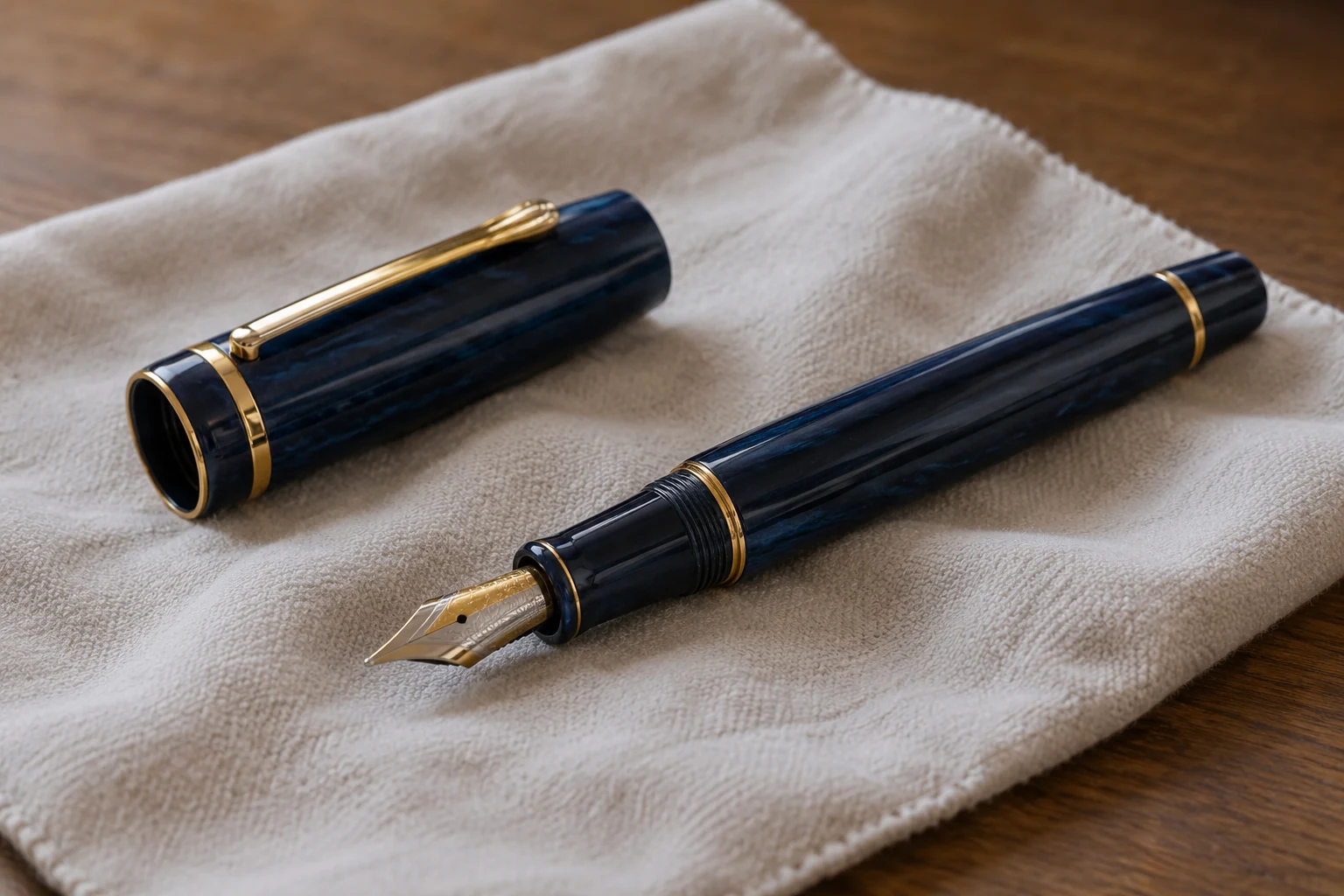
Restart the Pen and Check Its Writing
Begin with the care record, then look at the pen. Confirm the model and filler, whether the record says filled or empty, and what is visible in normal owner-accessible areas. Is an old cartridge still installed? Is there remaining ink? Do parts fit and move normally, or is there resistance or visible damage? This small inspection determines whether you can refill directly or need to return to the permitted care routine first.
If the pen was stored clean and empty and its parts fit normally, refill through its proper route with fresh, appropriate ink. Sailor recommends fresh ink before using a stored pen again. Write a short word with a light hand, then an ordinary sentence. The check is simply whether the pen writes under normal use—not a reason to press harder. Record what you observed, and close the pen after the session.
If you find an old cartridge or stale ink, do not treat the pen as though it had been stored empty. Likewise, if the first writing check has poor flow, consider its condition before retrying: Sailor identifies old ink hardened inside the nib as a possible cause of a pen not writing. Follow your model’s permitted emptying, cleaning and drying route, then refill with fresh appropriate ink and make one light writing check. This branch addresses old ink without turning a flow problem into an excuse to force the pen.
Stop if a cartridge is stuck, another part resists, damage is visible, or flow remains poor after the permitted cleaning and light retry. Ask the maker or dealer for help rather than forcing components, pressing harder or moving into nib adjustment. A storage routine can identify the point at which owner care has not solved the problem; it need not become a repair procedure.
For next time, copy this compact check into your pen record: next use expected; model, ink and material instructions checked; closure, orientation and location chosen; ink emptied, pen cleaned and parts dried if long-idle; care state and date recorded; restart writing result noted. That leaves one of two clear outcomes: an active pen closed and protected for its next session, or a long-idle pen properly prepared for a fresh fill—with its actual writing checked when it returns to use.