Identify the pen before choosing the replacement. Start with purchase records and what you can see without taking the pen apart, then establish the model and any variant that could affect the part. Only after that should you ask a maker or supplier to confirm that a specific cap, section, converter or nib unit fits—and what the offer actually includes. A brand name or convincing photograph is not enough. If the generation remains uncertain, a clear account of what you know is more useful than a confident guess.
Make a Record of the Pen You Have
Gather anything that came with the pen or documents its purchase: a receipt, order email, packaging, manual or printed product label. Copy any model name or product code exactly, and note where you found it. A code printed on a box is a recorded code; a code chosen because an online photograph looks similar is an inferred match. Keep those in separate notes, especially if you no longer know whether the box originally belonged to this pen.
An identity sheet can be simple. Give each of these its own field rather than combining them into a single proposed name:
| Field | What to enter |
|---|---|
| Maker | The name visible on the pen or supported by purchase records; note any disagreement. |
| Model | A documented name, or a candidate clearly marked “tentative.” |
| Product or model code | The exact code and where it appears, or “not found.” |
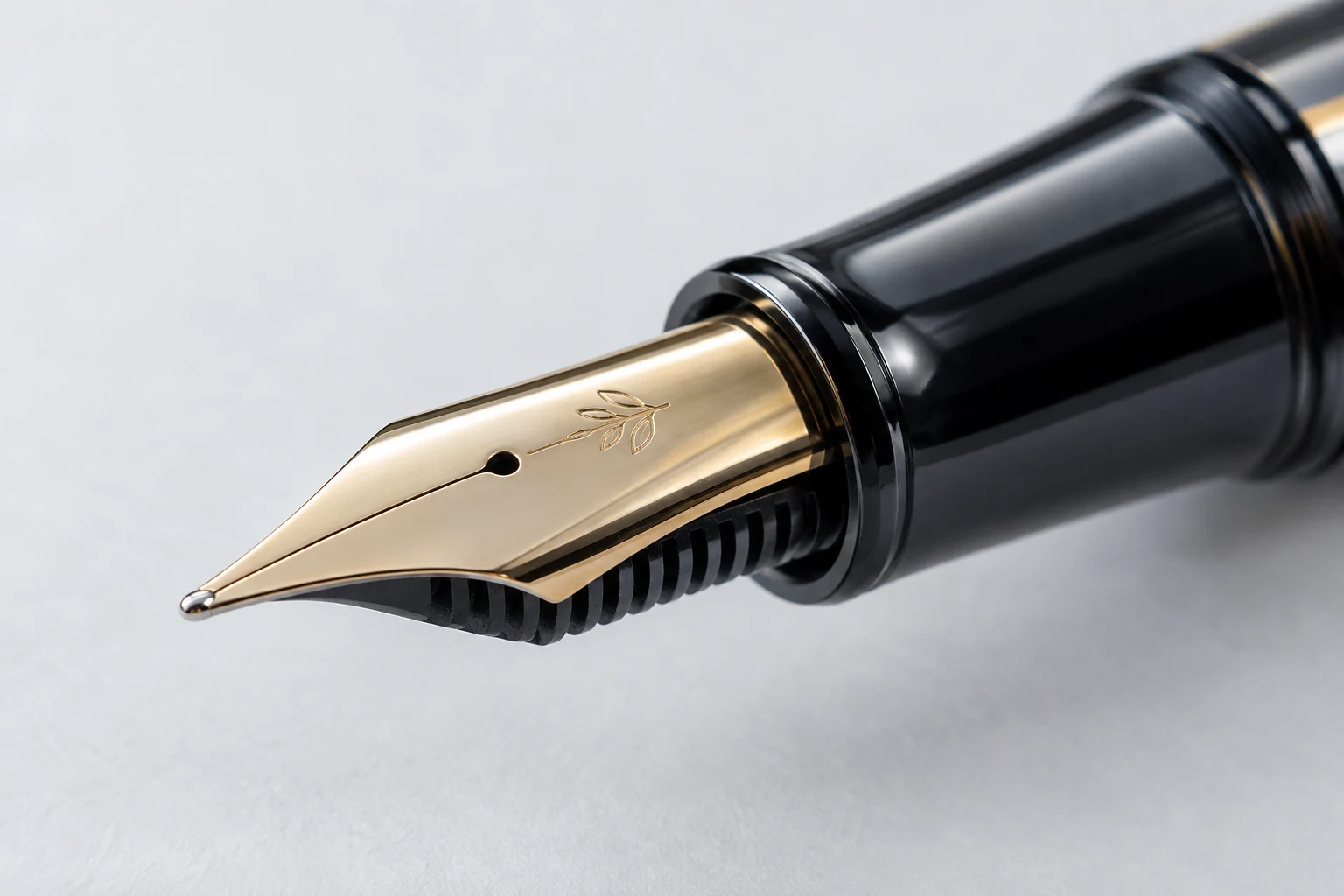
| Nib | Any visible size, material or engraving, copied as observed. |
| Filling system | What you can see through normal use, such as a removable converter or cartridge; write “uncertain” if you cannot tell. |
| Other markings | Visible text or symbols and their locations on the pen. |
| Needed part | What is missing or damaged, and the symptom that prompted the request. |
Keep the nib entry distinct from the model entry. An engraving on a nib may identify that nib rather than the complete pen. Likewise, a color is an observed feature, not by itself a product code or proof of a particular generation.
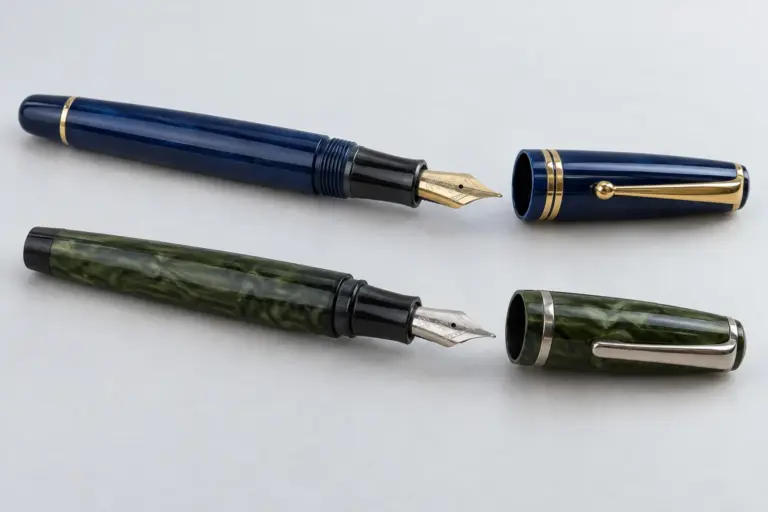
Photograph the whole pen capped and uncapped in clear light, with enough detail to read any visible markings. Add close views of the clip, cap, section—the part held near the nib—and the area where the missing or damaged component belongs. If you need a cap, show the cap you have, if any, and the exposed end it must cover. For a converter question, show the filling arrangement only as it appears during normal use. Include a ruler or note approximate length or diameter where a measurement may help distinguish candidates. State whether each detail comes from the photograph, a document or your recollection.
There is no need to dismantle a functioning pen to make this record. Open and handle it as you ordinarily would, but do not pull out a hidden component just to supply a photograph. If a marking or connection cannot be seen safely, write “not visible without disassembly.” That tells a maker or service shop what remains unknown without risking damage for a speculative identification.
Narrow the Model Without Guessing the Variant
Use the recorded code, if you have one, to find the maker’s product information or contact its support team. Compare more than a name: check the photographed markings and visible construction against the candidate identification. Keep three questions separate. Which product line is it? Which color or trim does this pen have? Is there a generation or variant that matters to the requested part? Answer only the questions your records and the maker’s information can support.
For example, suppose your order email lists a model code, while the pen photographs show matching markings, clip and filling arrangement. You can report the code as documentary evidence and those features as observations, then ask whether they establish the variant needed for the replacement. If the email’s description conflicts with a visible marking—or you cannot establish that the email belongs to this pen—do not quietly choose one. Record the conflict and send both pieces of evidence.
Now consider a pen with no surviving paperwork. Its color and clip may resemble a maker’s photograph, but that resemblance supports only a candidate model. It does not establish an exact generation or show that a photographed spare will attach. Write “possible model” on the identity sheet, specify the features behind the guess, and leave the generation unconfirmed. This distinction matters most when the replacement meets another part of the pen: a plausible exterior match does not answer a fit question.
For older Parker products, there is a specific route. Parker asks owners to send a digital picture when a product was offered or purchased more than 10 years ago so it can identify the model. That is Parker’s stated condition, not a rule for every maker or for every pen of unknown age. Your overall and detail photographs, together with any dated purchase record, give Parker a clearer question to answer.
If you cannot establish the model or relevant generation from documentation and visible features, stop short of assigning an exact identity. Ask the maker or a qualified service shop to identify the pen from the record. You can still describe the fault and the part you need; you simply should not turn a tentative visual match into a model-specific order.
Confirm What the Replacement Includes Before Ordering
Identification is the first half of the request. The second is confirmation that the offered part fits that identified pen, is available in the form you need and has an appropriate installation route. A listing titled with the right model name may not tell you whether it supplies a bare component or a larger assembly. That distinction can matter for a cap, section, converter or nib unit: ask what is included and what it is designed to connect to, rather than assuming the pictured piece is the entire replacement.
Here is an adaptable message. Replace the brackets with your own observations; delete any field you cannot establish rather than filling it with a guess.
> Subject: Pen identification and replacement [component] request
>
> Hello, I need a [cap/section/converter/nib unit] because [describe what is missing or damaged and the resulting problem].
>
> The maker is [confirmed maker]. My purchase record or packaging says [model and exact code, with the document named]. The pen itself has [visible markings]. I believe the generation or variant may be [candidate], but I have not confirmed it because [brief reason].
>
> The nib is marked [copy visible marking, if relevant]. The filling arrangement I can observe is [describe it, or say uncertain]. I have attached capped and uncapped photographs, close views of the markings and affected area, and [receipt/order email/packaging image, if available]. [Mention any detail that cannot be photographed without disassembly.]
>
> Can you confirm the pen’s exact model and relevant generation or variant? For the replacement you propose, please confirm its part code, the models and generations it fits, and whether it is a bare component or a complete assembly. Is it available separately? Is installation suitable for an owner, or should the pen be sent for service? If the identity or fit remains uncertain, what further information can I provide?
Adjust the component question to the actual fault. For a missing cap, ask whether the offered cap is complete as supplied and appropriate for this pen. For a damaged section, ask which assembly is offered rather than assuming every visible piece comes with it. For a converter, confirm the specific replacement against the pen’s filling arrangement. For a nib problem, distinguish an offered nib tip from a complete nib unit. These are questions for the seller or maker, not claims that any particular piece is interchangeable or owner-installable.
Published policies show why those distinctions matter. Parker says requests under its nib-exchange guidance must be for a nib from the same family of pen; its example changes nib width within the Sonnet family. Parker also says it does not sell caps or barrels. Neither statement promises that another part is sold separately, nor does Parker’s policy describe what another maker supplies. If you need a Parker cap, ask about the available service route instead of assuming you can order a loose cap.
LAMY says its fountain pens can be combined with LAMY nib tips, but expressly excepts the LAMY 2000. Read that qualification with the statement: it is not a blanket assurance that every similar-looking nib—or a complete nib unit—fits every LAMY pen. In any brand, ask for confirmation tied to the identified model and the particular part being offered.
Order when you have a confirmed pen identity, a specified replacement and assembly, explicit compatibility with the relevant model and generation, and a clear owner-installation or service route. If any of those is unresolved, send the record for identification or service guidance first. A careful “generation unknown” can prevent a wrong purchase; it is not a failure to identify what you can.