Start with the Writing You Actually Do
Choose a fountain pen for the writing you do and the way you hold it, then compare your candidates in a consistent writing trial. A pen that appeals on paper still needs to feel workable in your hand during your usual task.
Define that task before judging the pens. Are you making brief notes between meetings, filling pages in a journal, or writing letters at a desk? How long do you normally write before putting the pen down? Keep your usual paper and preferred ink in mind, since the writing experience you are choosing for includes both. Set a budget that leaves room for what you need to use the pen, and decide how much routine maintenance you are willing to take on.
These conditions give your comparisons a purpose. If most of your writing is quick notes, assess candidates for that task rather than imagining an occasional long session. If you regularly write for longer, give sustained comfort more weight than an attractive first impression.
Screen the Grip and Overall Size
Start where your fingers meet the pen: the grip section, just above the nib. Hold each candidate the way you normally write, without rearranging your fingers to suit it. Notice whether the section gives your fingers room to settle or makes them search for a position. A shaped grip may guide one person’s fingers and get in another person’s way. Pelikan, for example, describes the Pelikano Junior as having a special grip profile; that tells you its shape is worth examining, not that it will suit your hand . If a shaped section conflicts with your usual grip, try a different section shape before focusing on nib specifications.
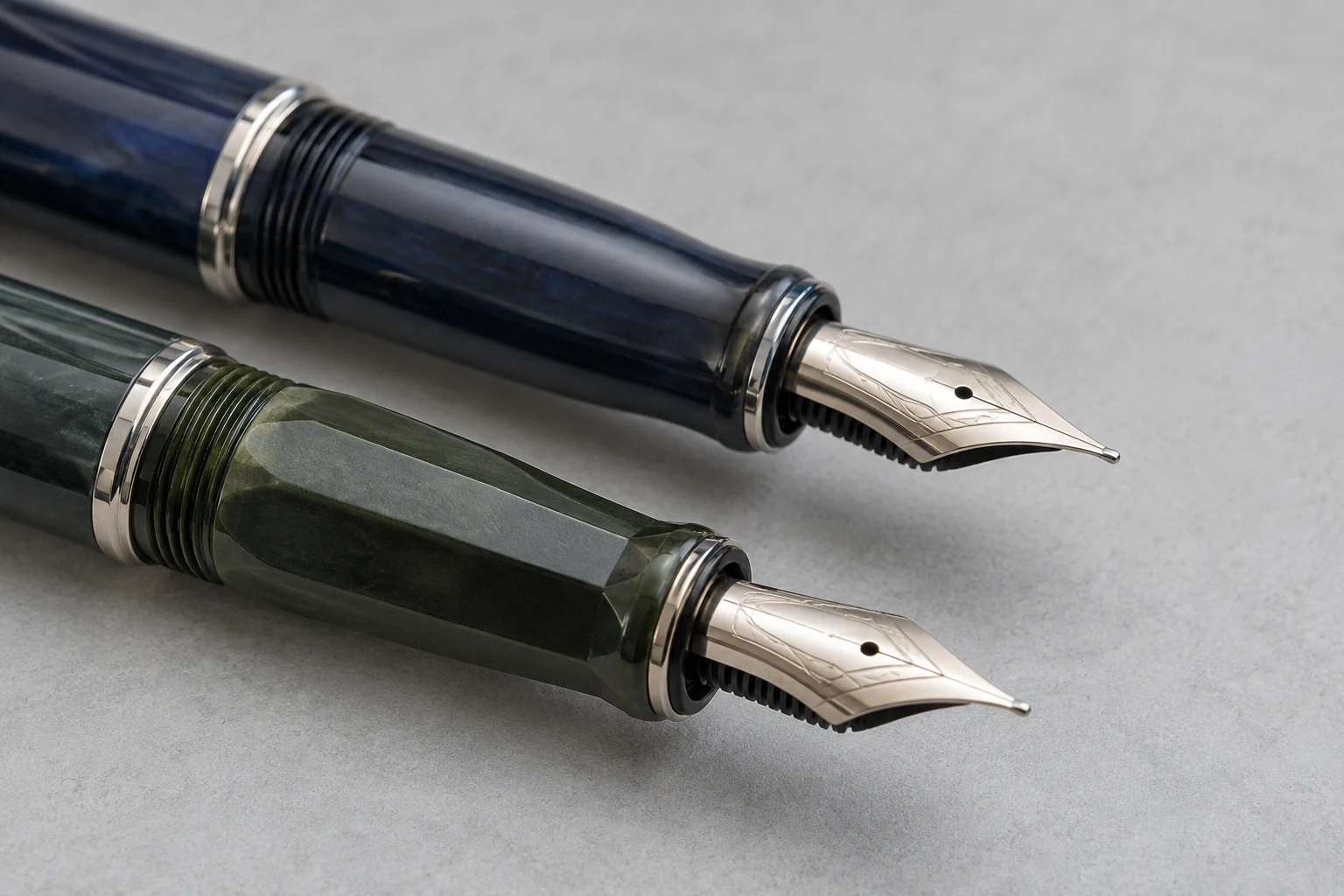
Next, consider whether the barrel’s thickness and length let you hold the pen without feeling crowded or stretched. Published dimensions can help distinguish candidates, but check what they measure: a maximum diameter is not necessarily the diameter of the part you grip. Platinum lists the PROCYON at 139.7 mm long, 14.4 mm maximum diameter and 23.3 g average mass . It lists the BISO at 138 mm long, 12.7 mm maximum diameter and 18.4 g . Those figures make BISO the slimmer and lighter of these two listed pens, but they do not tell you which section will sit more comfortably between your fingers.
Weight deserves the same hands-on attention. Hold each pen in your normal writing position and notice whether supporting it feels easy or whether you find yourself gripping more firmly than you intend. A lighter pen is not automatically the better fit; some writers may prefer more substance in the hand. Platinum describes BISO as lighter and slimmer than its #3776 Century, another useful indication that designs vary rather than a comfort verdict . These are maker descriptions and specifications, not firsthand comfort findings or proof of fit for every hand.
Use this screen to narrow the field, not to force a decision from measurements. Two pens with similar overall dimensions can still place your fingers on differently shaped sections, while a pen that looks appealing on paper may feel awkward in your ordinary grip. Keep the candidates you can hold naturally and set aside those that require you to fight the shape. If holding or writing with a pen brings on persistent pain, stop the trial rather than trying to write through it; a different pen should not be treated as a promised remedy.
Check Balance with the Cap Where You Use It
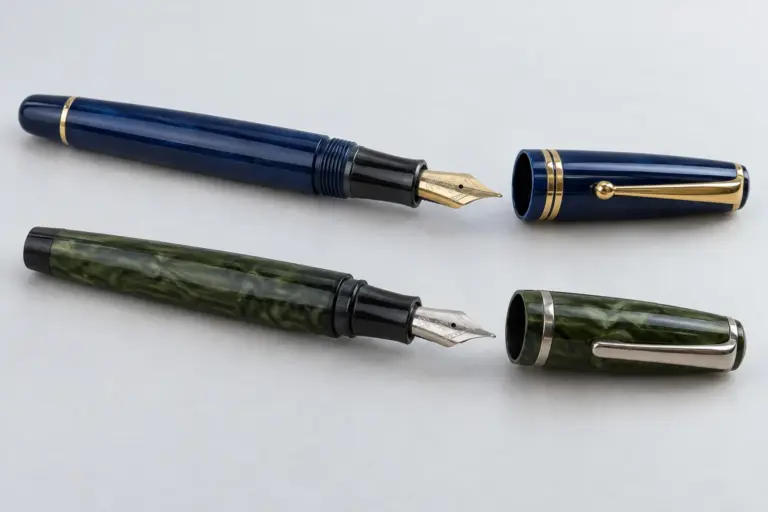
Do you write with the cap off, or do you place it on the back of the pen—post it? Try each candidate the way you normally write. A pen that feels steady with the cap off may feel different when the cap is posted: the added length and weight sit behind your grip. Neither configuration is automatically better. What matters here is where the pen feels settled in your hand while you write.
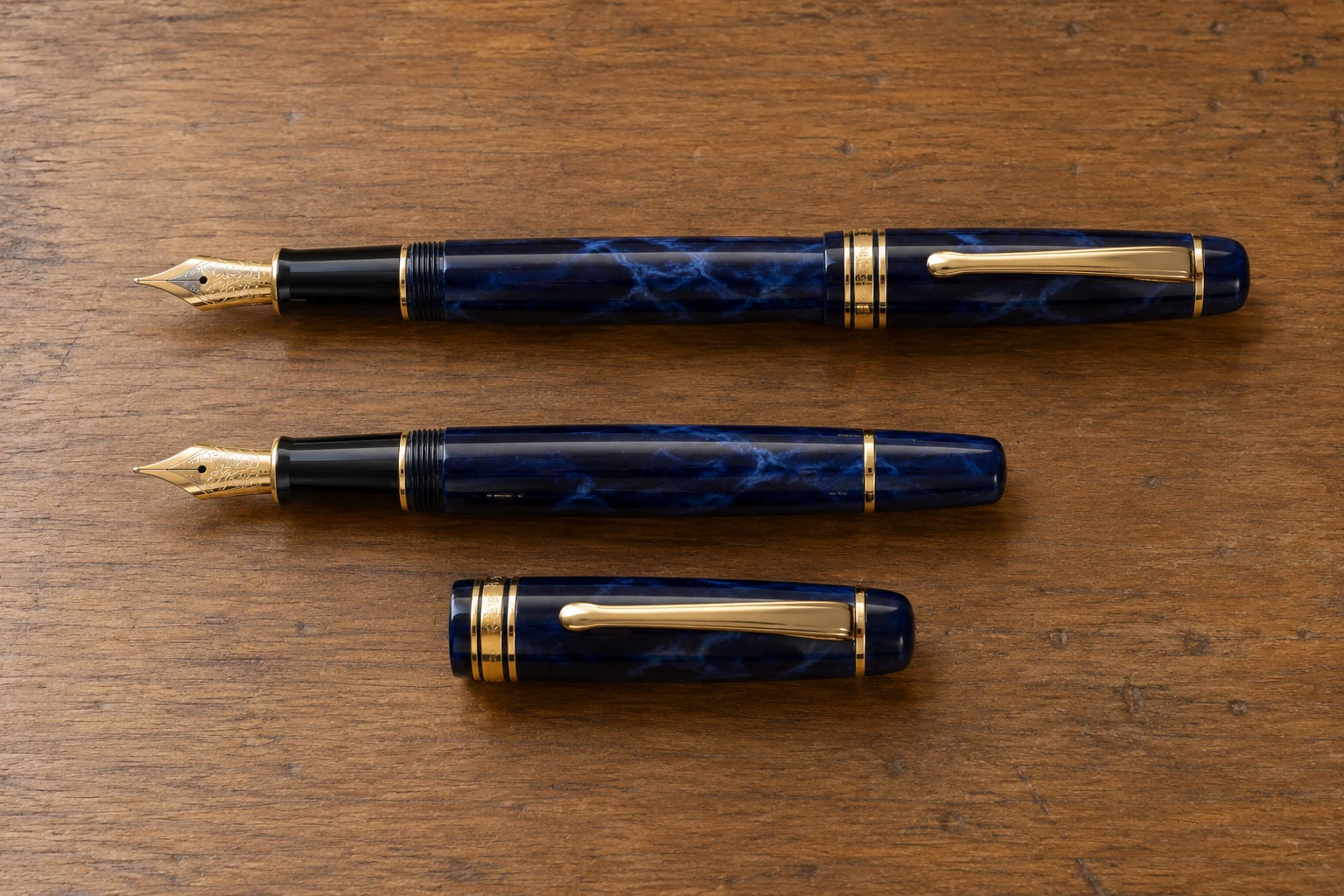
If you normally post the cap, assess the pen both ways in your usual writing position. Notice whether posting changes how firmly you hold the section, whether the back of the pen feels unobtrusive or seems to pull your attention away from the page, and whether you keep adjusting your grip. Then remove the cap and notice what changes. If you normally leave it off, give the unposted feel priority; there is little reason to favor a posted configuration you would rarely use.
Platinum says it considered writing balance with the PROCYON’s cap posted on the back . That description gives a cap-poster a reason to examine the configuration, not a verdict on how it will feel in their hand. You might find the posted pen comfortably settled, prefer it unposted, or notice little difference. Keep that observation separate from the maker’s design description.
Cap placement can also be a practical trade-off. Posting keeps the cap attached to the pen while you write, but if it makes your usual grip feel less settled, leaving the cap aside may be worth it. Conversely, if an unposted pen feels too short in your hand, posting may make it more workable. Decide which configuration deserves attention based on how you actually write, rather than evaluating every pen in a cap position you would not use.
Match Nib Feel to Handwriting, Ink, and Paper
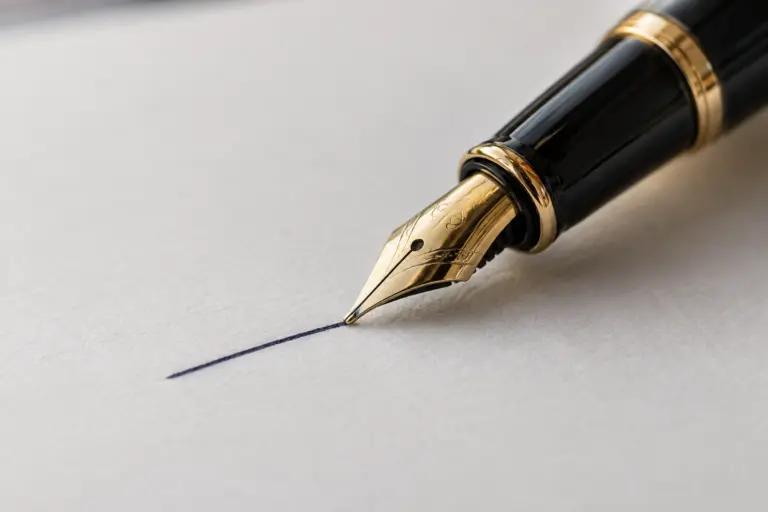
A nib that suits one writer may feel awkward to another. LAMY says nib choice depends on hand position, pressure, and writing style . As you write with a candidate pen, notice where the nib meets the page in your normal grip. Does it move comfortably through your usual letters and strokes, or do you find yourself rotating the pen, changing your hand position, or pressing harder to keep writing? Those adjustments matter more to your choice than a nib label alone.
Nib width is a useful starting point, not a verdict. LAMY describes its F and EF nibs as options for fine handwriting, its M nib as versatile, and its rounded A nib as stable for beginners . If you write small notes in narrow spaces, an F or EF may be worth trying; if your letters are larger, compare how an M handles them. The A designation suggests another shape to investigate if the nib’s contact with the page feels difficult to maintain. These are maker descriptions of different options, not predictions of which one your hand will prefer.
Judge the marks on the paper you normally use, with your intended ink if possible. Ask whether the line leaves enough space inside your letters, whether strokes look heavier than you want, and whether the nib’s movement feels comfortable at your ordinary writing pressure. Ink and paper are part of what you are observing: if the result looks too broad or feels unpleasant, it is too soon to assign the entire problem to the nib. A different nib width may change the result, but so may the ink-and-paper conditions under which you judged it.
If a pen’s grip and balance work for you but its nib does not, investigate another nib option before ruling out the whole pen. Keep the ink and paper the same while comparing those options, so the difference you notice is easier to attribute to the nib. A store trial can help match a nib to handwriting, according to LAMY . Use that opportunity to write in your ordinary hand rather than carefully forming letters only for the test. The useful question is not which nib has the most appealing description, but which lets you write as you normally do while producing a line you can use.
Compare Candidates with One Repeatable Writing Trial
Give each candidate the same short passage to write—perhaps a paragraph with the letters, numbers, and punctuation you use regularly. Try five minutes per pen as a manageable comparison window, not a measure of how long anyone should be comfortable. LAMY recommends trying a fountain pen to find a nib suited to individual handwriting; the useful evidence here is what happens with your handwriting.
Keep the setup as consistent as you can: use the same paper, writing position, and cap configuration for every pen. Use the same ink where feasible. If candidates contain different inks, note that difference rather than attributing every change in line or feel to the pen. Write at your normal pace instead of deliberately adjusting your grip to make a candidate work.
Make a brief scorecard for each pen. Record where your fingers rest, whether you shift your grip, how the balance feels, whether you find yourself pressing harder, and whether the nib feels smooth or resistant on that paper. Note any change from the first lines to the last: a pen that feels pleasant for one sentence may invite a different grip by the end of the passage. A simple “easy / uncertain / awkward” rating beside each observation can help you compare notes, but those labels and the five-minute window are personal comparison aids, not validated comfort thresholds.
Keep observations separate from product descriptions. “The cap made this pen feel back-heavy when I posted it” records your trial; “designed for balance” records a maker’s description. If two pens are close, repeat the passage in the same setup rather than relying on which one made the stronger first impression.
Choose by the Results That Matter to Your Writing
Put your notes beside the writing conditions you started with. If one pen looks appealing on paper but makes you adjust your normal grip, while another lets you write comfortably in your usual setup, give the latter more weight. A pleasing nib cannot make up for a grip you keep fighting; equally, a well-fitting body may be worth another look if the nib was the only drawback.
Before ruling out a candidate, identify what caused the hesitation. If your fingers resisted a shaped grip, reconsider the section shape. If the pen felt awkward only with the cap on its back, decide whether writing unposted suits you. If the body felt right but the nib did not, consider another nib option rather than treating the whole pen as a poor fit.
Choose the trade-offs you would accept during your actual writing—not the specifications you would most enjoy owning.