Start with the Writing You Actually Do
Choose your first fountain pen by narrowing the field around your writing routine, not by starting with a brand. What will you write most often—quick notes, long journal entries or small handwriting in tight spaces? Which paper will you use day to day? Set a budget, decide whether you want to use bottled ink or would rather keep refilling simple, and be honest about how much upkeep you’re willing to do.
Turn those answers into a shortlist. Look for pens whose grip and size you would want to hold through a typical writing session, nib options that suit the space you write in, a filling method you’re willing to use, and a level of maintenance you can live with. A pen meant for occasional notes may need to meet different priorities from one you plan to write with for an hour at a time.
Manufacturer examples later in this guide describe specifications for particular product ranges. They are not firsthand tests or universal recommendations; use them to identify possibilities, then judge the choice against your own writing conditions.
Choose a Grip and Nib for Your Handwriting
Start with the space your letters need and the way your hand holds a pen. If you write small notes in narrow margins, crowded letter shapes matter more than a bold-looking line. If your handwriting is large, a line that looks too slight may be less appealing. Grip shape and pen size matter separately: a shaped grip may guide where your fingers sit, while the barrel’s length and thickness affect how the whole pen rests in your hand. Pelikan, for example, describes a shaped grip on the Pelikano Junior; that tells you about that model’s design, not whether its shape will suit your fingers.
Nib width is a useful way to narrow the choice, but it is not a complete description of the mark you will see. LAMY presents fine and extra-fine nibs as options for fine handwriting and medium nibs as versatile. For small writing, consider whether a narrower line would leave enough space inside letters such as e and a. For larger writing, consider whether a medium line gives the marks the presence you want. These are starting points for choosing a width, not promises about how every pen will write.
Think about width together with ink flow and your everyday paper. A narrow nib that lays down plenty of ink could still make cramped writing look crowded on paper where marks spread; a broader nib with a different ink-and-paper combination could look more controlled than its label suggests. If your main task is annotating small print, prioritize legibility in that limited space. If it is writing generous journal entries, you have more room to choose the line appearance you enjoy. The useful question is not simply “fine or medium?” but “what mark does this nib-and-ink combination leave where I actually write?”
Your grip deserves the same attention as the line. Notice where your fingers naturally land, whether a shaped section puts them somewhere comfortable, and whether the pen’s size lets you write without adjusting your hold. Weight is a personal comfort criterion, not a performance grade: a pen that feels reassuring to one writer may feel tiring to another. A design labeled for beginners does not settle that fit, either. LAMY describes its A nib as designed for beginners, but that designation does not tell you whether its line width or feel matches your handwriting.
If you write left-handed, include that in your assessment rather than assuming one grip or nib designation is required. Pelikan lists a left-handed version of the Pelikano Junior, giving left-handed shoppers a specific version to consider within that range. What matters for your choice is whether the grip accommodates your hold and whether the resulting marks remain clear as your hand moves across the page. Neither a gold nib nor a higher price automatically answers those questions; hand fit and the line you need are more useful criteria.
Match the Filling System to How You Want to Refill
If you want refilling to be straightforward, start with cartridge pens. LAMY describes cartridges as the easier refill option in its range . That makes them a sensible shortlist filter if you would rather replace an empty cartridge than handle an ink bottle at your desk. The trade-off is that your ink choice depends on the cartridges that fit the pen. Don’t treat “takes cartridges” as a promise that any cartridge will fit: LAMY specifies T10 cartridges for its fountain pens except the LAMY 2000 .
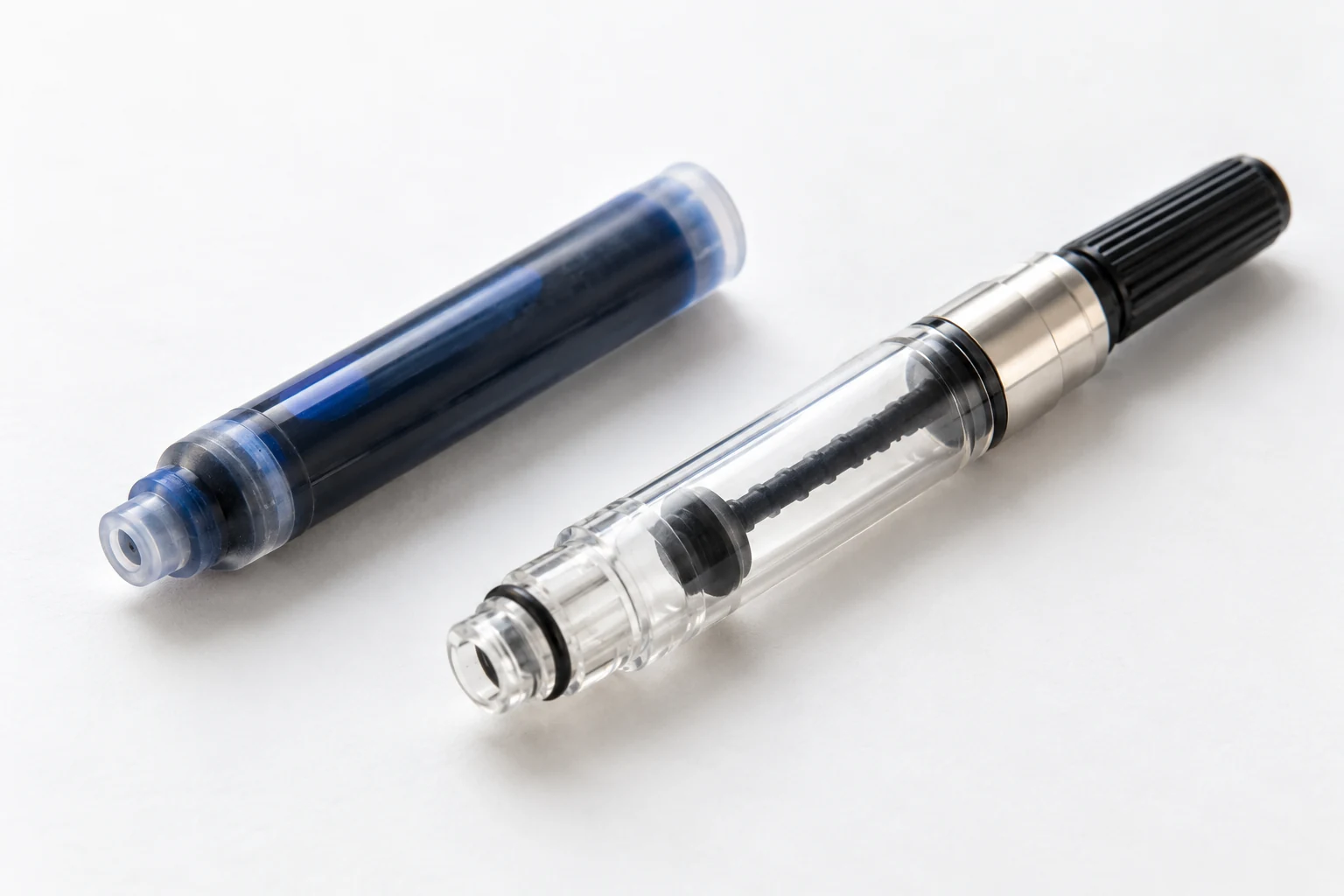
A converter offers a different route for someone who likes a cartridge pen but wants to use bottled ink. It fits in place of a cartridge and allows the pen to draw ink from a bottle, according to LAMY’s description of its system . That can make a converter-equipped candidate appealing if choosing bottled ink matters more to you than making every refill as simple as possible. It also adds a compatibility question: check whether a converter is available for the exact pen model, rather than assuming that every cartridge pen accepts one. If you plan to begin with cartridges and switch to bottled ink later, that question belongs on your shortlist now, not after purchase. A compatible cartridge-and-converter setup gives you two refill routes, but only if you can obtain the specified parts and ink.
Piston filling is the more direct bottled-ink route. LAMY describes its piston pen as filling from an ink bottle . Consider that arrangement if bottled ink is already part of how you want to write and you are comfortable making bottle refills your normal routine. If easy cartridge replacement is your priority, a piston model does not answer that preference merely because it is also a fountain pen. Conversely, if you know you want bottled ink, you need not choose a cartridge pen solely because it is the more familiar starting point.
Use the refill you expect to make most often to separate otherwise appealing pens. For writing away from home, you might value the simpler cartridge routine; for a pen kept where you use bottled ink, a compatible converter or piston filler may suit you better. Those are preferences, not a ranking of writing quality. Before retaining any cartridge-or-converter candidate, confirm the specified refill for its exact model and the converter fit if you intend to use one. Check the particular cartridges you would buy, too: a compatible filling system is less useful if it does not support the ink choice you want. The LAMY T10 specification and its LAMY 2000 exception show why a brand name alone is not enough to answer that question .
Choose Upkeep You Can Manage
Think about how often the pen will be used—and what you would be willing to do if it stops writing after sitting unused. If that sounds like a likely part of your routine, give cap sealing and straightforward cleaning more weight in your choice. Platinum describes dried ink as a possible consequence of a cap that does not seal tightly. It says its Slip & Seal mechanism prevents ink from drying in a pen equipped with that cap, but that is a feature to look for on the particular pen, not a promise about every Platinum model.
Cleaning access matters for a different reason. A pen that can be flushed gives you a first response to dried ink without treating the nib as a repair project. LAMY says dried ink can be flushed from its converter system with water. That example tells you what owner cleaning can look like for the system LAMY describes; it does not establish the cleaning procedure for an unrelated pen. When comparing candidates, ask whether you are comfortable with the cleaning instructions for the one you would own. A buyer who wants the simplest possible routine may value that more than someone happy to set aside time for occasional cleaning.
If a pen that has been idle will not write, work from the least intrusive possibility. Check that its cap closes as intended, especially if drying keeps recurring; a poor seal is one potential explanation, not proof that the nib is faulty. Then follow the maker’s owner-cleaning directions rather than trying to alter the nib. For the LAMY converter system described above, that includes flushing dried ink with water. After cleaning, assess whether the problem has actually cleared. If it has not, stop before bending, grinding or otherwise adjusting the nib yourself. A failed cleaning attempt tells you that simple flushing was not enough; it does not, by itself, identify the part that needs work.
Service options are worth considering alongside cleaning access. LAMY says its steel nibs can be changed through specialized authorized retailers. For a buyer worried about a damaged nib or a nib choice they may later want to change, that is a more useful ownership detail than assuming every nib is an easy home swap. The practical distinction is between routine cleaning you are prepared to do and nib work you would hand to someone equipped to do it. Choose the level of upkeep and service access that fits your likely use, particularly if the pen may spend long stretches capped and unwritten.
Test the Finalist and Verify Before Buying
Once you have a finalist, try to write with it rather than choosing from specifications alone. LAMY says an in-store trial can help match a nib to your handwriting . Write a few lines at your normal speed, including the small letters, numbers or signatures you use most. If possible, use paper comparable to your everyday paper and note which ink is in the test pen. That keeps the marks you see tied to the pen–ink–paper combination you actually tried.
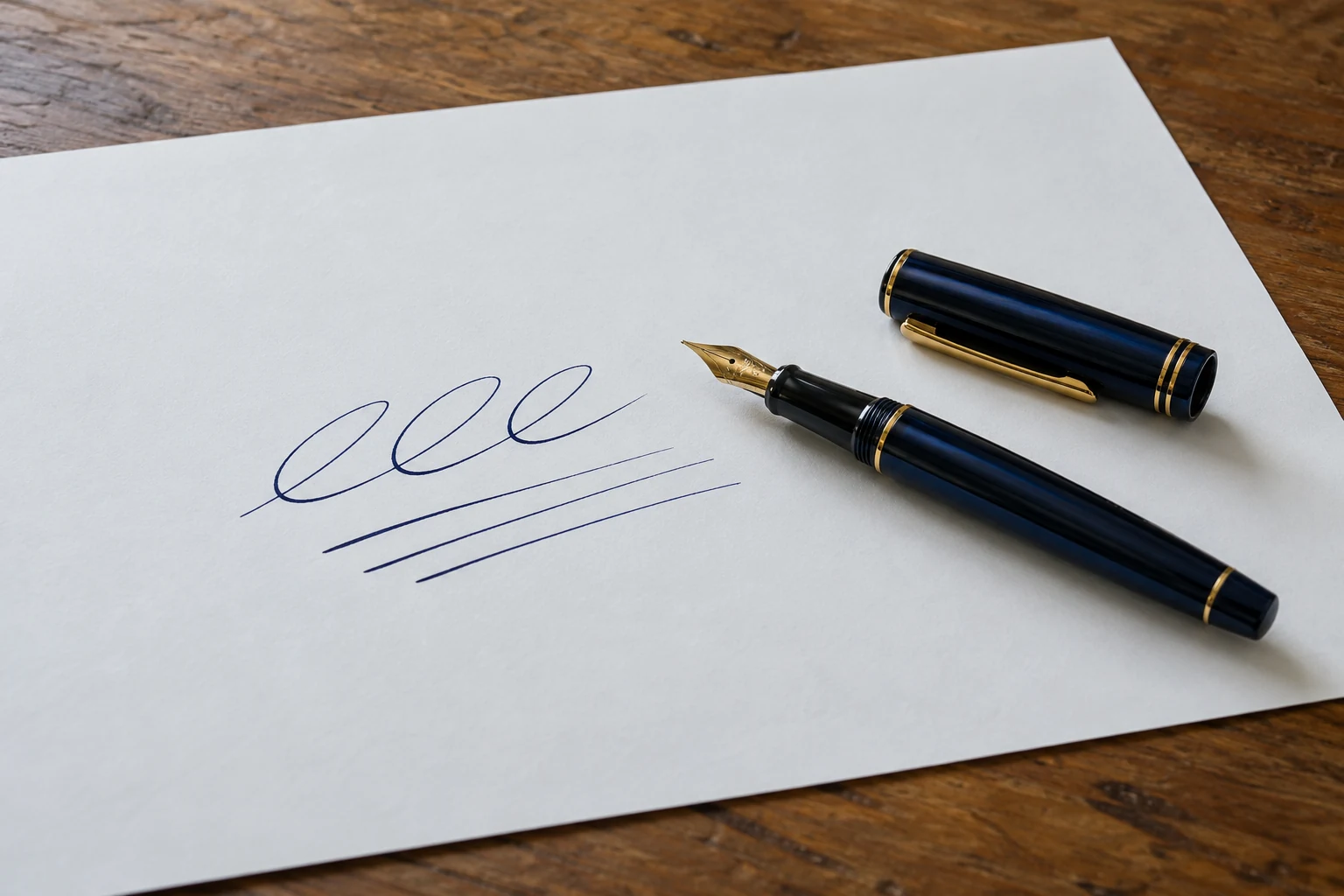
Pay attention to two separate questions. First, does the grip feel comfortable through more than a quick signature, including when you hold the pen at your usual angle? Second, does the nib make lines that suit your writing size without asking you to change how you write? A pleasant store trial is useful evidence about that pen; it is not a promise that a different nib width, ink or individual pen will feel identical. If you cannot try your usual paper, treat the line on store paper as a limited observation, not a verdict on how it will look in your notebook.
If a trial is unavailable, make the purchase decision more specific, not more confident: confirm the exact model and nib option being sold, its stated cartridge or converter fit or built-in filling system, and what cleaning access or nib-service options are available. Ask the seller to clarify an unclear listing before ordering. This is also the point to check the selected retailer’s current price, warranty and return policy for your market—particularly whether the policy covers a pen that has been inked for a trial.
Choose the finalist whose grip and written line work for you, whose refill method you are willing to use, and whose upkeep you can manage. Where you could not test one of those things, keep that uncertainty visible when weighing the retailer’s return terms against the purchase.