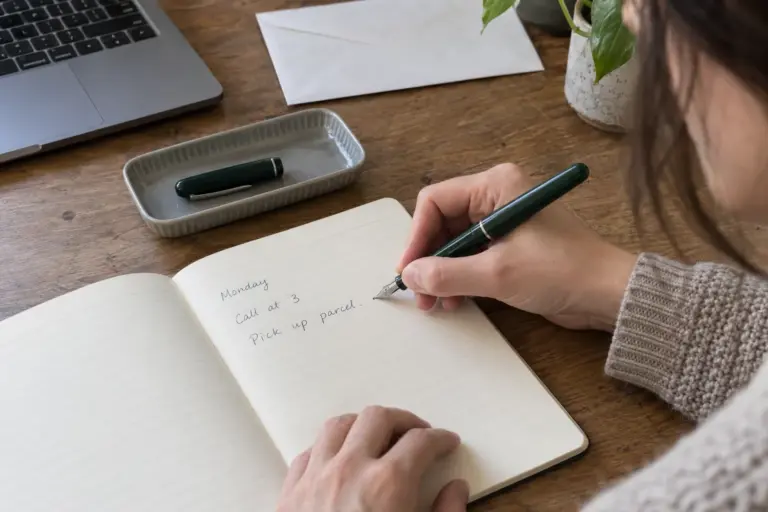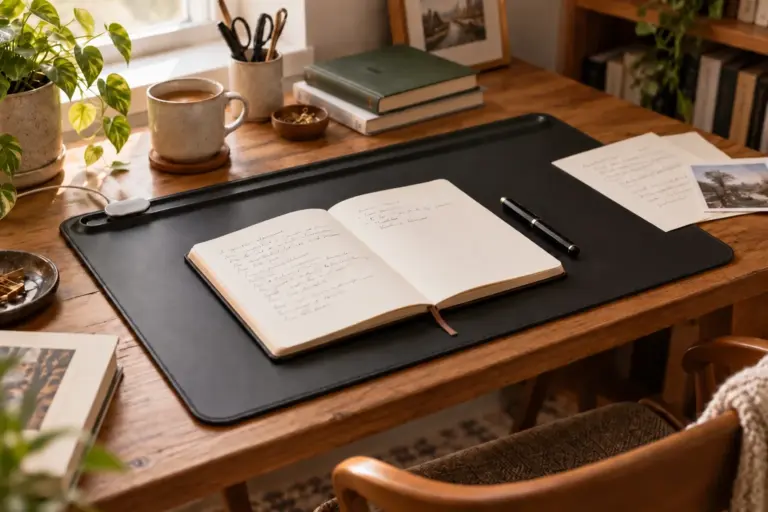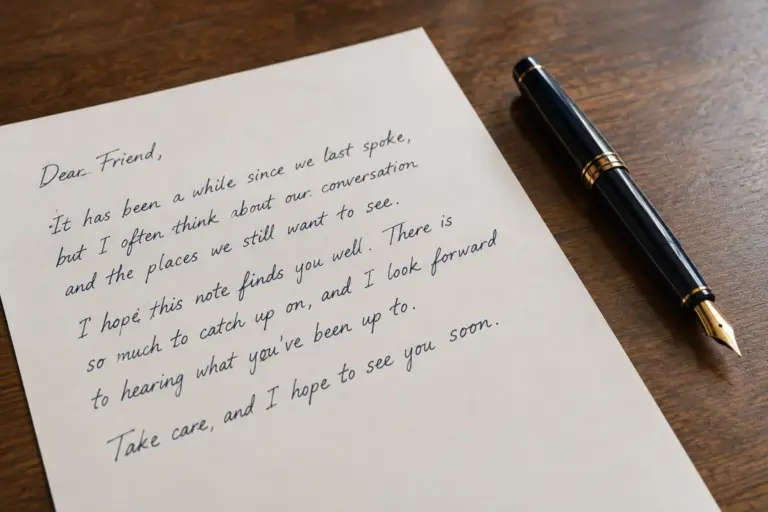
A café journal stop is most inviting when the setup stays simple: one notebook, one pen and just enough support to finish a page without covering the table in equipment. Everything should come out of an ordinary bag quickly, leave room for a drink and pack away just as easily.
A clear pen and a cream-paper notebook make a light starting combination. The alternatives below are choices rather than instructions to buy everything: select one pen, one notebook and an appropriate way to protect them, then add only the matching ink and helpers you will actually use.
Pens for the Page
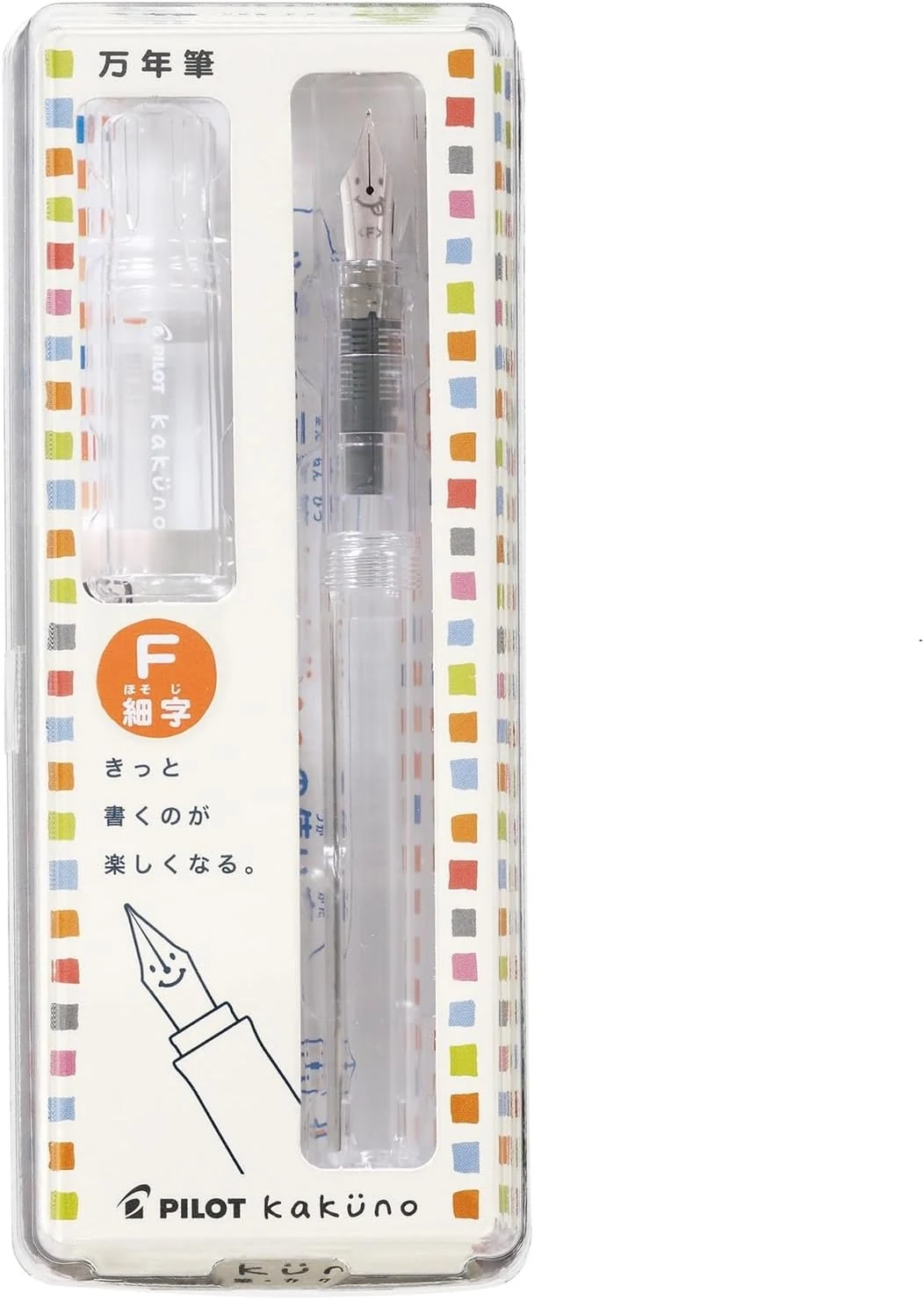
The pictured Pilot Kakuno Fountain Pen — Clear, Fine is an approachable choice for an unhurried half-hour of writing. Its transparent, faceted body lets you see what is happening inside, while the Fine nib suits journal pages where prose, dates and small annotations may share limited space. The selected model is FKA-1SR-NCF and comes with one black cartridge.
The important practical detail is its proprietary Pilot filling system. The Kakuno takes Pilot cartridges rather than generic short cartridges, although it can also accept Pilot CON-40 and CON-70 converters. For this portable kit, cartridges are the tidier choice: there is no ink bottle to open at a café and no filling equipment to clean before leaving.
No fountain pen is entirely independent of its paper and ink. Shannon, the sole displayed customer reviewer at Yoseka, stresses that “paper, pen and ink pairing are important.” That is a useful caution rather than a problem with the pen: begin with compatible paper and ink, then judge the feel of the combination you actually use.

Choose the Kaweco AL Sport Fountain Pen — Black, Fine instead if you want a smaller metal pen that feels more deliberately built for pocket-size carry. The black Fine variant has an anodised aluminium body and a screw cap that can be posted on the back while writing. Posting the cap turns the compact closed pen into a more usable writing shape at the table.
This is a genuine alternative to the Kakuno, not an upgrade that needs to accompany it. Its metal construction and screw cap favour compact, protected transport; the Kakuno favours a light, straightforward start and a view of the ink supply. The Kaweco includes a blue cartridge and uses short standard-international cartridges. Choosing it therefore moves the whole kit onto a different cartridge branch.
Notebooks That Suit Fountain Pens
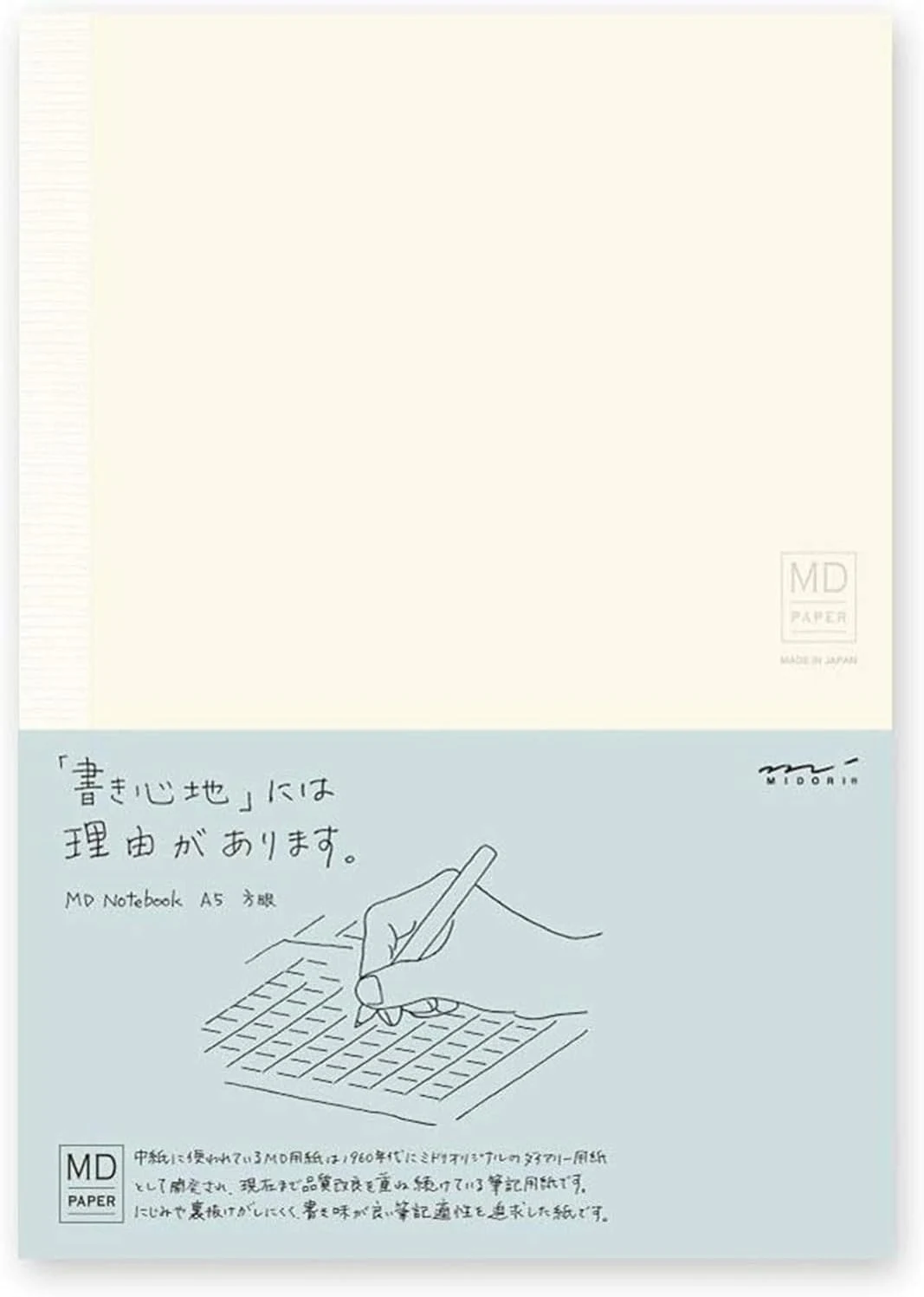
The Midori MD Notebook — A5, Grid is a cream-paper option for this kit. Under its removable retail band is a restrained cream soft cover with an exposed spine—more like a working book block than a conventional hardbound journal.
Its 176 pages use a cream 5mm grid, giving sentences a quiet baseline while making room for lists, timelines and small diagrams. Thread binding allows the notebook to open flat, which matters at a small café table: you can write near the centre without continually pressing the pages down.
In an independently purchased historical sample, reviewer Kelli McCown found average show-through but no bleeding or feathering with the pens she tested. She also preferred white paper to the notebook’s cream tone. Those results cannot guarantee every ink pairing, but they identify the meaningful choice here: pick the MD if you enjoy warm cream paper, subtle structure and a minimal cover that disappears beneath your hands.
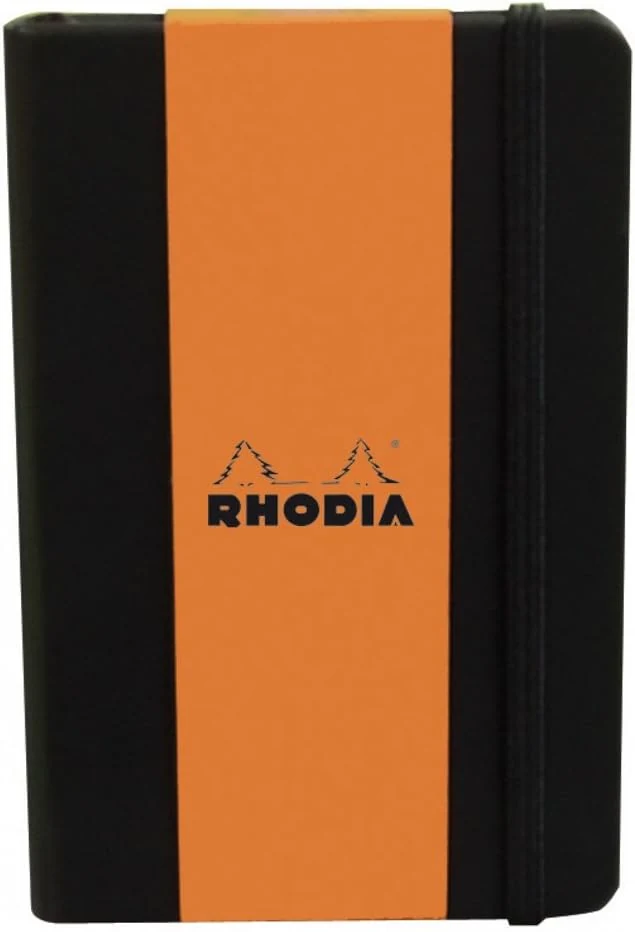
The Rhodia A5 Webnotebook — Black, Dot Grid is the more self-contained alternative. It has 192 pages of 90gsm ivory Clairefontaine paper with a 5mm dot grid. Dots provide guidance without forming as visible a framework as the Midori’s full grid.
Its black leatherette hardcover, elastic closure, ribbon marker and inner pocket make it a better fit when you want the notebook itself to withstand ordinary bag handling and contain a few loose notes or cards. Buyer Jon says he uses at least one annually for bullet journaling and finds it works well with his fountain pens, gel pens and pencils.
Choose between these notebooks rather than carrying both. The Midori is the softer, flatter-opening option for writers drawn to cream grid paper and an intentionally spare object. The Rhodia is preferable when a firm cover, closure and pocket matter more than minimalism.
Carry the Matching Ink
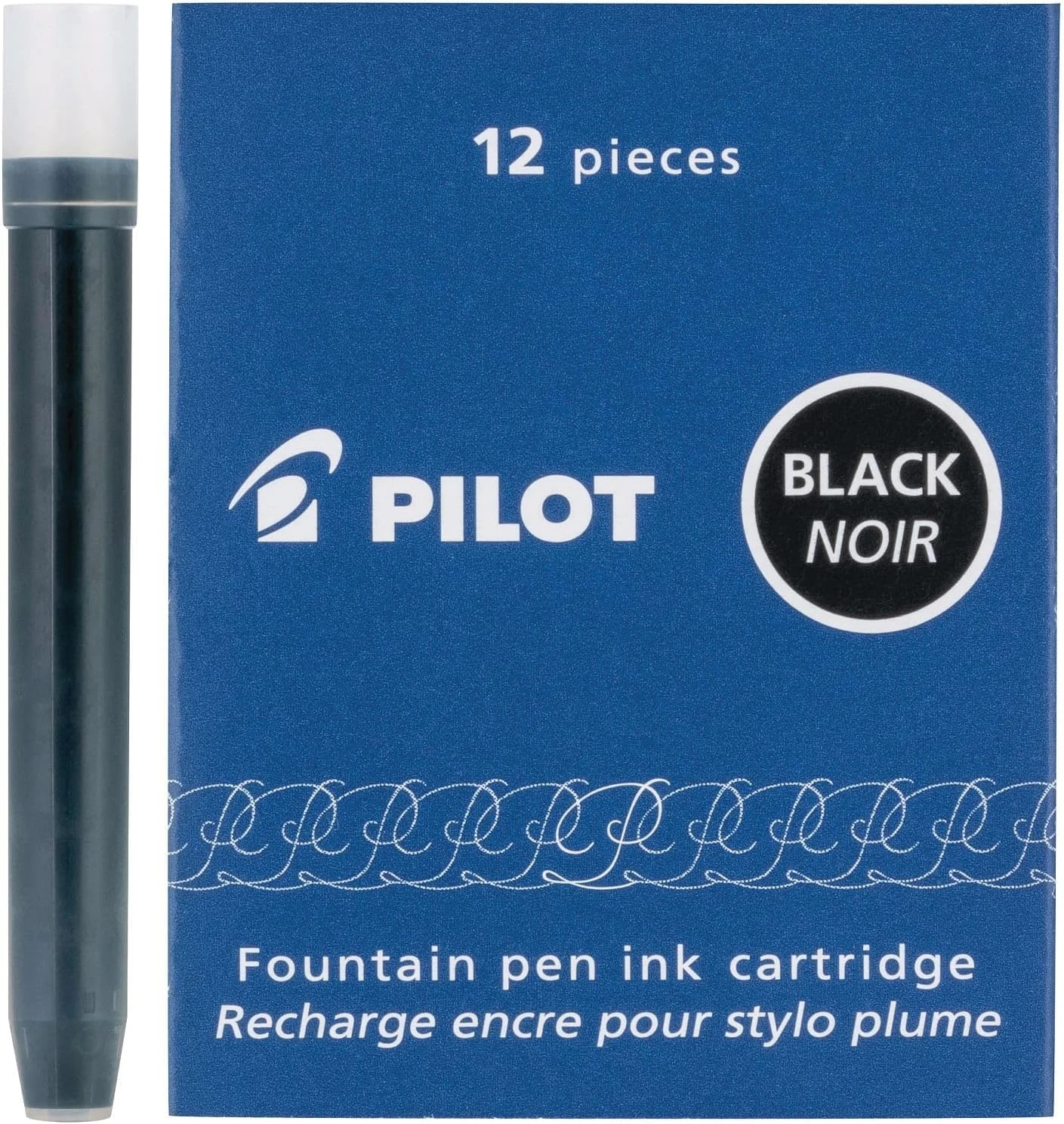
If you choose the Kakuno, add the Pilot Namiki Black Ink Cartridges —12 Pack. The Pilot IC-100 black cartridges are explicitly sold for the Kakuno, and the box contains 12 proprietary cartridges for compatible Pilot and Namiki fountain pens.
A single sealed spare is usually enough for a day out; the remainder can stay at home. The ink is not classified by the retailer as fast-drying or water-resistant, so avoid assuming that a freshly completed page can immediately be closed without transfer. One reviewer, O, also described the black as faint in a Pilot Decimo; that is one person’s experience in a different pen, but worth knowing if you specifically want a very dark black.
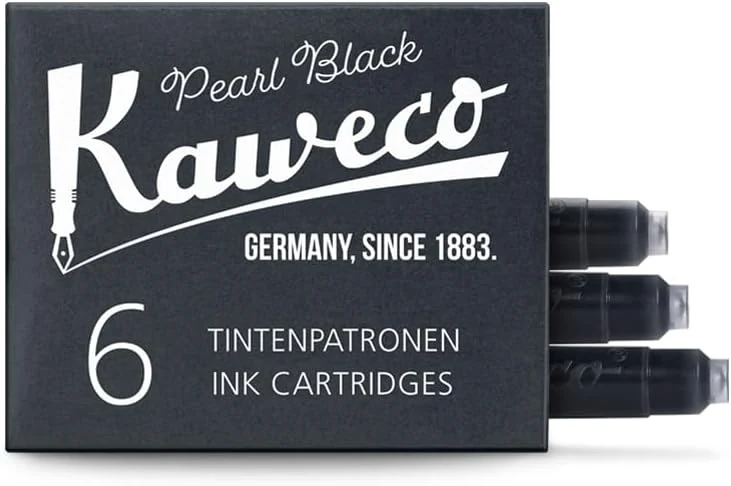
The AL Sport instead pairs with Kaweco Pearl Black Ink Cartridges —6 Pack. These are short standard-international cartridges, matching the format accepted by the Kaweco pen.
They are not interchangeable with Pilot’s proprietary Kakuno cartridges. Buy the pack that belongs to your chosen pen, carry one sealed spare and leave bottled-ink refilling for writing at home. An anonymous customer wished the Kaweco cartridges provided a larger ink supply, but that comment does not establish a measured capacity or performance comparison.
Protect the Kit in Your Bag
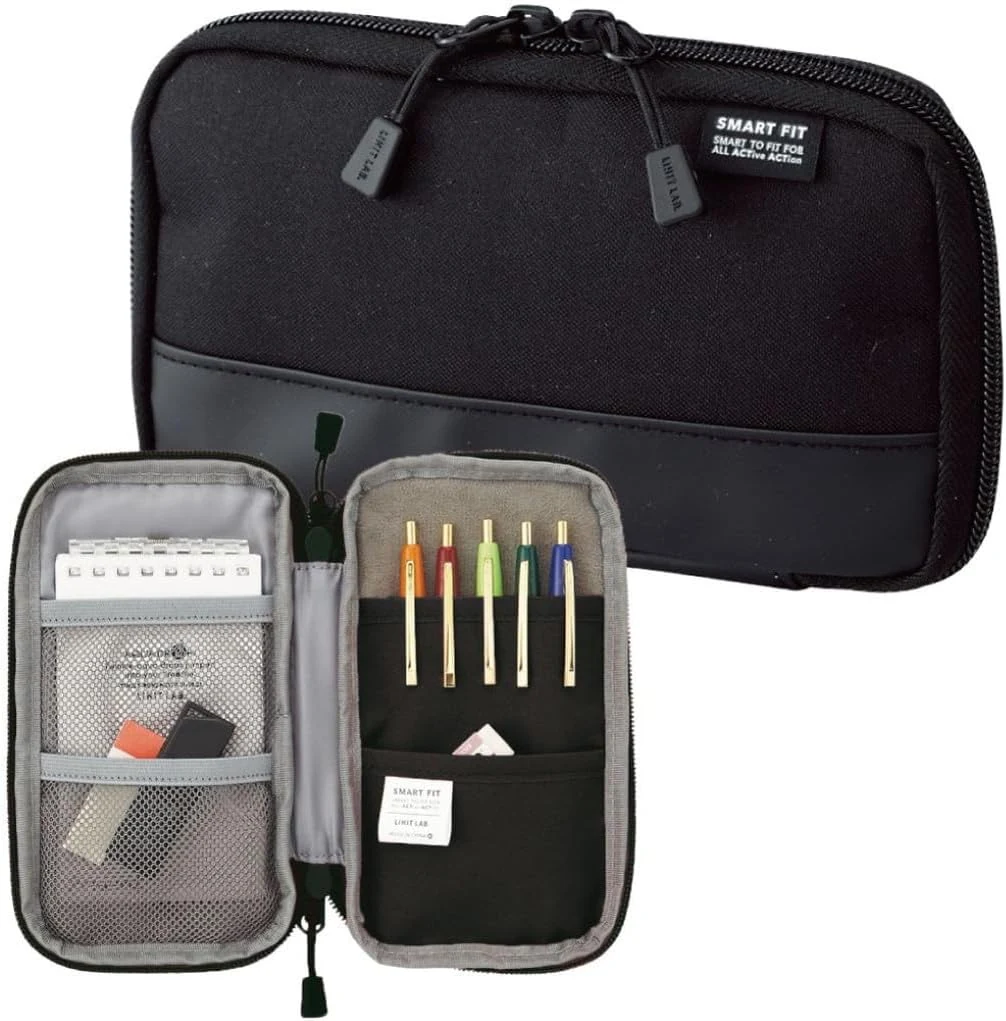
For one pen, spare cartridges and perhaps a small sheet of blotting paper, the LIHIT LAB Smart Fit Compact Pen Case — Black keeps the writing tools together without turning them into a large stationery collection. It opens like a small book, with internal pen and mesh pockets, and its listed outer dimensions are 165 by 90 by 20mm. Amazon also describes this model as water- and stain-repellent.
Those dimensions are useful for judging scale, not proof that every particular pen will fit. The A5 notebook should travel separately in your bag. Buyer Helen called the case “perfect and compact for traveling,” while Bobby said it held what was needed, although neither review specifies exact pen models.
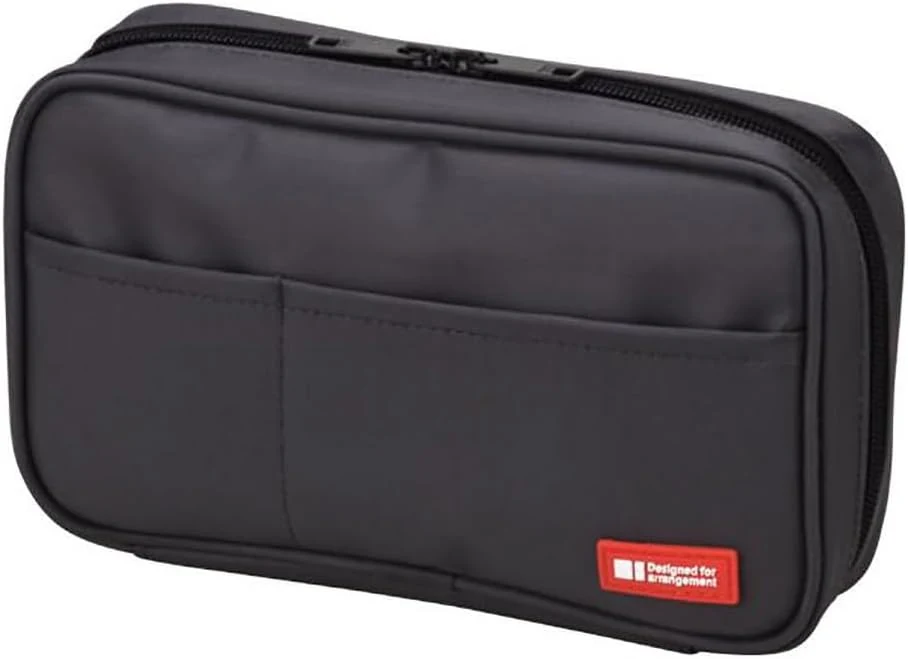
The LIHIT LAB Book-Type Pen Case — Black makes more sense if you routinely carry several writing instruments, spare cartridges and additional small tools. Multiple compartments and a middle divider provide more deliberate organisation, and the listed outer dimensions are 200 by 50 by 120mm.
Again, those are orientation figures rather than a physical fit test. Treat this as an alternative to the compact case, not as an A5 notebook holder. If your away-from-desk kit contains only one pen and a spare cartridge, its extra organisation may simply encourage unnecessary packing.
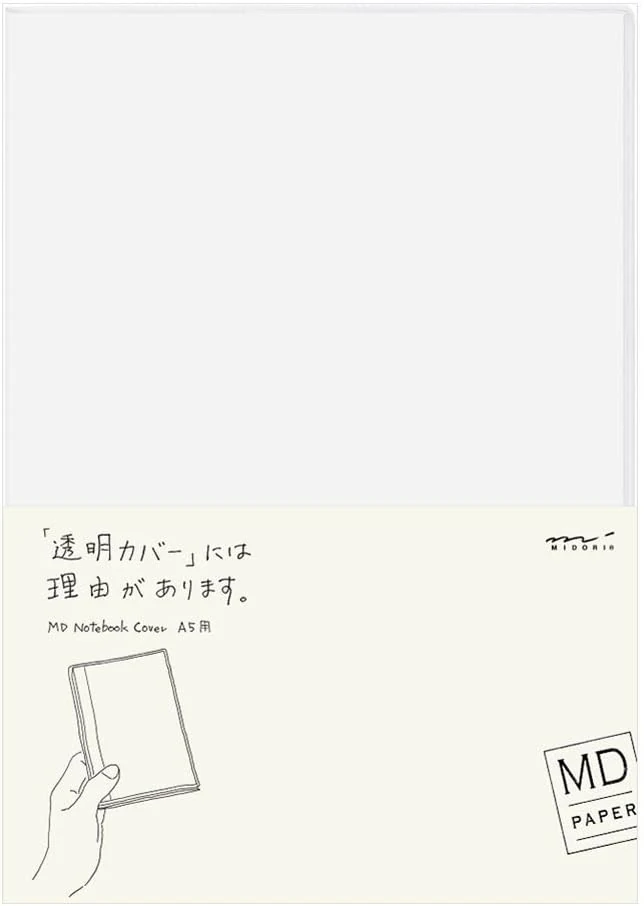
The Midori MD Clear Notebook Cover — A5 solves a different problem. It is a clear sleeve made specifically for the Midori MD A5 notebook, protecting that minimal cream cover without changing its appearance substantially. It complements the MD; it does not replace the pen case, and it is unnecessary for the already hard-covered Rhodia.
There is a pen loop intended for pens up to 10mm in diameter, but that measurement is not enough to promise either fountain pen will fit comfortably. Think of the loop as a possible bonus rather than the reason to buy the cover. Charlotte, a displayed buyer, says it “perfectly holds my midori” and appreciates the loop.
Small Helpers for Short Writing Stops
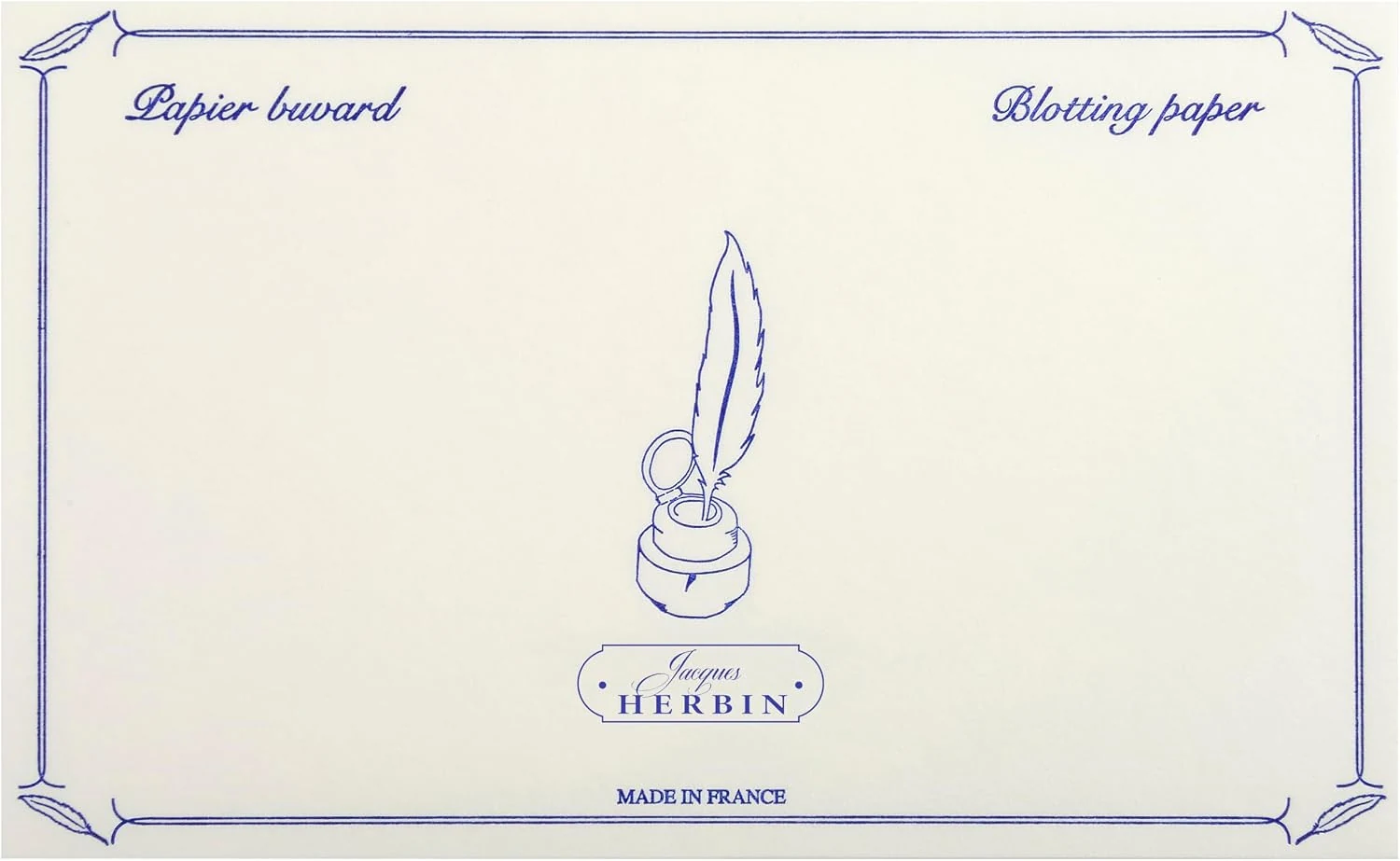
A piece of Jacques Herbin White Blotting Paper —10 Sheets is one of the few extras that directly improves a short writing stop. The pack contains 10 sheets that can be cut to fit the notebook.
Keep a cut piece between the pages or in the pen case. When it is time to leave, a practical precaution is to place it over the fresh writing before closing the notebook. Customer Gena L uses cut pieces in a pocket planner and journal while on the go, which is precisely the useful scale for this kit.
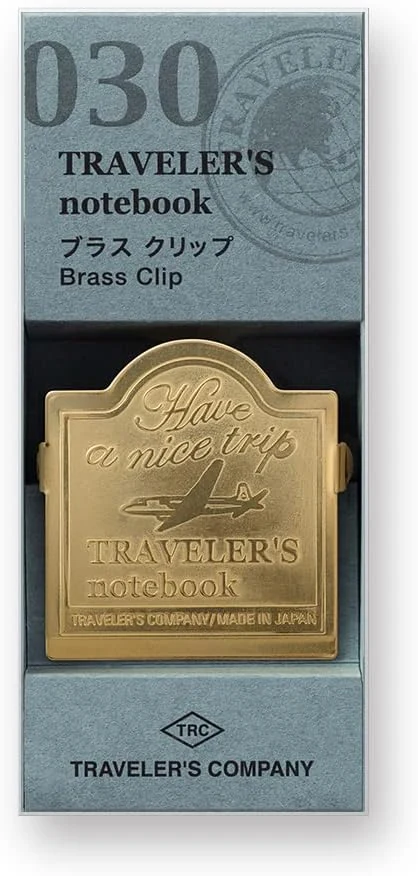
The TRAVELER’S COMPANY Brass Clip — Airplane is more conditional. This solid-brass clip is designed to hold a Traveler’s Notebook open and flat. For another notebook, consider it only as a possible page-holding aid rather than assuming the same result.
It is not essential with a cooperative, flat-opening Midori. One owner liked its page-holding ability but questioned the price and weight; another praised it for sketchbook use. Add it only after discovering that page movement is genuinely interrupting your writing.
A Light Kit to Start with
The most coherent starting combination is the Pilot Kakuno, Midori MD A5 Grid, matching Pilot cartridges, compact LIHIT LAB case and one cut-down piece of Herbin blotting paper. Add the Midori clear cover if the notebook’s soft exterior will receive rough treatment in your bag.
From there, make substitutions rather than accumulating duplicates. Choose the Kaweco AL Sport with its matching Kaweco cartridges when you want a compact metal pen. Choose the Rhodia instead of the Midori when you want a hardcover, elastic closure and pocket. Move to the larger LIHIT LAB organiser only when you carry several tools, and add the brass clip only when pages refuse to stay put.
That leaves you with what a portable journal kit should be: small enough to open beside a cup, pleasant enough to make writing feel like the point of the stop, and simple enough to pack before the rest of the day continues.