To blot fresh fountain-pen writing, lower a clean, dry area of absorbent paper onto the ink, press gently without sliding, and lift the sheet straight up. Inspect the writing before turning or closing the page; if ink could still transfer, let it dry longer or blot again with a fresh area. The important movement is contact followed by a straight lift—not a wipe across the letters.
Choose the Sheet and Test the Writing
Use absorbent blotting paper rather than assuming any spare sheet tucked into a notebook will do the job. Goulet Pens describes blotting paper as especially absorbent paper used to take up extra ink on a page without smearing it. An ordinary page insert may separate pages without absorbing enough ink for this technique. Goulet also describes a blotter as a holder for blotting paper; you do not need that holder to use a loose sheet.
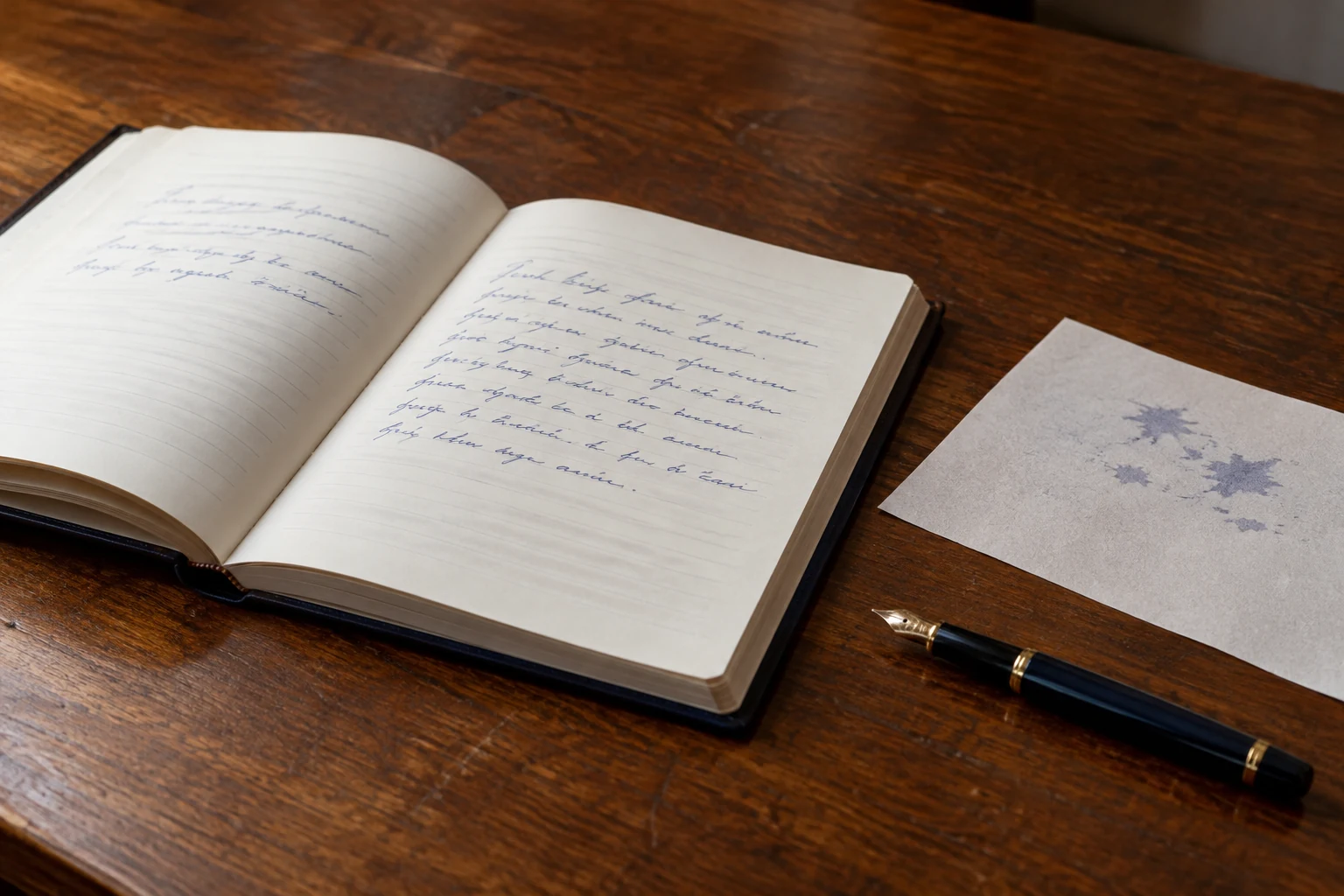
Before working on a page you want to keep, write a short trial line using the same pen, ink and paper. Leave part of the line unblotted for comparison. On the rest, try one gentle contact with a clean, dry area of your blotting sheet, then lift it straight up. Look at both the writing and the spot on the sheet that touched it. This shows you whether the sheet picks up excess ink and whether you like the result on that particular combination of materials.
Pay particular attention if your writing leaves a heavy deposit of ink or you value its shading or sheen. Removing liquid from that deposit may change its appearance; the test is more useful than a promise that the blotted and unblotted lines will look identical. It also lets you decide whether to blot immediately or simply give this writing more time to dry. There is no single wait time that establishes when every pen, ink and paper combination is ready to close.
Choose a dry part of the sheet for the page itself, even if the test patch still looks usable. Set the sheet where you can pick it up and lower it deliberately, without reaching across wet writing.
Press the Sheet Onto Wet Writing, Then Lift It Straight up
A loose sheet needs a controlled press-and-lift, not a sweeping motion. Arrange the page on a stable surface first, with the part you want to blot accessible. Keep the page from shifting as you work. Choose a clean, dry area of blotting paper large enough to cover the writing you intend to contact; if it is not large enough, work in separate contacts rather than dragging the sheet along the line.
- Position the sheet above the writing. Hold it so the chosen dry area will land where you intend. Lower it onto the fresh ink without sliding it across the letters. If the sheet lands in the wrong place, lift it away and reposition it above the page; do not push it into place while it touches the ink.
- Make gentle, even contact. Once the sheet rests on the page, press just enough to bring the absorbent surface into contact with the writing. Do not rub or bear down to force a result. The aim is to pick up excess liquid, not to leave an impression of the sheet’s texture in the writing paper or risk tearing the page. If you find yourself pressing harder because little ink is lifting, stop and inspect rather than increasing the force.
- Lift straight away from the page. Raise the sheet without pulling an edge across the letters or peeling it sideways over nearby writing. While ink is wet, sideways movement can carry it across a stroke or into a clean part of the page. A straight lift keeps this contact separate from any next one.
- Move to a fresh area if another contact is needed. Check which part of the sheet touched the ink. For the next press, choose a different clean, dry area and position it above the writing before lowering it. Do not set an ink-loaded patch back onto the page: it may return color to the writing instead of taking up more liquid. Rubbing harder with a wet patch does not make it a fresh absorbent surface.
You can make these contacts one small area at a time if that makes the placement easier to control. The point is not to cover the whole page in one attempt; it is to know where each contact will land and where the sheet has already picked up ink. If an edge threatens to brush an adjacent wet line as you lift, pause before the next contact and arrange the page and sheet for a clearer path. This flat-sheet method does not require the different motion of a rocker blotter.
Inspect the Result Before Turning or Closing the Page
After each lift, look at the writing and at the contacted area of the sheet. Ink on the sheet shows that it took up liquid, but it does not establish that every remaining stroke can touch another page without transferring. Avoid testing that by closing the notebook and hoping for the best. Instead, use the trial line and what you can see on the page to judge whether another contact is worthwhile.
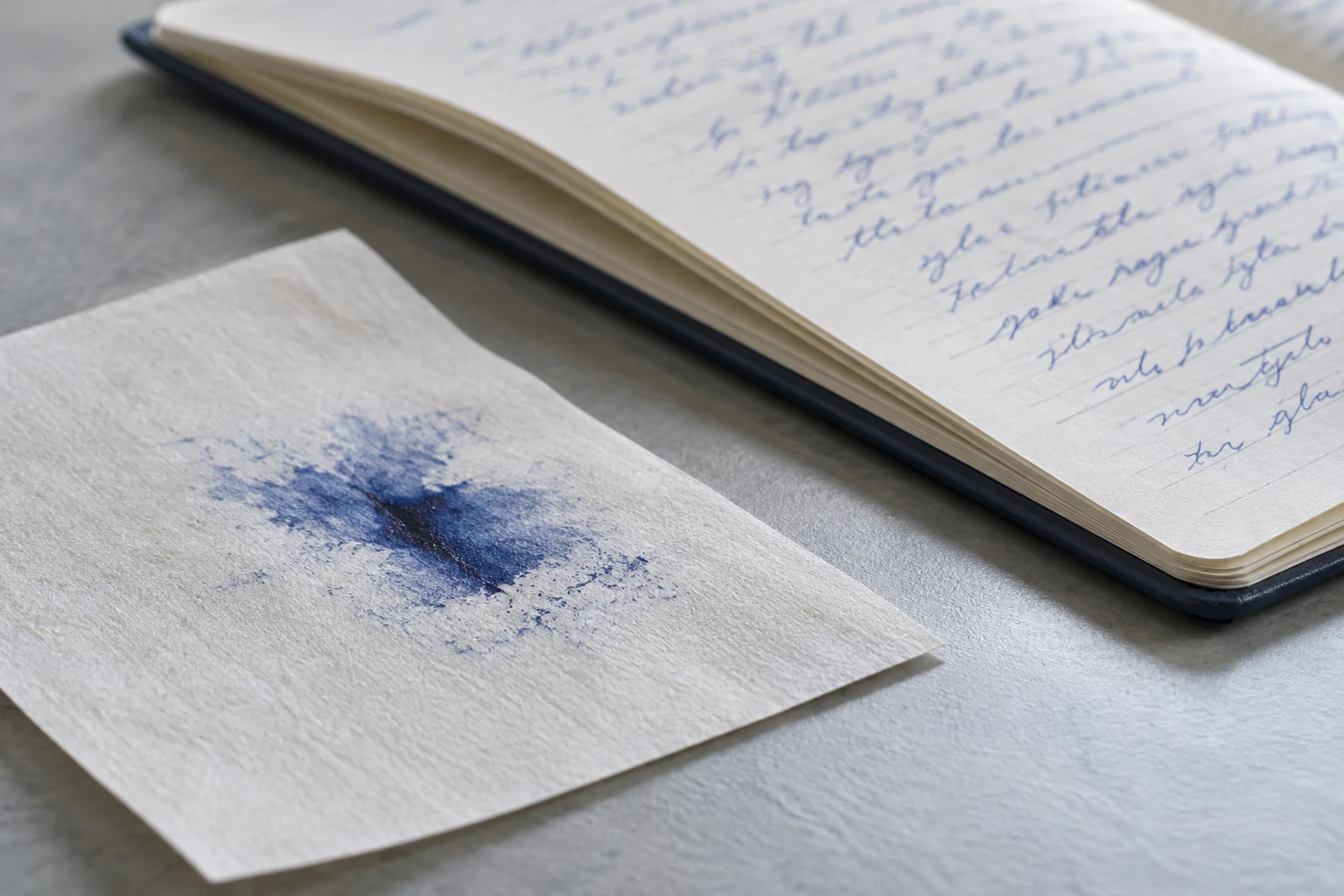
If excess liquid is still sitting on the writing, you can make another gentle press-and-lift with a fresh, dry area. If the sheet is saturated, damaged, or has no suitably clean area left, use another usable piece rather than returning a wet patch to the ink. If further blotting would risk changing a deposit you want to preserve—or the writing still transfers after a careful contact—leave the page open to dry longer. Waiting is a valid alternative to repeatedly pressing the same spot.
Turn or close the page only when the writing no longer appears likely to transfer onto the facing surface. Your trial with the actual pen, ink and paper is a better guide to that decision than a fixed number of seconds. Blotting can lift excess wet ink, but it cannot erase a smear already spread across the paper, and it does not make the remaining ink waterproof.
For the next freshly written page, keep the decision simple: use a clean dry contact area, press lightly, lift straight up, then inspect. If the writing is not ready to meet another page, wait or repeat with a fresh area before closing it.