A fountain pen’s comfort depends on more than its weight in grams. What matters is how much of the pen you hold while writing, where that weight sits relative to your grip, and whether the barrel has a comfortable place to rest. A pen that feels substantial when lifted may settle comfortably on the page; a lighter one may feel awkward if it is too short for your hand. The useful comparison is between the configurations you would actually use for a quick note, a letter, or a journal entry—not between weight figures alone.
Weight Is a Number; Balance Is Where That Weight Sits
A mass specification describes the pen in whatever configuration was weighed. Balance describes something different: how the weight is distributed in your hand while you write, as Pen Boutique defines the term. Two pens with the same listed mass can therefore feel different if their parts put more of that weight near the grip or farther behind it. Their lengths matter, too: Pen Boutique notes that the lengths and weights of a pen’s parts affect its center of gravity.
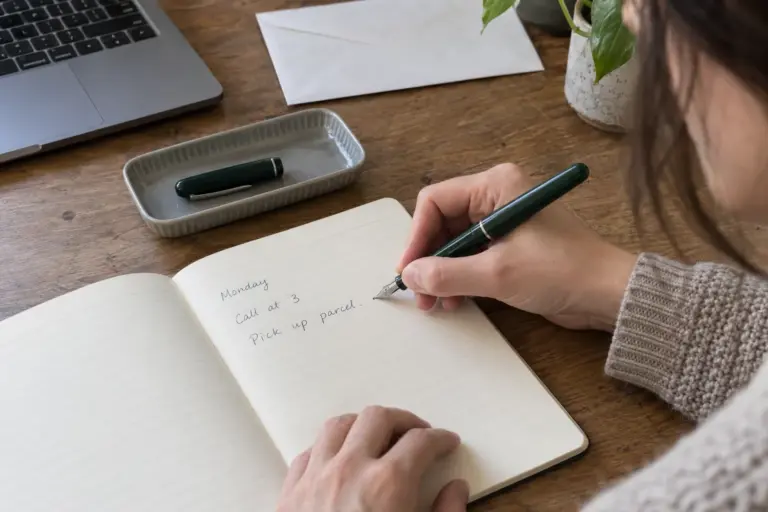
The cap makes this distinction easier to see. When a pen is closed, its listed mass may include the cap, but that figure alone does not tell you how much you will hold when writing unposted, with the cap removed and set aside. When you post the cap on the back, its weight joins the writing body and extends the pen behind your hand. Posting can change the feel substantially, in either a welcome or an unwelcome direction. It does not change the combined mass of all the pen’s parts; it changes which parts you hold and where they sit. Pen Boutique describes posting as adding both length and weight to the rear, while Goulet Pens notes that a metal cap’s weight can be significant.
Consider one bounded specification example. In Pen Boutique’s review of the coffee-brown limited-edition Otto Hutt Design 07, the fountain-pen version is reported at 61 g even when empty of a cartridge or converter. That tells you something about the reviewed pen’s heft under the stated empty condition. It does not establish the mass of its uncapped writing body, the weight of its cap, or a figure for every Design 07 variant. There is no need to guess those missing numbers to recognize that removing or posting the cap will produce different writing configurations.
Before interpreting any gram figure, ask what it includes. Is the pen closed, uncapped and unposted, or posted? Is it empty or filled, and does it contain a cartridge or converter? A posted length and an unposted length answer a different question from mass: they help you anticipate whether the barrel may reach a comfortable support point in your hand. Neither a length nor a weight figure, by itself, tells you whether your fingers will stay relaxed while the nib moves across the page. Specifications are clues to test against your usual grip, not a comfort score.
What Front-heavy, Back-heavy and Unsupported Feel Like
Judge balance with the nib on paper, rather than solely by holding the pen in the air. In your usual grip, notice whether your fingers can remain reasonably relaxed while the nib maintains light contact, and whether the barrel rests comfortably against your hand. Pen Boutique describes a reference position in which the barrel rests against the web between thumb and index finger. That is a useful picture of support for someone who holds a pen that way, not a requirement to move your grip to a prescribed spot. Pen Boutique also notes that desirable balance varies with hand size and where and how someone holds a pen.
A back-heavy tendency may feel like work to keep the nib down. Pen Boutique identifies that strain as a sign that the pen is probably back-heavy. The point is to notice the effort, not to press harder on the nib or clamp your fingers around the section to compensate. If posting introduces that sensation, compare it with the unposted feel: the cap may have added rear weight without adding useful support for your particular hand.
An unsupported barrel is a different clue. If the back of the pen lifts away instead of resting against your hand, the problem may be that the writing body is too short for your hand and grip. Pen Boutique suggests that a pen with this feel may need more length, potentially from posting. Calling it simply “too heavy” would miss the distinction: added length might improve support even though posting also adds weight. The result depends on whether that support is worth the cap’s position at the rear.
Nor does front-heavy automatically mean uncomfortable. In her review of the Kaweco Student 50’s Rock Blue, Sarah Read says its solid metal grip gave it a front-heavy feel when she lifted it, yet the pen settled into balance when she wrote with it. That is a report about her experience with that pen, not a promise that every forward-weighted section will suit every hand. It illustrates why the impression from lifting a pen can differ from its feel once the nib is on paper and the barrel is supported.
These clues describe different relationships between pen and hand. Rear weight may call for noticeable effort to maintain contact. A short barrel may leave the hand without a comfortable support point. Weight nearer the section may feel prominent in the air but unobtrusive during writing. Rather than trying to locate an ideal balance point by eye, ask which sensation appears in your normal writing position—and whether you can keep writing without repeatedly adjusting your hold.
Why Comfort Can Change Over a Writing Session
A few words are enough to reveal an obviously awkward grip, but they may not tell you how a configuration feels through your usual task. Goulet Pens distinguishes brief writing from a more sustained activity such as journaling or writing a letter. A pen that seems fine for a note may call for more effort as the page fills; conversely, a pen that initially feels unfamiliar may settle into a comfortable position once you are writing normally. The useful duration is the one relevant to what you actually do, not an arbitrary timed test.
Watch especially for repeated grip tightening. Goulet Pens says gripping harder increases hand fatigue and cramping, and that weight added to the back by a posted cap can tire the hand. Those observations do not mean every posted pen will be tiring. They give you a practical distinction to make: does the added length let the barrel rest more securely, or do you find yourself gripping more firmly to manage the rear weight? Treat the tightening as feedback about comfort, not as a technique you ought to use.
Balance also shares the writing experience with the shape and surface your fingers touch. Read describes the Student’s grip as a smooth, flared hourglass shape. She found that it could feel a little slick, yet its shape remained comfortable for her during long writing sessions. Her report supports a more specific conclusion than “its balance made it comfortable”: both contact with the section and the pen’s position in her hand mattered to her experience. A balance judgment made without noticing the grip surface leaves out part of what the writer actually feels.
A heavy pen is not necessarily an unposted-only pen, either. Writing for Pen Boutique about the reviewed Design 07, Laura P reported that a large share of its weight was in the cap and that she found it comfortable to hold uncapped. She also described its balance as comfortable with the cap posted. Those are two judgments from the same writer about two configurations, not contradictory rules. They show why cap weight alone cannot tell another person which configuration will feel better.
The same reasoning allows two conditional possibilities: a light pen can still feel too short or poorly supported for a particular grip, while a heavier pen can feel comfortable if its shape and distribution suit the writer. Neither possibility supplies a universal weight threshold. The question is whether you can write your ordinary amount with light nib contact and a grip that does not keep demanding correction—not whether you can make an uncomfortable configuration work for a few lines.
Compare the Configurations You Would Actually Write with
Start by reading specifications as descriptions of particular states, not as predictions of comfort. Identify what the published mass includes; if that is unclear, leave it unclear rather than estimating a missing cap or converter weight. Look for whether the pen posts and for its posted and unposted lengths. Pen Boutique notes that some fountain-pen specifications supply those details, though not all do. They can help you decide what to examine in hand, especially if an unposted pen looks short for the way you hold it.
Begin the comparison unposted, using your usual grip and an ordinary writing task. If possible, keep your usual paper, ink and nib consistent while comparing the two configurations of one pen, so changes in the writing setup do not obscure the difference you are trying to feel. Write a normal passage rather than only making marks to judge heft. Notice where the barrel rests, whether maintaining light nib contact takes effort, and whether your fingers repeatedly correct their position. As you continue for an amount of writing typical for you, notice whether the line feels steady to make and whether the pen remains comfortable.
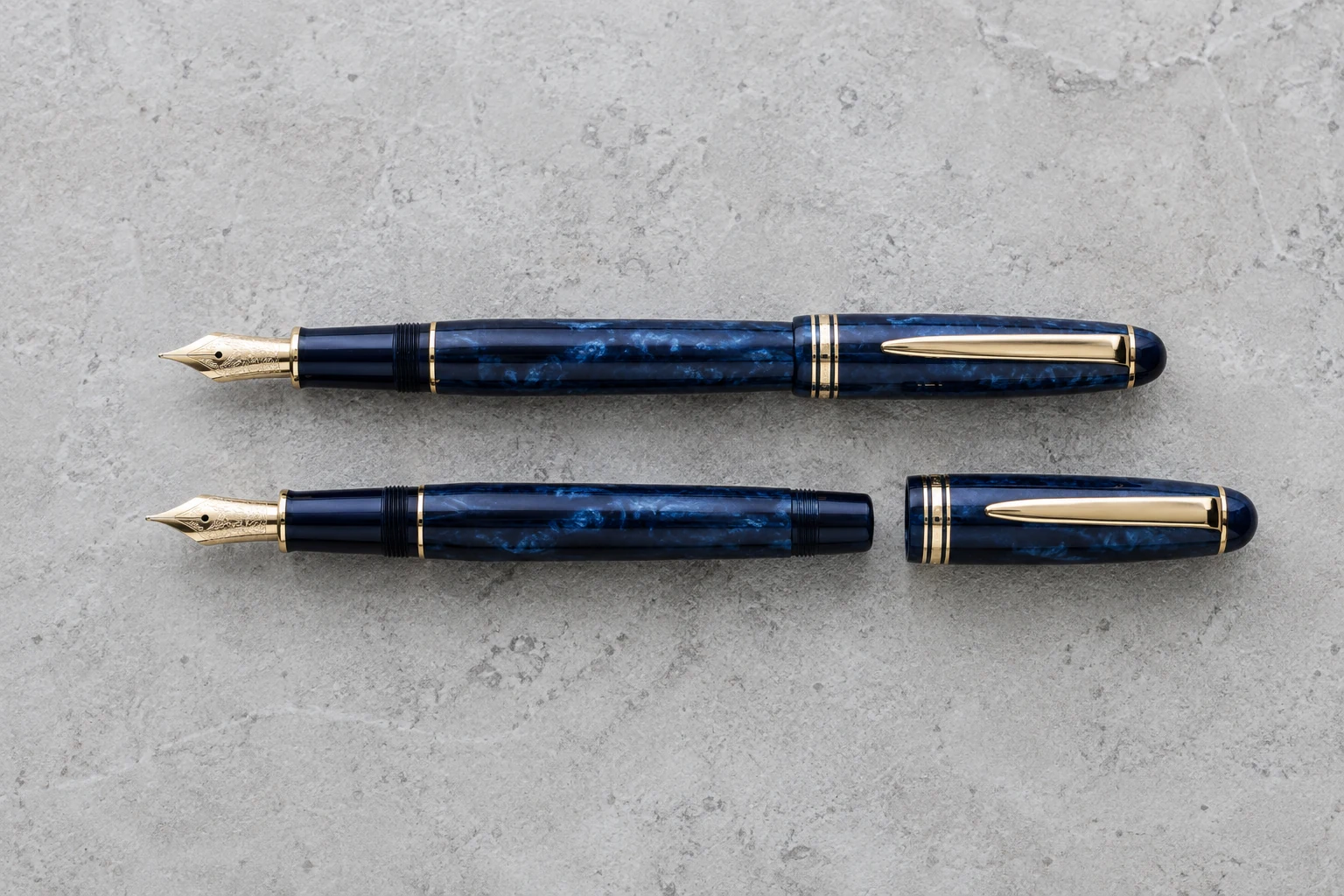
If the cap is suitable for posting, sits naturally and securely, and you accept any potential finish risk, try the same kind of writing with it posted. If posting is unsuitable or feels awkward to attempt, assess the pen unposted; a comparison is not worth forcing the cap into place. Pen Boutique’s broad suggestion is to try a pen both ways rather than posting automatically. In your comparison, the question is narrower and more useful: did the extra length give your hand support, and did the cap’s rear weight introduce effort you did not have before?
Read’s Student offers an example of why both effects belong in the judgment. She found its unposted length just right for her. It did post, but not deeply; she found the cap’s added length and weight awkward when posted and noted that she has very small hands. Her conclusion describes her fit with that pen, not what someone with a different hand or grip must feel. For another writer, added length could address an unsupported barrel; for Read, the unposted pen already supplied the length she wanted.
When comparing different pens, be more cautious about crediting or blaming their gram figures. Section width and surface may change how securely your fingers rest, and a difference in nib flow may change the writing experience as well. Treat those as possible differences to notice, not as evidence that weight caused everything you felt. Comparing posted and unposted versions of the same pen keeps more of the writing setup alike, while still revealing how much the cap’s placement matters to you.
Choose unposted if the rear cap adds effort without useful support. Choose posted if its length supports your hand and the resulting balance stays comfortable through your normal writing task. If neither configuration feels right, there is no obligation to pick a heavier, lighter, posted or unposted winner. The best evidence for your choice is how the writing-ready pen behaves in your hand for the writing you actually do.