Yes—a fountain pen can be practical for everyday school writing if it keeps up with the student’s pace, works on the required paper, is easy to supply and carry, and is permitted for the task. It does not have to be the right pen for every class. A comfortable pen that produces clear notes may still smear when pages must be turned quickly, or be unsuitable for an exam with different instructions.
The useful question is not whether fountain pens are “school pens” in general. It is whether one particular pen, nib, ink and page combination works through this student’s ordinary day. Start with the day’s writing tasks and rules, then try the setup under conditions that resemble them. Keep a permitted conventional pen available for the tasks it handles better.
Start with the School Day, Not the Pen
“School writing” covers several different jobs. A student learning letter shapes may write a few careful lines at a time. A student in a long lecture may need to keep writing, turn pages and resume without waiting for ink to dry. Marked work might have to be submitted on a particular worksheet; an exam may specify the writing instrument or ink colour. Occasional wet lab work raises a different question from ordinary desk notes. The pen and notebook also have to make it through the trip in a school bag.
Map those tasks before judging the pen. Which pages must be used, and which can the student choose? Where does writing happen slowly enough to let a page dry, and where must the notebook close immediately? Which assignments require writing on both sides of a sheet? A fountain pen can pass the daily-notes test without passing every one of these other tests.
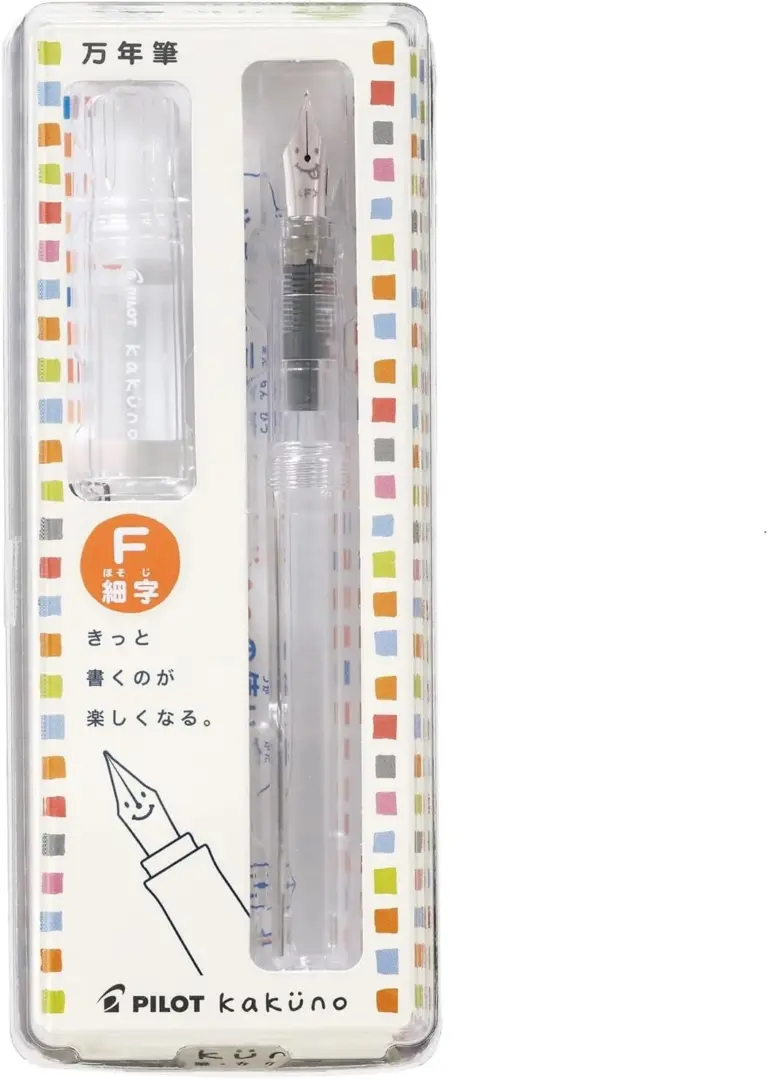
LAMY distinguishes writing stages in its school-pen descriptions: it positions the abc for children learning to write for the first time and names the nexx M, safari and AL-star for children with more writing experience. Whether any of those pens suits a particular hand, worksheet or timetable still requires trying it under the student’s actual conditions.
Permission is a separate test. Check the actual teacher’s, institution’s and exam’s instructions for permitted pens, required ink colour and any pencil requirement. Do not infer an exam rule from what is allowed in daily notes, or assume that every school or exam uses the same rule. If an assignment calls for a pencil or another implement, use that implement for the assignment. A rule-compliant conventional pen can also cover an exam or an unexpected failure without requiring the student to give up a fountain pen in classes where it works.
That gives the decision a useful shape: identify where the pen is allowed, then ask whether it performs under the pace, page and handling conditions of those tasks. A school label does not answer either question. Nor does an enjoyable short writing sample establish that the pen will remain practical through a full class.
Find a Grip and Nib That Work at Class Pace
A fountain pen should be judged in the hand that will use it. Goulet Pens describes a starting position: hold the grip where it feels comfortable above the nib, keep fingers off the nib, and write with the nib facing up and the feed underneath toward the paper. The grip should be firm enough for control without squeezing tightly. Goulet also associates gripping harder with greater hand fatigue and cramping while writing.
That is a starting point for ordinary contact with the page, not an instruction to force every hand into one shape. With the actual pen and nib, try the sort of writing the student normally does: careful letters if that is the task, or a normal stretch of notes at the usual pace if notes are the task. Can the student keep the pen under comfortable control? Do the letters stay distinct, with spaces that make the page readable later? Does the pen continue to make clear marks without repeated faint or skipped strokes?
A few attractive lines written slowly cannot answer those questions for a fast class. Conversely, a student learning letters need not judge the pen by lecture-note speed. Test the writing that matters, for long enough to notice whether the hand remains comfortable through that normal task. The aim is practical legibility and control.
Nib width matters in combination with ink and paper. Goulet notes that when paper is absorbent, a pen depositing more ink is more likely to produce feathering—spread at the edges of strokes—or bleed-through to the back. It suggests trying a finer nib in that situation. A finer line is therefore one possible adjustment if the required paper spreads ink. It is not a mandatory choice for school, and it does not establish that every ink will dry quickly or that the narrower nib will feel right to this student.
If strokes look faint or skip, first notice whether the nib is making its normal contact with the page while the student writes comfortably. If clear writing requires squeezing, awkwardly holding the pen or deliberately falling behind the class, that is a poor fit for the task. A suitable adjustment already available—such as a different compatible ink or nib option—can be tried separately. If the difficulty persists, use another pen for time-critical work rather than making an uncomfortable grip or slower pace the price of using a fountain pen.
Make Drying Time and Ink Supply Fit the Timetable
Ink is practical only if the writing remains usable when the class moves on. Goulet Pens identifies three contributors to drying time: the ink’s formulation, how much ink the pen and nib put down, and the paper’s absorbency. Less ink on the page or more absorbent paper can shorten drying time, but that does not make any particular fine nib, ink or sheet a guaranteed quick-drying combination. The relevant observation is whether the student can turn a page, rest a hand near the writing or close the notebook at the moment the timetable requires.
A student account published by The Pen Addict in December 2010 shows why that distinction matters. The unnamed writer described physics notes in a side-stapled, approximately A5 Rhodia notebook while using Private Reserve Velvet Black ink. They reported ink that dried too slowly, smeared and was too water-soluble for their use; smudging and distraction appeared among the problems described with the notes. They concluded that gel pens would be better for taking those notes. The account does not identify the fountain pen or nib, so it cannot establish how another pen—or a current version of any named product—would perform. It does show a sensible task-specific decision: when the page and pace made note-taking troublesome, the writer chose a fallback for note-taking.
Supply creates another kind of interruption. Before a school day, start with a filled pen or know that enough ink remains for the intended work. Find out how that particular model is supplied: does it take a compatible cartridge, use a converter, or have another filling arrangement? If a spare is useful, it must be compatible with the actual pen and secured for carrying. Plan any refill for a convenient break, following the model’s instructions, rather than depending on a bottled-ink refill in the middle of urgent classwork or a test. No fixed writing time can be assumed from the word “cartridge” or from a pen’s school-oriented description.
Compatibility is model-specific. LAMY states that its abc includes a blue T 10 ink cartridge; that is an example of a named pen and cartridge, not a claim that cartridges fit universally. A different low-interruption arrangement appears in Goulet Pens’ 2019 student-pen discussion: it describes the Pilot Varsity specifically as pre-filled, so filling it during class is unnecessary. That description should not be transferred to every student pen or to the abc.
Give the backup a defined job rather than treating it as an admission of failure. A conventional pen permitted under the local rules can take over when the fountain pen unexpectedly runs out, a page is still smearing when it must be handled, or the task calls for ink or an implement the fountain pen cannot provide. The student can then return to the fountain pen where the combination has proved workable.
Test the Required Page and the Normal Carry Routine
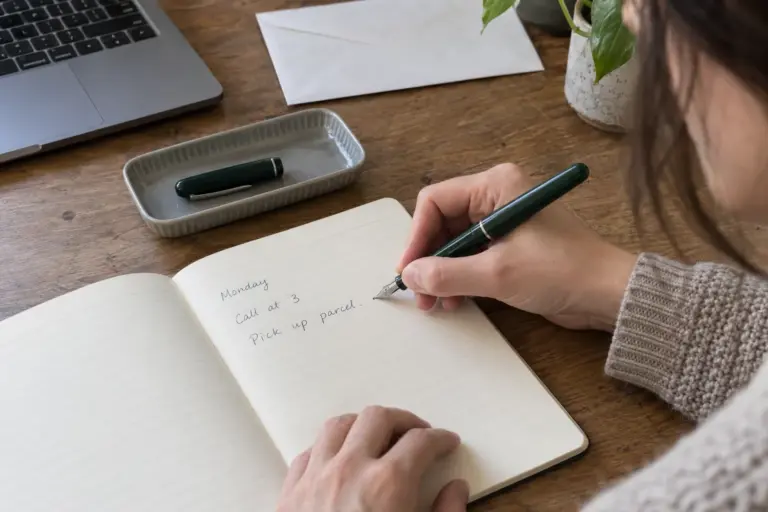
Paper can change both the look of a line and when it is safe to handle. The most useful trial therefore uses the actual pen, nib and compatible ink on the worksheet or notebook required for class. Write a normal amount in a comfortable hand position at the usual pace. Include the kinds of words, numbers or diagrams the student must actually produce. Turn the page when they ordinarily would, write on the back if the class requires it, and close the notebook at the point a real lesson would end. A large, carefully dried ink swatch does not answer those school-day questions.
Inspect the result in practical terms:
- Legibility: Are letter shapes and spaces still clear at normal speed? Are any strokes faint or skipped?
- Edges and reverse side: Do stroke edges spread into feathering? Has ink passed through the sheet, or is writing merely visible from the back? If it is visible, can the reverse side still be used?
- Handling: Does the student’s hand smear fresh writing? Does a turned page or closed notebook pick up ink before the class would reasonably wait for it to dry?
Those observations distinguish problems that are easy to lump together. Ink visible through a sheet is not the same as ink passing through it; a page with some show-through may still work on both sides. More absorbent paper may take ink in quickly and shorten the wait before handling, yet Goulet warns that a heavier ink deposit on absorbent paper raises the chance of feathering or bleed-through. As a working interpretation of the trial, a crisper line on a less absorbent page is no victory if it remains wet when the notebook must close.
Jeff Abbott’s 2014 review of a Kokuyo Campus Twin Ring notebook illustrates why the exact combination matters. He found its fairly absorbent paper quick-drying and saw no feathering with the inks he tried, though he did not identify every pen–ink pairing. He observed some show-through but still found the back usable, including in his wide-nib writing. Those are observations about his writing on that notebook, not a guarantee for other inks and not a reason every student must buy that paper. They suggest useful questions for any required page: does it dry in time, and is the reverse side usable for this student?
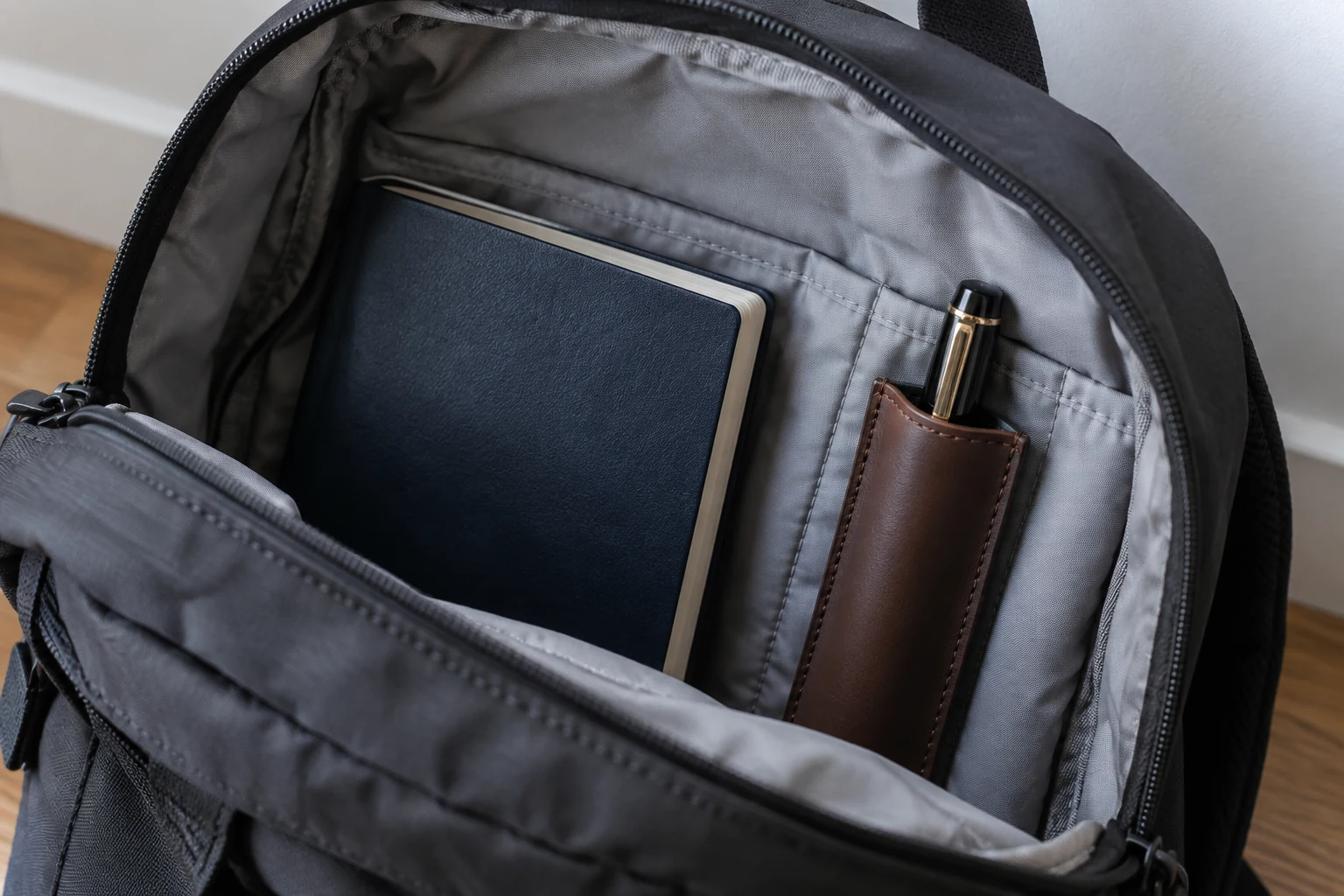
Then test the ordinary journey. Close the pen’s cap properly when it is not in use and secure the actual pen in a suitable case away from loose items. Put the notebook where it is protected from damage and keep it apart from wet items. Try that normal carry routine. Abbott expected the notebook he reviewed to struggle in a harsh backpack filled with textbooks and suggested a separate Kokuyo Systemic cover for protection. If the student’s notebook faces a similar trip, check whether a separate cover fits or choose another suitable way to protect it.
If the trial fails, change one available variable at a time and repeat the part that failed. A compatible ink, a suitable nib option or a permissible page choice might change the result; Goulet likewise describes trying different pen, nib, ink and paper combinations. But assigned paper may not be negotiable. If it still smears or bleeds with the workable options at hand, choose the backup for that assignment rather than forcing a grip or pace the student cannot comfortably sustain.
Choose Where It Earns a Place—and Where the Backup Takes Over
The positive verdict is straightforward: a fountain pen is a practical daily school pen when the student’s normal writing stays legible at pace, the hand remains comfortable through the real task, required pages and page turns work, compatible ink is available, the pen and notebook travel well in ordinary carry, and local rules allow it. That is a verdict about a tested setup under known conditions, not about every fountain pen or every school day.
Consider two hypothetical students. An early writer has time for permitted letter practice and finds a fountain pen comfortable on the assigned practice page. It may fit that activity, even if another lesson requires the prescribed pencil. A more experienced student may take clear daily notes with a fountain pen but face a lecture in which rapid page turns smear the required notebook. That student has a reason to use a permitted conventional pen for the lecture—or to reserve it for an exam that specifies a different implement—without abandoning the fountain pen for slower notes.
Wet work or an unpredictable class deserves its own decision. If exposure or frequent interruptions defeat the tested arrangement, use the permitted backup for that task. Success in a quiet writing period does not erase that problem; failure in a wet or rushed period does not mean the pen is useless elsewhere.
A workable school setup is modest: a pen and nib the student has actually used at class pace, a known source of compatible ink, pages that remain usable under the required handling, a protected way to carry pen and notebook, and a rule-compliant backup. If those conditions hold, the fountain pen has earned a place in the day. If one fails for a particular class, let the backup take that class.