A scratchy nib does not automatically need adjustment. First record when and where it catches. Then change pressure, hold and paper one at a time; check ink availability and clean only as your pen’s maker permits. Finally, look at the nib without touching its tines or feed. These checks may reveal a comfortable writing condition or give a seller useful information about an unresolved fault. If the tip is visibly damaged or the nib catches hard enough to damage paper, stop testing and ask the seller or a nib professional for help. The aim is to learn what changes the symptom, not to repair the nib yourself.
Record What the Nib Does Before Changing Anything
Write down the pen and nib you are actually using, the compatible ink or cartridge in it, and the paper on which you noticed the problem. Note when the scratchiness began. Was the pen new, had you just changed ink, or had it been dropped? If you do not know, record that rather than guessing. These details establish a baseline: a later result is much easier to interpret when you know which conditions stayed the same.
Before making test strokes, look for an obvious bent or broken tip. If you see one, stop and contact the seller or a professional. Otherwise, on the troublesome paper, use light, normal writing contact—not extra pressure to make the problem appear. Make a short downward, upward, leftward and rightward stroke, then strokes in both diagonal directions. Write an ordinary word at your usual pace. LarryPOST recommends checking feel in these directions and noting whether ink flow falls off in any direction.
For each stroke, distinguish the feel from the ink mark. Does it offer fairly even, pencil-like resistance, or does a sharp edge snag? Does the line become faint, skip or remain consistent? LarryPOST describes ordinary feedback as potentially noticeable, especially with a finer nib, but even rather than sharp or scratchy. That distinction is more useful here than deciding whether the pen feels perfectly smooth.
Record the particular direction of a catch instead of writing only “scratchy.” Goulet says scratchiness mainly in one direction is likely an alignment clue. It is not proof from a remote writing test: the paper, ink and way the pen is held can also matter. Treat the direction as information to carry into the later checks, not a reason to move the tines.
If a stroke tears, scores or otherwise damages the paper, do not repeat it to confirm the result. Stop and contact the seller or a nib professional. The same applies if a bent or broken tip becomes apparent during the test. A single clear observation is enough for a useful report; further strokes risk turning a symptom check into more damage.
Change Your Hand and Paper One Variable at a Time
Keep the baseline ink and paper in place for the hand checks. Repeat only the short strokes that were safe to make, plus a normal word, with a lighter hand. Note whether the same direction still catches and whether the line still looks faint or interrupted. Pure Pens says excessive pressure can make even a well-tuned nib feel scratchy. If lighter contact helps, you have found a potentially workable way to write; you have not established that the nib itself is flawless.
Next, if your usual hold is unusually upright, try a comfortable, slightly less upright hold as a separate trial. Do not combine it with a deliberate change of pressure or prescribe yourself a fixed angle. Pure Pens identifies an upright hold as another possible contributor to scratchiness, while Goulet notes that writing angle changes the pressure placed on the nib and tines. The useful question is whether a comfortable change improves your ordinary writing—not whether you can hold an awkward position long enough to pass a test.
Then return to your normal, gentle contact and check for roll: rotation of the pen around the barrel’s long axis as you write. You might begin a word with the nib contacting the paper evenly and turn the barrel without noticing. Goulet describes this as a writing variable some people do not realize they have. Try restoring gentle, even contact and write a word, without pressing down or trying to correct the nib. Record whether the snag changes. This is a check of how the pen meets the page, not a requirement to retrain your grip.
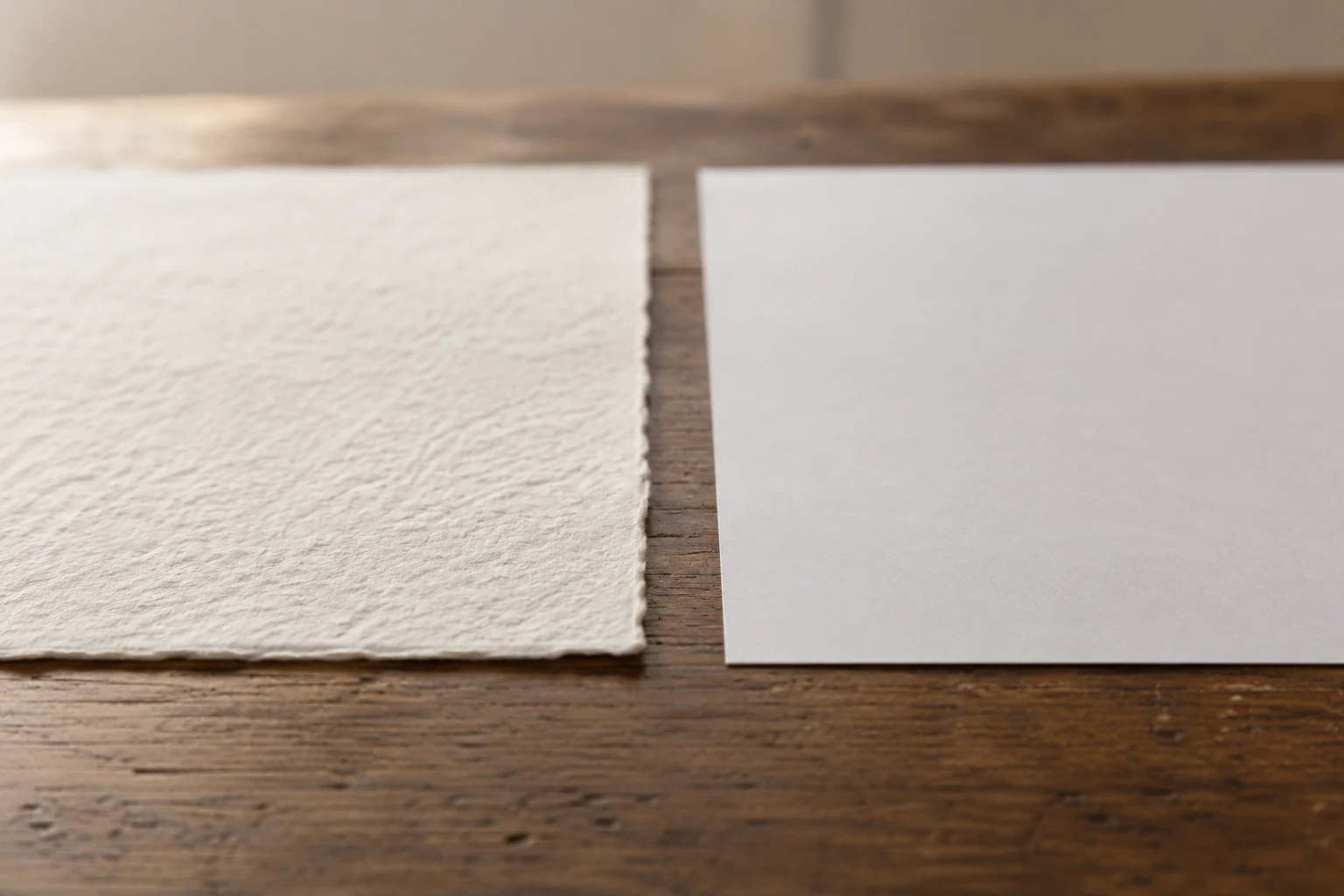
For the paper comparison, keep the pen and ink the same. Use the same safe strokes and an ordinary word on the troublesome sheet, then on familiar, smoother paper that works well with fountain pens, if you have some. Goulet notes that felt feedback can refer to the paper as well as the nib, and that smoother, more ink-resistant paper can improve how a fountain pen feels. If the snag appears only on one sheet, that gives you a practical paper choice; it does not prove that every other sheet will work or that the nib has no issue.
After each trial, note one change and its result: “lighter hand; same ink and paper; left stroke still catches,” for example. Return to the baseline where practical before changing another variable. If a comfortable hold or paper eliminates the problem in normal writing, you can use that condition and keep the note in case the symptom returns. If the sharp, directional catch remains unchanged, move to the next applicable check—or contact the seller now, particularly if the pen is new. You do not have to keep writing with a nib that catches to complete every trial.
Check Ink Availability, Then Clean Before Comparing Supplies
Take this branch especially when scratchiness accompanies a faint line, skipping or unusually dry resistance. Pure Pens lists too little ink reaching the nib as a possible source of a dry, scratchy feel. A sharp catch with a consistent ink line may call for a different next step; cleaning is not a test that can settle every nib concern.
First check the ordinary facts you can verify without forcing anything: is there ink in the cartridge or converter, and is the installed supply seated as your pen’s maker instructs? If you are unsure how your model fits together, consult its instructions rather than experimenting. Do not force a cartridge, twist or remove the nib and feed, or treat resistance from the hardware as permission to apply more force. Record what you found, including uncertainty.
Before trying a different ink supply, clean the pen by a method approved for your actual model. Goulet recommends cleaning before changing diagnostic variables; LAMY also notes that a LAMY pen that scratches or has interrupted flow may need cleaning before nib replacement is considered. Neither statement makes one cleaning procedure suitable for every pen.
For a bounded example, LAMY’s converter FAQ describes filling the converter with water or ink and flushing the system several times to remove encrusted ink. It specifically says not to add soap or detergent to the water in that procedure. Follow that guidance only where it applies to your LAMY setup; otherwise use your own maker’s instructions. There is no need here to improvise a soaking time, water temperature or disassembly step.
If feasible after maker-approved cleaning, refill with the same compatible ink used for the baseline. Retest the previously safe strokes and a word on the same paper, with your normal gentle contact. Compare this result with the original: did the line become more consistent, did the dry resistance ease, and did the directional catch change? Holding the ink and paper steady makes the cleaning result more informative than cleaning and switching supplies together. If the pen writes comfortably now, you have a useful result without needing to buy or try anything else.
If symptoms remain and you already have a suitable alternative, make a separate comparison using one compatible different ink, cartridge or converter, as applicable to the pen and its maker’s instructions. Do not change all three, or change paper at the same time. LAMY advises thoroughly rinsing a pen with water before filling it with a new ink colour; that advice concerns a new-colour fill, not a universal instruction to replace supplies. A different supply is optional, not a required purchase.
If writing improves with a wetter ink, flow is implicated, as Pure Pens observes. That result does not establish that the nib’s metal geometry or tipping is flawless; it tells you that the tested combination writes better. If faintness persists, record it for a seller or specialist. If the ink line improves but the sharp catch remains, keep those outcomes separate and proceed to non-contact observation—or stop and contact the seller.
Look at the Nib Without Adjusting It
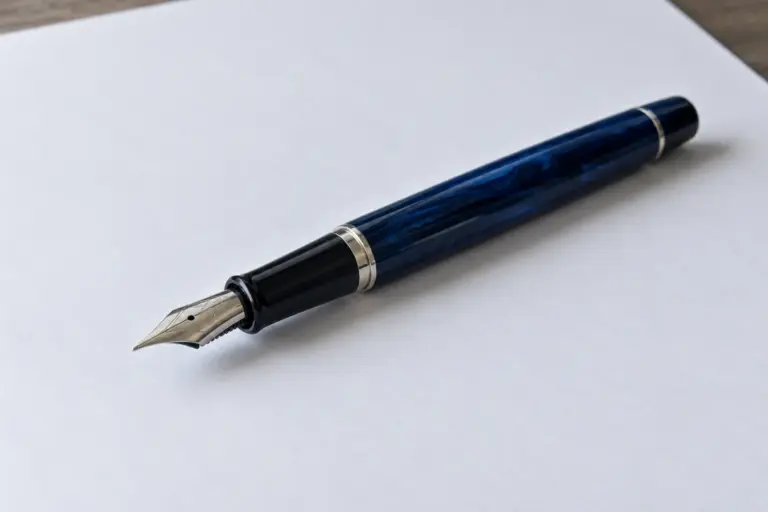
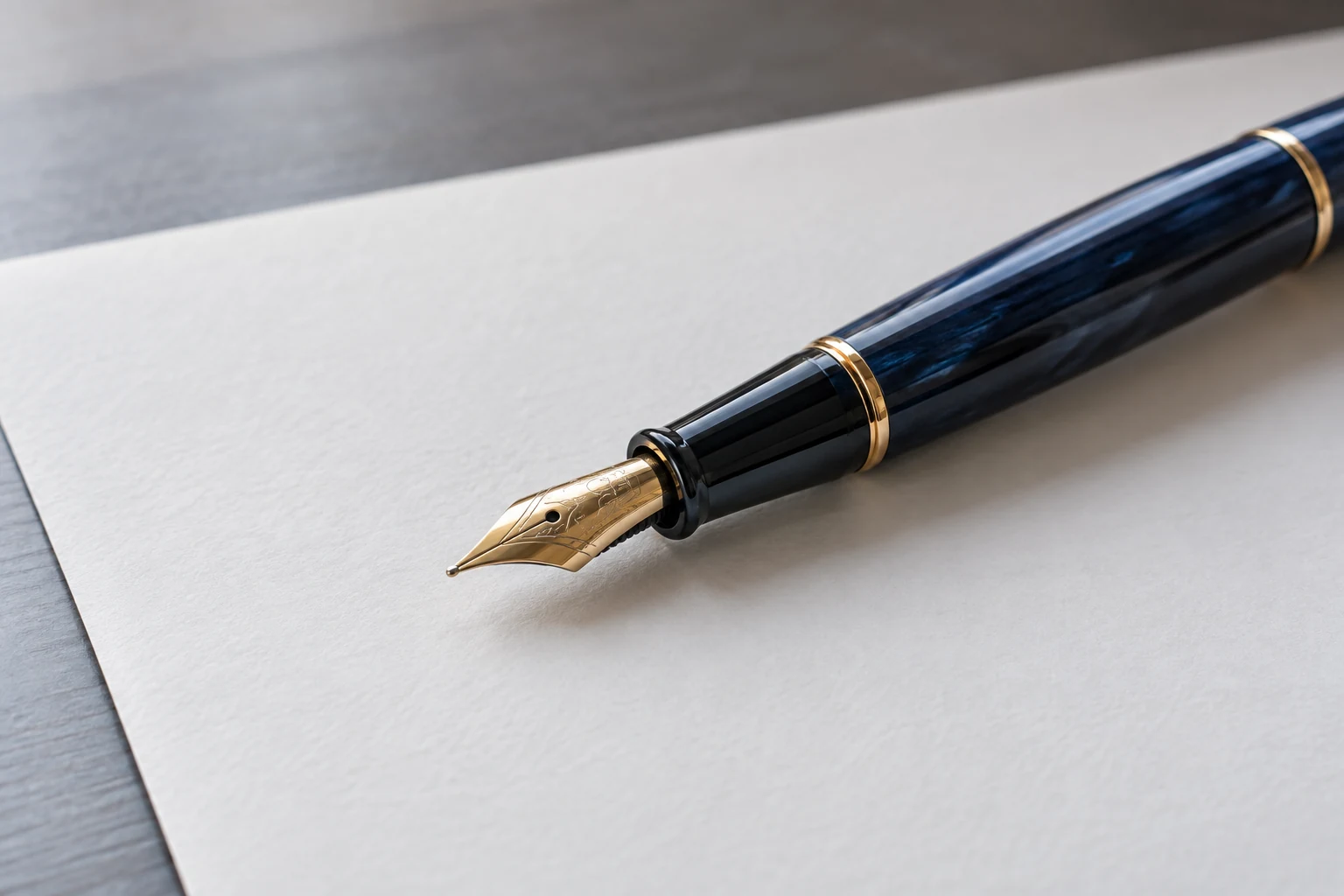
Take the pen off the paper before looking closely. Do not touch, bend or reposition the tines or feed. If you already have magnification, use it; a loupe purchase is not a prerequisite. Look across the writing contact surface and the two tine tips, rather than relying only on a view from above. Note whether one tip appears higher or lower than the other. Goulet recommends looking across the writing surface for alignment, and LarryPOST describes comparing tine heights under magnification. Also note whether the feed—the part beneath the nib—appears centred, as LarryPOST advises. These are observations to record, not adjustments to make.
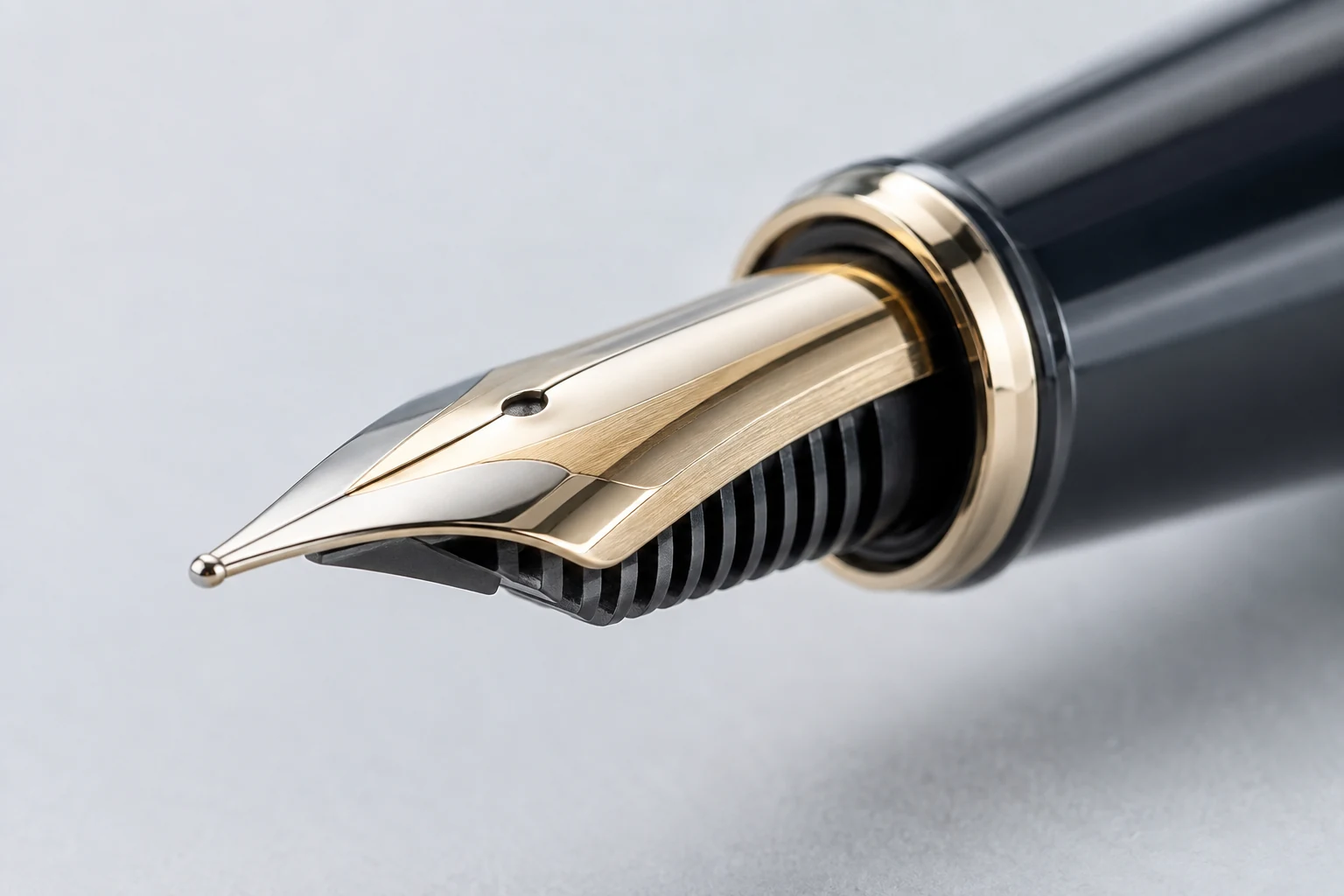
Compare what you can see with the directions recorded at the start. Goulet says a lower tine can drag on the page when the tines are uneven. LarryPOST describes a lower-looking tine potentially catching on horizontal or diagonal strokes toward the opposite side. If your record contains a similar directional catch and you see an apparent height difference, the two observations may be worth reporting together. They still do not amount to a certain diagnosis from your desk. If earlier strokes damaged paper, do not write again to confirm what you see.
An ordinary top-view photograph has limits. It may show the general position of the nib and feed, but it cannot guarantee that the writing contact surfaces meet the page evenly or establish the quality of the tip’s grind. Goulet notes that a grind imperfection can cause trouble even when the tines, nib and feed appear properly aligned. Conversely, if the tips look level to you, do not dismiss the symptom: paper, ink flow, writing position and an issue you cannot see remain possible.
Record a plain observation such as “tips appear level from my view” or “one tip appears lower; I have not adjusted it.” If an easy photograph shows what you saw, save it for the seller or professional. Avoid presenting a photograph as proof of either a defect or a clean bill of health. The value of this check is that it preserves the pen’s condition while giving the next person a specific concern to assess.
Stop Testing and Make a Useful Repair Request
If the pen now writes comfortably with a lighter hand, a comfortable hold or suitable paper, you have a workable condition. Use it if it suits your normal writing, and keep the baseline note so you can recognize a later change. If cleaning resolved dry resistance, record that result too. None of these improvements requires a verdict that the nib is perfect.
Seek advice from the seller, the pen maker or a nib professional if a sharp catch persists after the applicable reversible checks, or sooner if there is visible damage. Pure Pens identifies sprung tines, damaged tipping and issues with vintage nibs as matters beyond do-it-yourself repair. Uncertainty about a valuable or vintage pen is itself a good reason to stop rather than experiment. If the pen is new, contacting the seller before any manipulation is a sensible early path; Goulet explicitly tells its own buyers to reach out before attempting manipulations. You need not exhaust every test first.
Leave polishing, tine bending and feed work outside this sequence. Goulet warns that overdoing abrasive Micro-Mesh work could permanently damage a nib. Changing the position of tines or feed is likewise not one of these reversible checks. When the nib itself is the problem, Goulet names replacement or professional tuning as possible outcomes; deciding which is appropriate belongs in the seller or specialist conversation, not in another home trial.
A short record is more useful than “it scratches.” Hypothetical handoff log:
> Pen and nib: [model and nib, as marked or known]. Supply and paper: [compatible ink or cartridge]; [paper]. Onset: [when noticed; new pen, ink change or drop, if applicable]. Baseline: light strokes catch on the leftward diagonal; flow stays consistent; ordinary words also catch. One-change trials: lighter hand, same ink and paper—catch remains. Comfortable less-upright hold, same ink and paper—catch remains. Familiar smooth paper, same pen and ink—catch remains. Cleaning: [maker-approved method performed, or “not attempted; maker instructions unclear”]. Off-paper view: [observation, or “could not tell”]; photograph available if useful. Decision: stop rather than repeat the catching strokes.
Use only the fields and trials that actually apply to your pen; an unperformed check should never become a claimed result. A comfortable, repeatable writing condition is one useful ending. A documented sharp catch that remains unresolved is the other: it gives a seller or professional a clear symptom to assess without asking you to risk further damage.