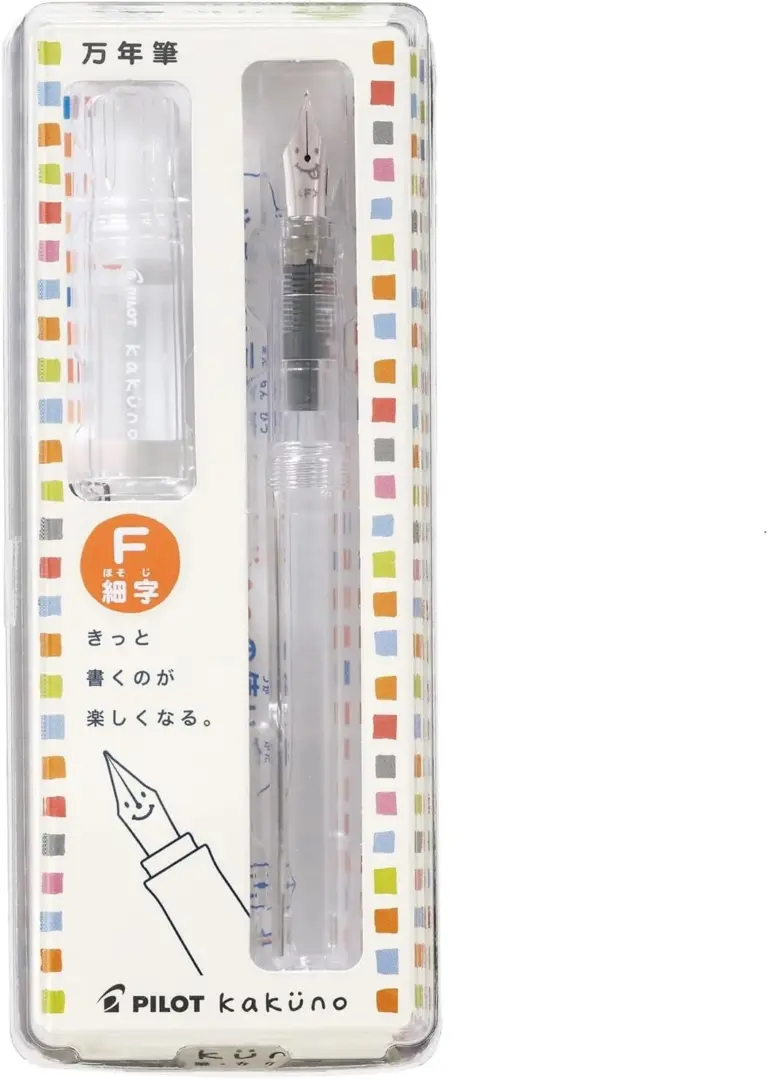
To start a fountain pen collection, begin with one pen—or choose a first pen you can learn from. Use it for your ordinary writing, notice what you enjoy and what gets in the way, then add something only when you can name the purpose it will serve. That purpose might be a different writing task, a new filling routine, or simply a body design you want to own. There is no number of pens you need to reach.
The useful question is not “What should a collection contain?” but “What would this particular addition give me, and can I comfortably use and care for it?” A short record of your writing, costs and pen care will help you answer that question without turning a hobby into an obligation.
Set a Purpose and Limits for Your Collection
Write one collecting aim in your own words before looking for another pen. Make it specific enough to guide a choice, but small enough to test. For example:
- “I want a pen for everyday notes and, if I need it, a different line for larger writing.”
- “I want to learn whether another grip or balance feels better during my usual work.”
- “I enjoy the routine of filling from a bottle and want to explore a pen that allows it.”
- “I want to collect pens with a particular body shape or material because I enjoy their design.”
These are different aims. A pen chosen for larger lettering has a writing job to demonstrate. A pen chosen for its appearance does not have to produce a different line to justify your interest. You can value its form while being honest that its writing role may overlap with a pen you already own. That distinction helps you decide whether the enjoyment is worth its cost and care.
Add one constraint beside your aim: What total can I personally afford to spend, and how much storage or upkeep am I willing to manage? Use your own limit rather than a suggested price or collection size. A pen that fits your spending limit might still be a poor addition if you have nowhere you want to keep it or do not want another pen to clean and track. Conversely, one carefully chosen pen can fully meet your aim for now.
If you have not bought a fountain pen yet, your first choice is a starting point, not the first item in a shopping plan. Choose a candidate you can assess for your actual writing, then spend time using it before deciding what else would help. You may discover that its line and grip already suit everything you do. You may instead find a precise reason to try something different. Either discovery is more useful than assuming a collection needs variety before you know your baseline.
Keep your aim and constraint somewhere you can revise them. “A comfortable notes pen, with room for an occasional larger-writing pen if I use one” is a workable plan. It permits a second pen, but it does not require one.
Learn What Your Current Pen Actually Does
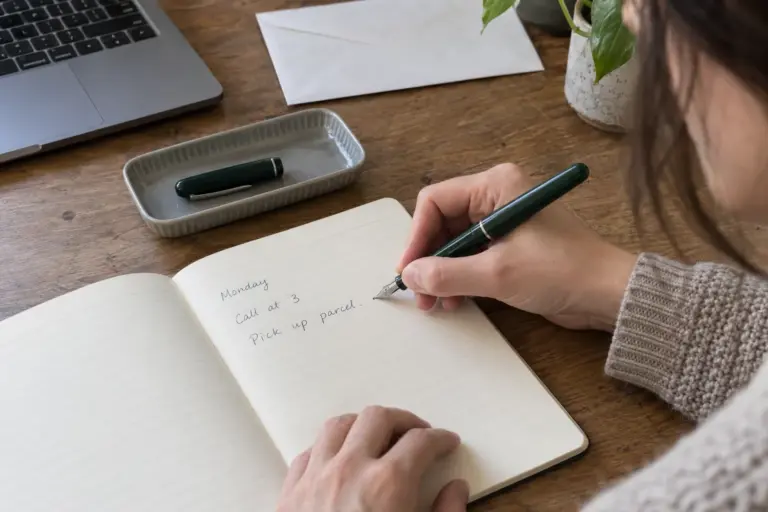
Use ordinary writing as your test. With your usual grip and pressure, write the kinds of notes you normally make, a complete sentence and some numerals. Include enough writing to notice whether the line remains readable and how the pen sits in your hand; a few decorative strokes alone will not answer those questions. If you are considering your first pen, try those same tasks with the candidate where possible, then learn from regular use before planning an addition.
Record the exact pen and nib, ink and paper for each trial. Underneath, note what you observed rather than what a specification suggested you would feel:
| Writing record | Your observation |
|---|---|
| Pen, nib, ink and paper | |
| Task and line readability | |
| Grip and balance during normal writing | |
| Refilling or care that felt easy or awkward | |
| What worked; what is still untested |
You need not turn this into a formal review. A note such as “easy to read in my small notebook; grip felt comfortable for notes; have not tried writing an address” is enough to inform the next decision. It also separates an actual experience from an assumption about how every example of that model will behave.
Pilot puts particular emphasis on writing with a pen before choosing it. Its advice is to compare body material, nib type and balance in the hand, and to consider how body size and thickness work with your hand size, pressure and writing angle. A listed dimension can help you decide what to investigate; it cannot establish your comfort without a trial.
Look for both strengths and unanswered questions. Perhaps your current pen is excellent for compact notes, but you have never tried it for headings. Test that task before treating it as a gap. Pilot gives medium nibs as one possible choice for addresses, larger characters or enjoying ink shading; that is an example of a task shaping a choice, not a rule that every collector needs a medium nib.
Paper and ink belong in the record because you want to know the conditions under which you liked—or disliked—the writing. If a later shop trial uses different supplies, keep that difference visible. It may be hard to tell from that trial alone which part of the changed result came from the pen. Your baseline should tell you what to compare next, not force a conclusion before you have made the comparison.
Choose the Difference the Next Addition Must Deliver
Name one contrast you want before comparing candidates. You might keep a compact notes pen as your regular writer and look for something suited to larger words on a page. Or you might like your current line perfectly well but want to hold and use a body of another form or material. If filling is the interest, describe the routine you want to try rather than treating every unfamiliar mechanism as a reason to buy.
Compare each candidate against that contrast. For a line-related aim, write normal words on a page and ask whether the result serves the intended task. For a comfort aim, pay attention to grip and balance in your usual hand position. For a design aim, decide whether the body itself is the difference you wanted. For a filling aim, establish how that exact model takes ink and whether you would welcome its routine. A near-duplicate is not a mistake if you knowingly want it; it simply should not be mistaken for an experience it does not provide.
Before buying a whole pen to change your line, ask whether your current pen takes a confirmed compatible replacement nib. LAMY describes changing a nib on its pens as a way to use a pen differently and give handwriting another character. It also says nib choice depends on hand position, pressure and personal style. That possibility is a reason to check a specific pen-and-nib pairing, not permission to assume any nib will fit. If the fitting is unclear, ask the maker, seller or an appropriate pen professional rather than attempting a forced change.
A nib option can meet a line-change aim while leaving the familiar body in your hand. It cannot give that body a different balance or material. If the body is what interests you, a nib swap does not answer the aim.
Similarly, if your aim is to fill from bottled ink, check whether a compatible converter would serve it. A cartridge is a replaceable ink supply. A converter fits where a cartridge would go and allows bottle filling when that pen supports it. A piston mechanism fills the pen from a bottle by its built-in mechanism. LAMY describes cartridge, converter and piston routes in its filling-system guidance, including a converter used in place of a cartridge; its examples do not mean that every model offers all three routes. A converter may change your access to bottled ink, but it does not change your nib or grip. Nor does it provide the distinct body you might want for a design theme.
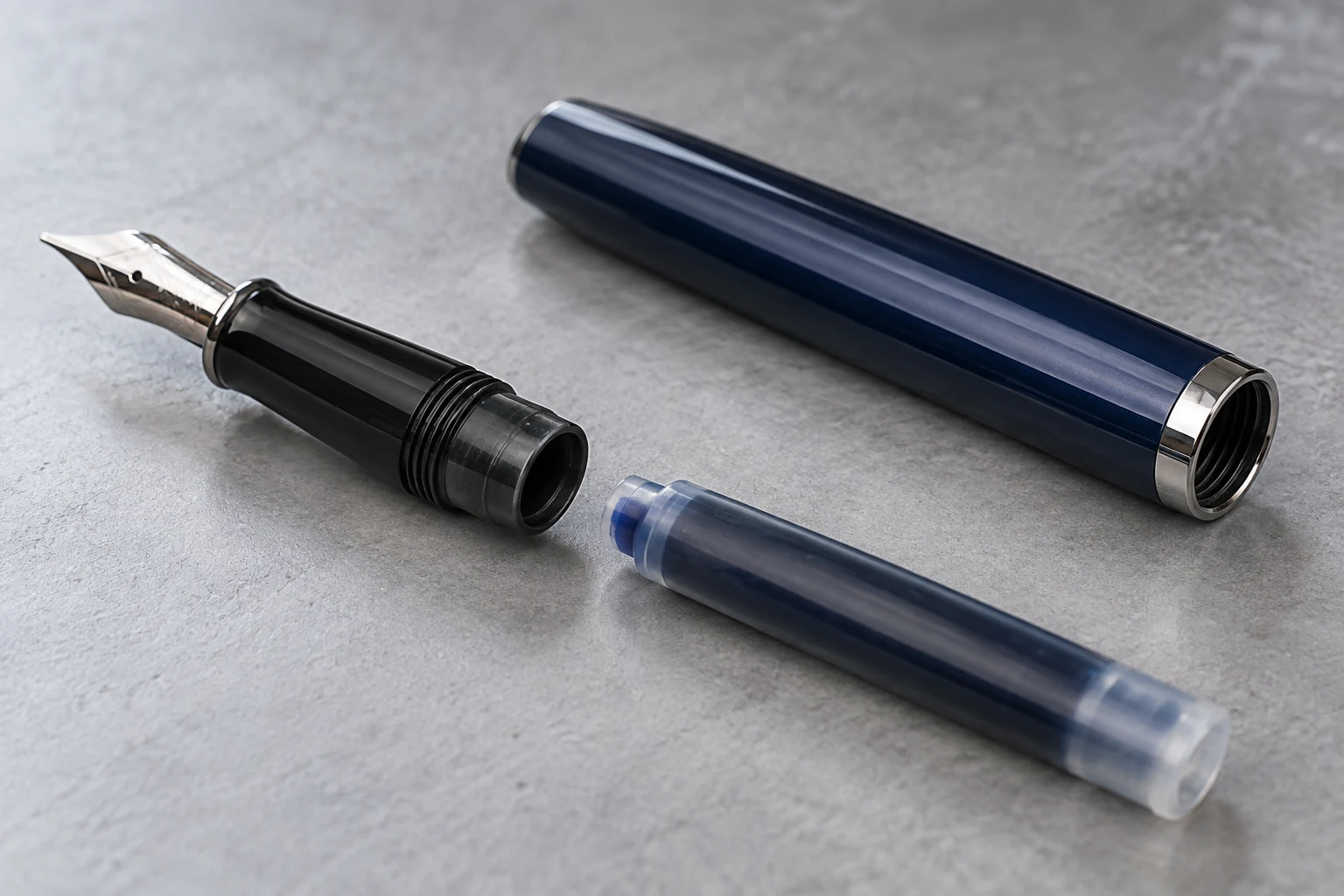
Consider this hypothetical two-pen plan. Your existing pen handles daily notes and remains your active writer. You are considering a second pen for larger writing or because its body belongs to a design theme you chose. For the larger-writing version, the candidate earns a place only if its line does the job, it feels acceptable during normal writing, and you can confirm its refills and care. If a compatible nib in your existing pen delivers the line you wanted, you may prefer that route and keep one body. For the design version, the nib alternative does not provide the desired form; you can still choose the second pen if its fit, upkeep and cost work for you. Neither version assumes that two pens are inherently better than one.
Verify the Candidate and the Full Cost Before Acquiring It
Try the exact candidate with normal words if you can. LAMY notes that a retail shop may offer a chance to try a pen before purchase. Note the trial ink and paper. Using the same supplies as your baseline makes the comparison clearer; if the shop uses different ones, write that down instead of assigning every difference you see to the candidate pen.
When a trial is unavailable, request a representative writing sample and details about the grip or body you cannot examine in person. Those details can help you decide whether to investigate further, but personal fit remains unknown until you can judge it. If the candidate is used, ask about its actual condition and whether a writing and refill check is available. Do not treat an unverified condition, or a listing’s description of it, as a substitute for that check.
Before committing, confirm the model and nib option you would receive. Identify a named cartridge or converter that fits that model, if either is part of your plan, and check that the ink you intend to use is meant for the pen. Find its normal filling and cleaning instructions. Refill fit and cleaning method are separate questions: knowing what supplies ink does not tell you how to care for a particular mechanism. Ask the maker or seller when a compatibility detail is unclear, and check the seller’s current support and terms rather than assuming what help will be available later.
Use actual seller costs to make a small purchase calculation. Leave out supplies you already have and will use; include only what this decision actually requires.
| Required item | Actual seller cost |
|---|---|
| Pen or compatible nib option | |
| Required refills | |
| Compatible converter, if needed | |
| Ink, only if needed | |
| Paper, only if needed | |
| Total to compare with your personal limit |
Your final check can be brief: intended role; exact model and nib; observed fit or an explicit “unknown”; trial ink and paper; confirmed refills; required supplies and total; cleaning and storage instructions; current seller support or terms. This is a decision record, not a requirement to buy every listed accessory.
Add the pen when its chosen difference is worthwhile to you and its fit, compatibility, care and total cost are acceptable. Use an existing compatible nib or converter instead when that option meets the actual aim. Defer when an important fit, refill or care question is unresolved—or when the total crosses the limit you set. Waiting is a complete decision, not a failed attempt to collect.
Keep an Inventory and a Manageable Rotation
An inventory can be small enough to fit in a note. Its job is to tell you which pen is ready to write, what it contains and what you need to remember before using or storing it. Make one entry per pen:
| Pen and exact nib | Intended role | Current ink and confirmed filling compatibility | Status: active or empty | Last care note |
|---|---|---|---|---|
| Your notes pen | Daily notes | Active / empty | ||
| Your other pen, if acquired | Your chosen second role | Active / empty |
Write the actual ink in an active pen; for an empty pen, record its confirmed filling compatibility so you can find the right supply later. A last care note might simply record when you emptied and cleaned it under its instructions. The status prevents you from confusing a ready-to-write pen with one that has been put away empty.
Keep active the pens you really use, rather than assuming that every owned pen should stay inked. Suppose your notes pen is your daily writer and a second pen is intended for occasional larger lettering. Name the occasions: perhaps you actually use it whenever that larger-writing task arises. Record its ink and the times you use it. If those occasions do not materialize and a long idle period is likely, reconsider leaving it filled merely so it can count as “in rotation.”
Sailor says a little writing each day helps keep ink flowing. That is a useful consideration for a pen you choose to keep active, not a demand to write with every pen daily. When you finish using an active pen, close its cap securely. Pilot advises doing so to limit ink drying and protect the nib.
For extended non-use, plan for an empty, cared-for pen rather than silently leaving ink in one you no longer reach for. Pilot advises draining ink and washing the nib before a long unused period. Sailor also identifies extended storage without use as a reason for cleaning and notes that cleaning methods differ by filling style. Follow the instructions for your own model and ink materials; do not assume one washing routine applies to every pen, or that refilling alone takes care of every cleaning need.
Give stored pens a designated place you can find again. That is an organization choice, not a universal rule about which direction a pen must face. Update the entry to “empty” and note the care you completed. If you later return that pen to active use, its record tells you what it is meant to do and which filling supplies you have confirmed for it.
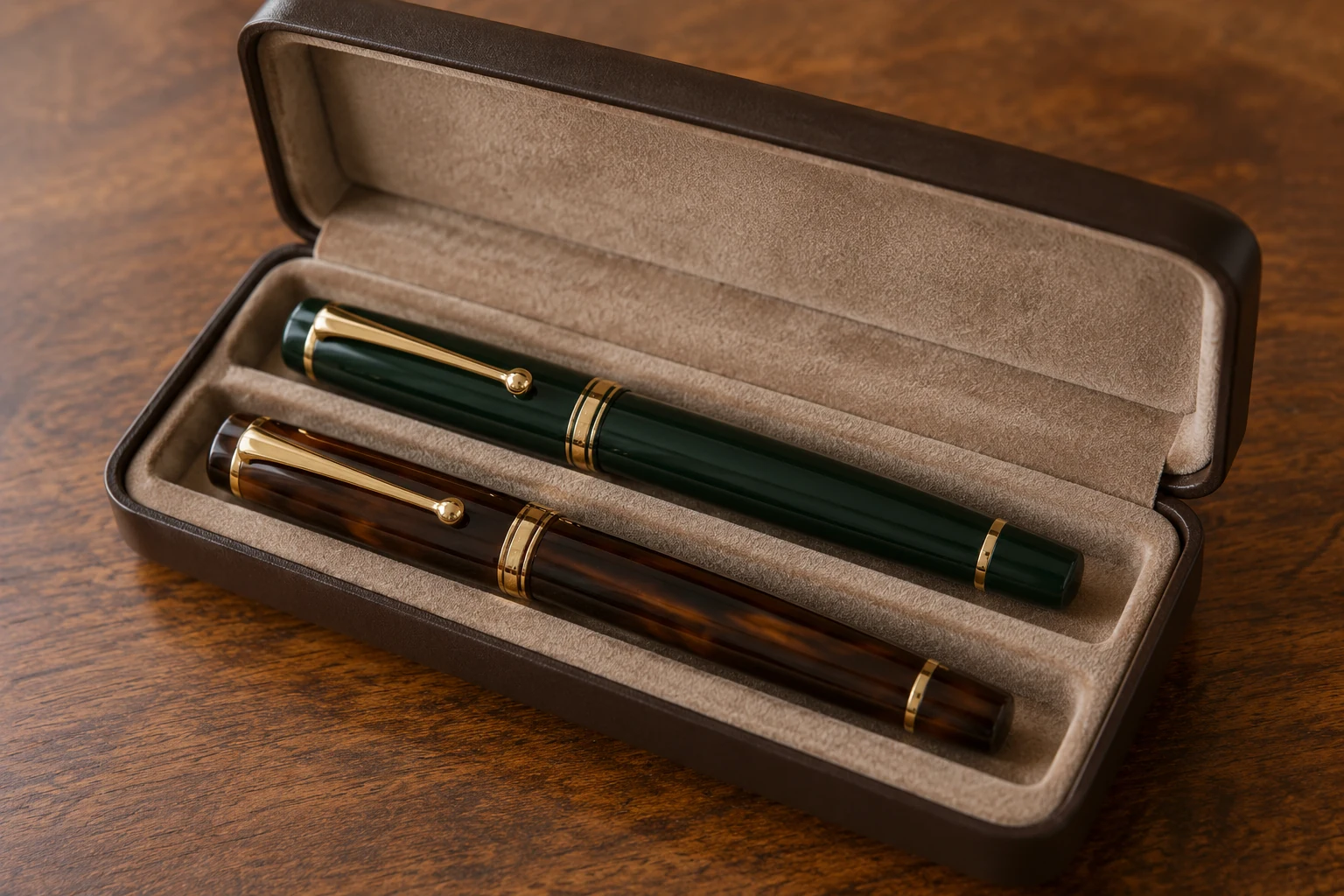
A manageable rotation may therefore be one active pen and one clean, empty pen. It may also include an occasional pen kept active because you truly use it and can maintain it. Let actual occasions and your tolerance for care decide—not the idea that owning a pen requires keeping it filled.
Reassess Before the Next Addition
Choose a period of real use, then read your aim and inventory together. Which pen actually handled each intended task? Did the second pen get used for the occasion you imagined? Did you enjoy its body or filling routine enough to keep making time for it? Notice, too, what sat unused, what duplicated an experience you already had, and whether care began to outweigh the pleasure or usefulness.
The review can change your plan. If two pens have settled into clear roles and their upkeep is comfortable, keep that routine. If one will sit unused for an extended period, follow its instructions for cleaning and empty storage, and mark it accordingly. If the pen you already use fulfills your writing and design interests, wait before adding anything. You can revise your collecting aim as you learn; it is a guide to decisions, not a commitment to keep purchasing.
End each review with one question: What difference, if any, is still missing from my actual writing or chosen design interest? If you can name one, test the next candidate—and any compatible nib or converter alternative—against it. If you cannot, keep using, capping and caring for the pens you have. The size of a satisfying collection follows from those choices; it is not a target you have to reach.