The Short Answer: Even Feedback Versus a Catching Scratch
Fountain pen feedback is a steady sense of contact as the nib moves across paper. It may feel textured, but it does not catch. Fountain pen scratchiness feels sharper: the nib seems to dig into the paper or snag as you write. Goulet calls the drag of a nib crossing paper “feedback” or “tooth,” but describes a scratchy nib as one that digs in . The useful distinction is therefore not Can I feel the nib? but Does the sensation stay even, or does it interrupt the stroke?
Imagine writing an ordinary sentence at your usual pace. With feedback, you can feel the nib’s path without having to push through a particular spot. LarryPOST notes that finer nibs can have feedback that feels even rather than sharp . The sound, if you notice one, is worth describing alongside the feel: does it remain much the same as you write, or does a sharper noise coincide with a catch? Sound alone need not make the decision; the point is to identify whether anything abruptly breaks the motion of the pen.
A nib that makes a steady sound while your hand moves freely may have noticeable feedback without being scratchy. If a sharper sound occurs just as the nib snags, describe the catch rather than judging the pen by its volume. This matters when comparing your experience with someone else’s: “I can hear and feel the nib” says less about the problem than “the stroke stops when the point catches.”
That distinction also leaves room for preference. Goldspot frames smooth writing and writing with feedback as different choices a writer might make . A pen need not feel glassy to feel right in your hand. If its texture is consistent and you enjoy the sense of contact, calling it “scratchy” may obscure what you actually like about it. Conversely, a sharp catch is not simply a more intense version of a preferred texture: it changes how freely the nib moves across the page.
Feel is not fixed by the nib alone. Goulet says nib smoothing, paper and writing pressure affect it, and that a drier pen often gives more felt feedback . Those influences explain why noticeable drag, by itself, is a poor verdict. For now, describe what happens during normal writing in plain terms—even texture, sharp catch, or not sure—rather than treating every audible or tactile trace as a fault.
Check Whether the Sensation Changes with Stroke Direction
On the same sheet of paper, use light pressure to make a few slow upstrokes, downstrokes, sideways strokes and diagonal strokes. LarryPOST recommends testing those directions with a light hand. Keep the pen in your usual writing position so the change you are noticing is the direction of travel, not a deliberate change in grip.
Compare each stroke with the others rather than asking whether the nib is silent or perfectly smooth. Fountain pen feedback may produce a consistent sound across directions, while an evenly aligned nib should feel even in normal writing directions. If the texture is present on both an upstroke and a downstroke but neither stroke catches, direction alone gives you little reason to single out one edge of the nib.
Fountain pen scratchiness is more suspect when the same stroke repeatedly catches while its opposite remains comparatively smooth. For example, if several rightward strokes catch but leftward strokes do not, note that specific contrast instead of simply recording that the pen “feels rough.” Goulet describes scratching in only one direction as a likely clue to misalignment; it does not establish that misalignment is the cause in your pen.
Repeat each direction a few times before deciding whether there is a pattern. A single rough stroke is less informative than the same catch recurring during otherwise comparable strokes. Notice both feel and sound: a steady sound alongside an even texture fits the feedback pattern described by LarryPOST, whereas a distinct catch confined to one direction gives you a more specific observation to investigate. Keep the pressure light rather than pressing harder to reproduce it; the useful comparison is how the nib behaves under your ordinary writing hand, on the same paper, as its direction changes.
A slow figure-eight offers another way to notice the contrast because the nib changes direction without a pause between separate test strokes. Pure Pens suggests this check and says a difference in smoothness between the figure-eight’s directions makes misalignment more likely. Try it with the same light pressure and paper. If you hear an even sound and feel an even texture around both loops, that supports your observation from the straight strokes. If one part repeatedly catches, identify where in the loop it happens; a repeatable directional difference is more useful for further diagnosis than a single rough mark.
See What Changes with Paper, Ink and Writing Position
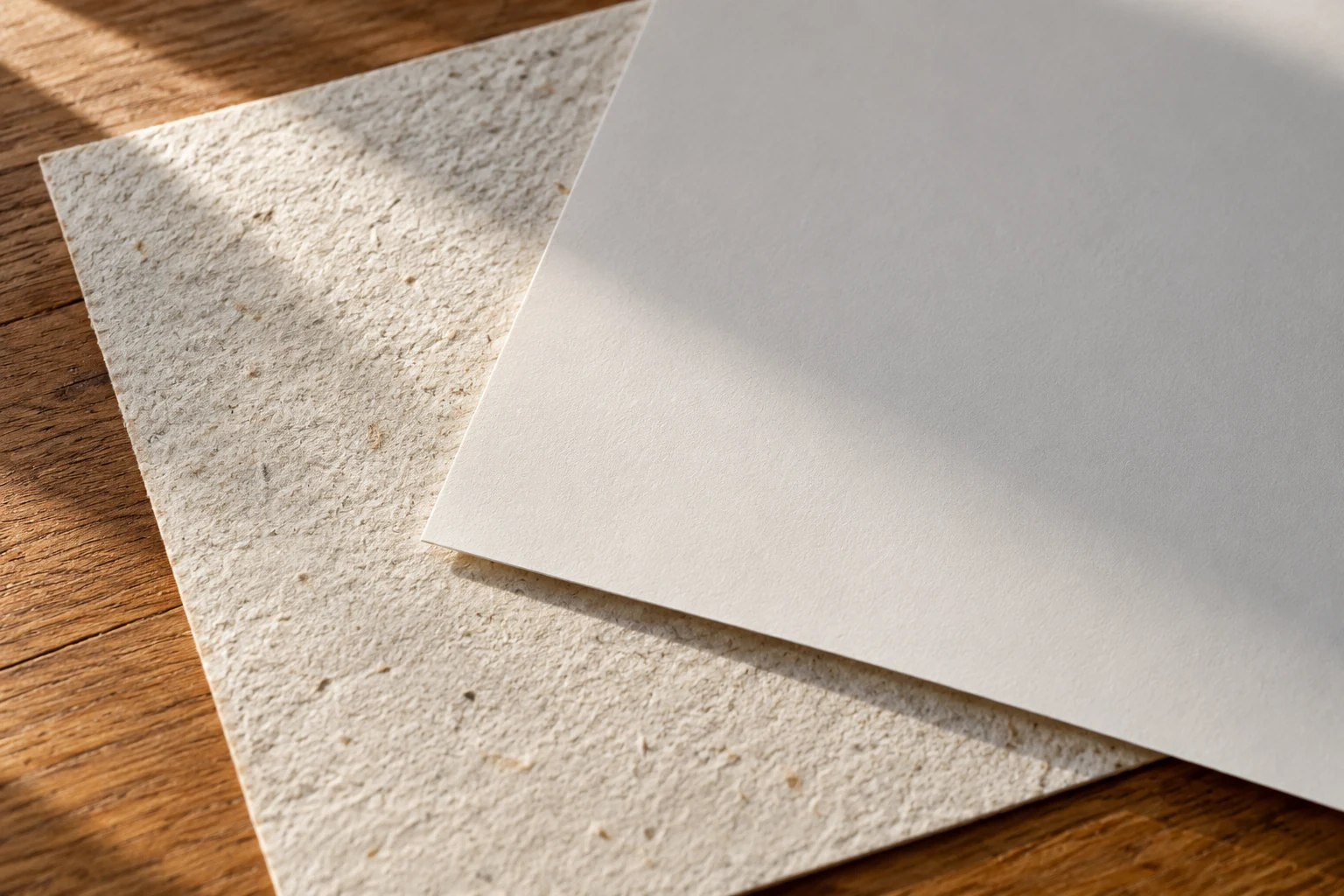
The feel of a nib is not fixed independently of the conditions in which you write. Paper, nib smoothing and pressure all affect how much tooth you feel . If a texture becomes more noticeable on one paper but does not turn into a sharp catch, the paper may be amplifying feedback rather than revealing a new fault. If a catch persists despite a paper change, that observation gives you a stronger reason to investigate—but it does not identify the cause by itself. Compare the papers with the same ink and light pressure. Otherwise, a change in how firmly you write could be mistaken for a paper effect.
Ink flow can blur the distinction in a similar way. Goulet links drier flow with weaker ink color and more feedback, while Pure Pens lists flow trouble among possible causes of a dry, scratchy feel . A pen that feels rougher and writes paler than it usually does may therefore be telling you something about flow, not just the nib’s surface. Cleaning is a first diagnostic step; after that, changing ink, converter or cartridge, and paper one at a time makes it easier to tell which condition affected the feel . If several things change together, an improvement is welcome, but its cause remains unclear. Note both the feel and the appearance of the line before and after a change: a wetter-looking line with less drag is a different observation from a sharp catch that remains.
Your hand can change the result without any change to the pen or paper. Excessive pressure can make even a tuned nib feel scratchy . Writing angle can alter pressure on the nib and displace the tines, and a writer may rotate the nib without noticing . This is why a rough patch that appears only when you bear down, tilt the pen or rotate it needs a different interpretation from a catch that remains under your usual comfortable grip. Try changing pressure, angle and rotation separately while keeping the paper and ink the same. If you change your grip and pressure together, you cannot tell which made the difference. Reducing pressure may make the feel gentler; forcing an awkward grip merely to make a catch disappear is less useful as an account of how the pen writes for you.
The useful comparison is not “Did the pen ever feel rough?” but “Which change reliably changed the roughness?” An even texture that varies with paper or flow can still be feedback you enjoy; a sharp catch can also be made more apparent by those conditions . Keep each observation tied to the condition that produced it, rather than treating one better-feeling stroke as proof that the issue is gone. The record below is meant to separate those effects, not to turn a writing-feel comparison into a repair procedure.
| Trial | Change one thing | Record what you notice |
|---|---|---|
| Baseline | Use the same paper and ink with light pressure. | Record whether the feel is even or catches, and what you hear. |
| Stroke direction | On the same paper, try up, down, side and diagonal strokes. | Record any direction with a repeatable catch or different sound. |
| Paper | Change the paper; keep the other conditions as steady as possible. | Record whether the feel changes or a catch persists. |
| Ink or flow | After cleaning, try a different ink without changing other test conditions. | Record whether the pen feels drier or the catch changes. |
| Writing position | Change pressure, angle or nib rotation one at a time. | Record which change, if any, alters the feel. |
Decide Whether to Accept the Texture or Seek Help
Fountain pen feedback is a reasonable texture to keep if it feels even, never catches, and makes writing pleasant for you. Smoothness versus feedback is a matter of preference, not a contest in which the smoothest pen automatically wins. Even a finer nib’s feedback should remain even rather than sharp. If that describes your pen, there is no need to treat its texture as a defect simply because you can feel the page.
If the sensation changed when you changed a writing condition, investigate that condition before deciding the nib is at fault. For example, if the catch appeared only after a change of paper or writing position, that result tells you where to focus your next comparison; it does not, by itself, identify a damaged nib. The useful question is whether you can return to a comfortable, non-catching feel under conditions you actually want to write with. If you can, you may have a workable combination even if another setup feels less pleasant. If the sharp catch remains under your preferred conditions, accepting it as “just feedback” is a less convincing choice: feedback on a fine nib should not be sharp.
Fountain pen scratchiness calls for a different response when a sharp catch persists. A scratch concentrated in one stroke direction makes tine alignment worth investigating: Goulet links one-direction scratching to likely misalignment, and Franklin-Christoph identifies out-of-alignment tines as a main cause of nib scratchiness. That makes alignment a plausible explanation, not a confirmed diagnosis of your pen. Describing exactly which stroke catches, whether the problem is repeatable, and what changed its feel gives a seller or specialist something more useful to work from than “the nib feels rough.”
For a recently bought pen that does not write as expected, contact the seller before attempting nib work; Pure Pens also invites contact about a recent purchase with disappointing writing performance. For persistent trouble attributed to the nib, Goulet points to professional tuning or replacement. That is the stop point for owner troubleshooting: you can report the symptom and the conditions under which it occurs without trying to alter the nib or feed yourself.
The choice, then, depends less on whether you feel anything at the page than on what that feeling lets you do. Keep an even texture you enjoy; revisit a condition that changes the result; and seek seller or professional help when a sharp catch persists. That preserves room for personal preference without asking you to tolerate a writing problem—or to assume you know its cause before it has been diagnosed.
Continue reading
More pen and paper guidance