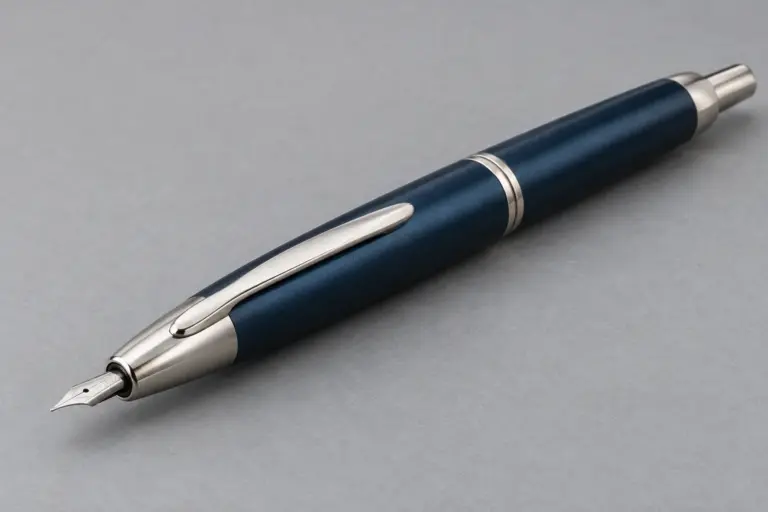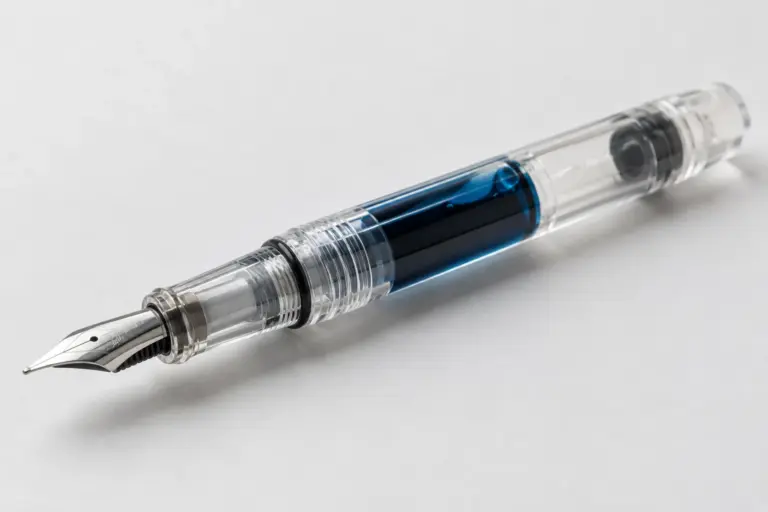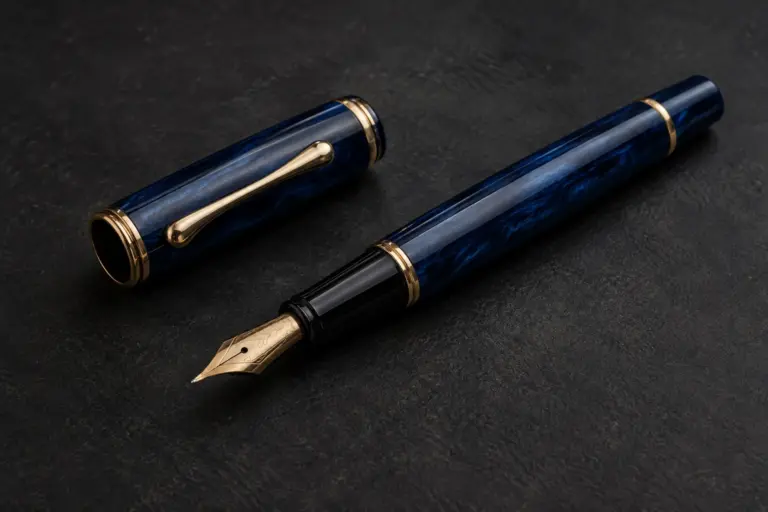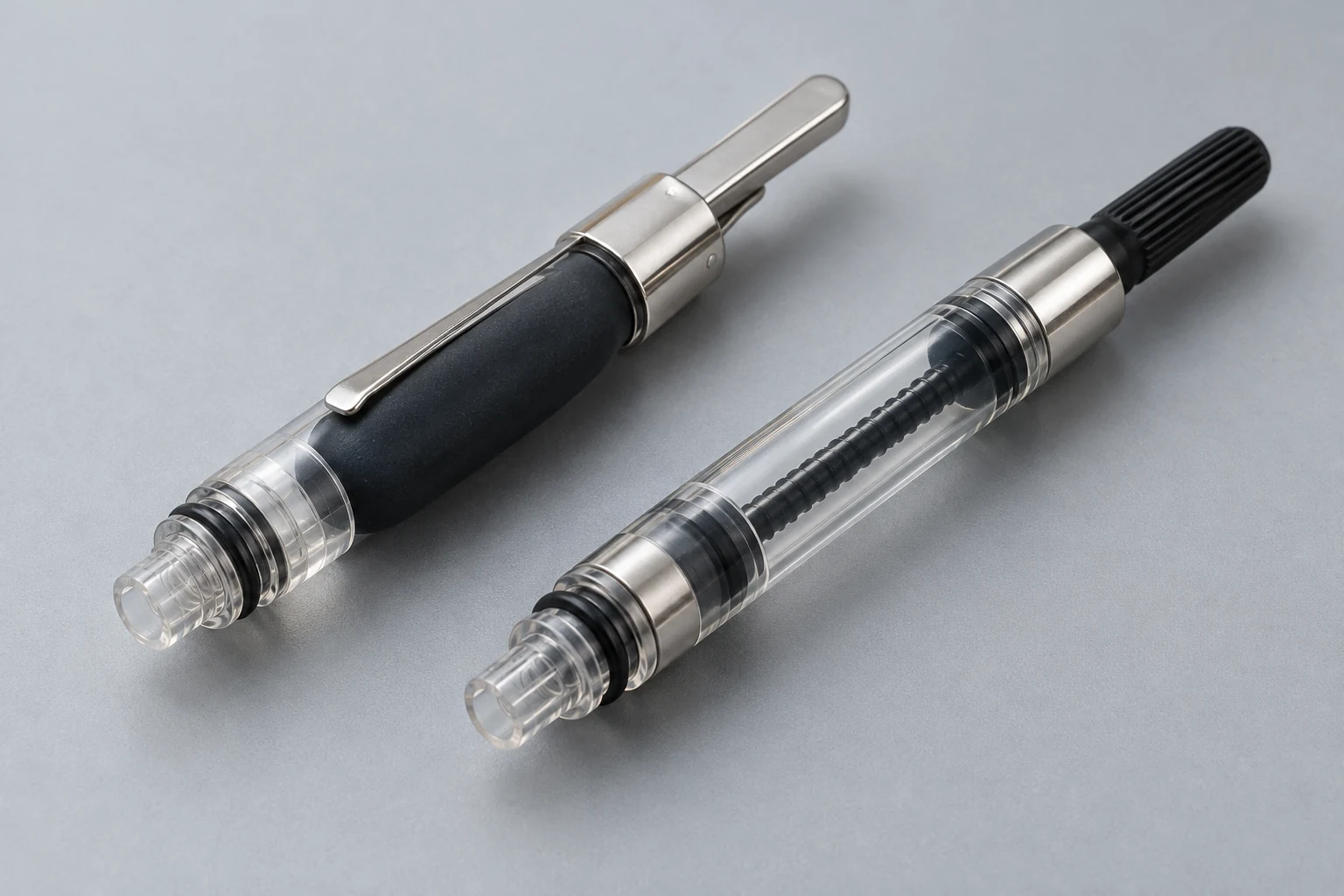
A squeeze-sac converter draws ink when you press and release its chamber; a twist-piston converter draws ink when you turn a knob. YoungW’s account of the Pilot CON-B illustrates the first motion, while Pilot’s instructions for the CON40 illustrate the second. Both examples involve immersing the nib and part of the section before drawing ink, but their controls and filling feedback differ . Check that your pen accepts the particular converter before choosing either motion. These two examples do not establish a universal fit, and neither filling method is inherently the better choice for every pen or writer.
Identify the Mechanism Before Choosing a Converter
The useful distinction is what the control moves. In YoungW’s description of a squeeze converter, pressing its rubber chamber and letting it expand again draws ink into that chamber . For the CON-B example, the action to learn is therefore squeeze, then release. Turning or tightening a control is not part of that described motion.
For the twist-piston example, Pilot directs the CON40 user to turn its knob to draw ink. In Pilot’s stated filling position—with the nib down and the section immersed—the direction given for drawing ink is to the right . That direction belongs to this instruction, not to every converter with a knob. If you have a different pen or converter, use its own directions rather than assuming its knob works in the same orientation.
The controls can look similar in one superficial respect: each requires an action by your fingers. That is not enough to identify the mechanism. Pilot calls the CON70 a push-button converter and describes filling it by pushing its control five to six times . A button press is not the CON-B’s squeeze-and-release of a rubber chamber, and it is not the CON40’s knob turn. If your converter is a CON70, use its instructions rather than either sequence below.
Fit is a separate decision from filling style. First identify the pen and the specific converter it accepts; then identify that converter’s control and filling directions. Do not press a converter into place because its reservoir looks like the example you wanted to use. A removable converter that does not seat as the pen’s instructions require is not made compatible by changing how you squeeze or turn it. If you cannot confirm the pairing, pause before putting the nib into ink.
Once fit is confirmed, the preference is straightforward. Someone who likes a press-and-release action may prefer a compatible squeeze-sac converter. Someone who would rather operate a knob may prefer a compatible twist-piston converter. That is a choice about handling, not a claim that one type holds more ink, fills faster, or lasts longer. Nor does the CON-B example establish that every squeezable reservoir has the same construction.
Fill Each Example Using Its Own Motion and Immersion Instructions
Set up around the pen’s actual instructions, not just the converter’s general name. In both examples, ink must cover the instructed inlet area while the converter is drawing. Keep the nib tip clear of the bottle bottom rather than using the bottom to position or support the pen. If the ink level does not allow the instructed immersion without pressing the tip down, stop and find a suitable way to fill; pushing harder on the nib is not a substitute for immersion.

Con-b: Immerse, Squeeze, Release
YoungW’s CON-B account says to place the entire nib and part of the grip section below the ink surface . With that area immersed, squeeze the rubber chamber and release it to draw ink up . The release matters: this is not a procedure in which holding the chamber compressed completes the draw.
Keep the nib and instructed part of the grip immersed as you release the chamber. Otherwise, the opening through which ink should enter may instead be above the ink. This is a practical reading of YoungW’s combined immersion and squeeze-and-release instructions, not a promise that every attempt will produce a full chamber .
After the draw, remove the nib from the bottle and wipe the inked exterior of the nib and section as your pen’s directions permit. Check that the converter remains properly seated and that ink is not escaping where it should not. If it appears loose or leaks, stop rather than repeatedly squeezing it to compensate. Confirm the converter model and the pen’s fitting instructions before trying another fill.
Con40: Prepare the Knob, Immerse, Turn to Draw
With a twist-piston converter, use the knob as directed to move the mechanism into its expelling position before drawing ink. Follow the instructions for your particular pen and converter for that preparatory motion; do not assume the draw direction also tells you every other direction or stopping point.
Pilot’s quoted CON40 instruction is specific about the draw: dip with the nib pointing down until the section is immersed, then turn the knob to the right to draw ink . Keep the section immersed during that turn. Do not shorten the immersion to just the nib tip because another pen’s directions happen to use a different depth. Equally, do not transfer Pilot’s right-turn instruction to an unrelated rotary converter.
Lift the pen out after the draw, then wipe the inked exterior as directed for the pen. Look for a properly seated converter and any sign of ink escaping at a connection. If the knob reaches its normal stopping point, do not tighten it further in pursuit of an apparently perfect fill. An unusually resistant control, uncertain fit, or apparent leak calls for a pause and a check of the actual model instructions—not more force.
These are parallel sequences, but they are not interchangeable. On the CON-B, the draw comes from letting a squeezed chamber expand; on the CON40, Pilot specifies a knob turn with the section immersed . In neither case does “dip and fill” tell you enough: the relevant depth, control motion, and moment when you keep the inlet under ink all matter.
Judge the Fill, Clean Safely, and Make the Conditional Choice
The named examples also differ in what you can observe. YoungW says its squeeze converter’s chamber is not transparent, so you cannot watch ink rise inside it during filling. The same account contrasts that with seeing ink rise in a piston converter . That makes the CON-B’s press-and-release motion something you perform without the same view into its chamber. It does not mean every squeeze design is opaque or that every piston converter offers identical visibility.
Visible space is not, by itself, proof that a fill failed. YoungW notes that a CON40 can be inked and ready to use while part of the converter remains empty . Read that as an observation about a usable fill, not as a required fill level or a guarantee of how much ink any attempt will draw. If the pen is filled and functioning, do not squeeze harder or over-tighten a knob merely to eliminate every visible pocket of air. If the pen is not drawing ink as expected, revisit its specified immersion and control directions before repeating the attempt.
For cleaning, use the normal water-fill route permitted by the actual pen and converter: operate the filling control as directed to take in and expel water, rather than opening internal seals to reach the reservoir. The motion you use follows the mechanism you have—press and release a squeeze chamber, or operate a rotary knob according to its instructions. Do not force a converter that seems mismatched in order to clean it. If you cannot establish an approved cleaning route, consult the pen’s guidance before proceeding.
A fit problem and a leak deserve their own stop decision. If the converter will not seat correctly, do not fill with it. If ink appears to escape from a connection, stop filling and check the pen and converter models and their maker guidance before another attempt. Neither problem is evidence that the other filling type would automatically work; compatibility still has to be confirmed.
Choose a compatible squeeze-sac converter if you prefer the CON-B example’s squeeze-and-release handling and do not need to watch ink rise inside its opaque chamber. Choose a compatible twist-piston converter if you prefer operating a knob and value the visible filling feedback described for the piston example. The tradeoff is handling and, for these examples, what you can see—not a demonstrated winner for capacity, filling speed, durability, or fit across pens.