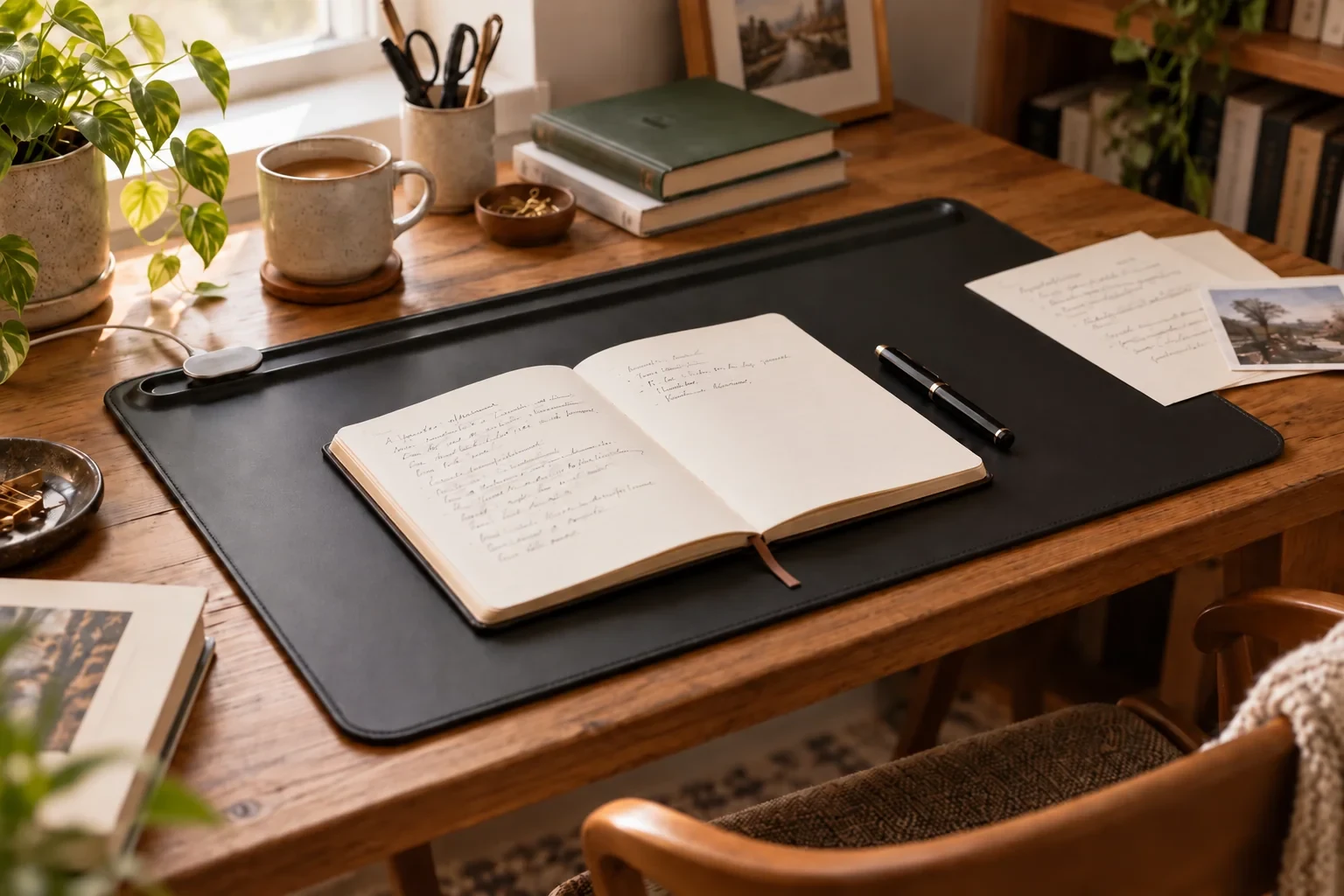
A small writing desk feels inviting when the journal has somewhere obvious to open and the few tools you reach for are not competing with it. In this arrangement, an existing A5 journal rests on a defined black surface, while books, a cup and loose paper keep the desk feeling lived in rather than staged.
Treat this as one peaceful possibility, not a bundle to reproduce. Depending on what interrupts your own writing, one or two well-chosen additions may be enough.
Define the Notebook Area First
The pictured Orbitkey Desk Mat — Medium, Black gives the journal a clear visual boundary while adding quiet storage around it. The medium mat measures 686 × 373mm and is 4.9mm thick, so measure the usable part of your desk rather than assuming “medium” will leave enough room for your elbows, lamp or cup.
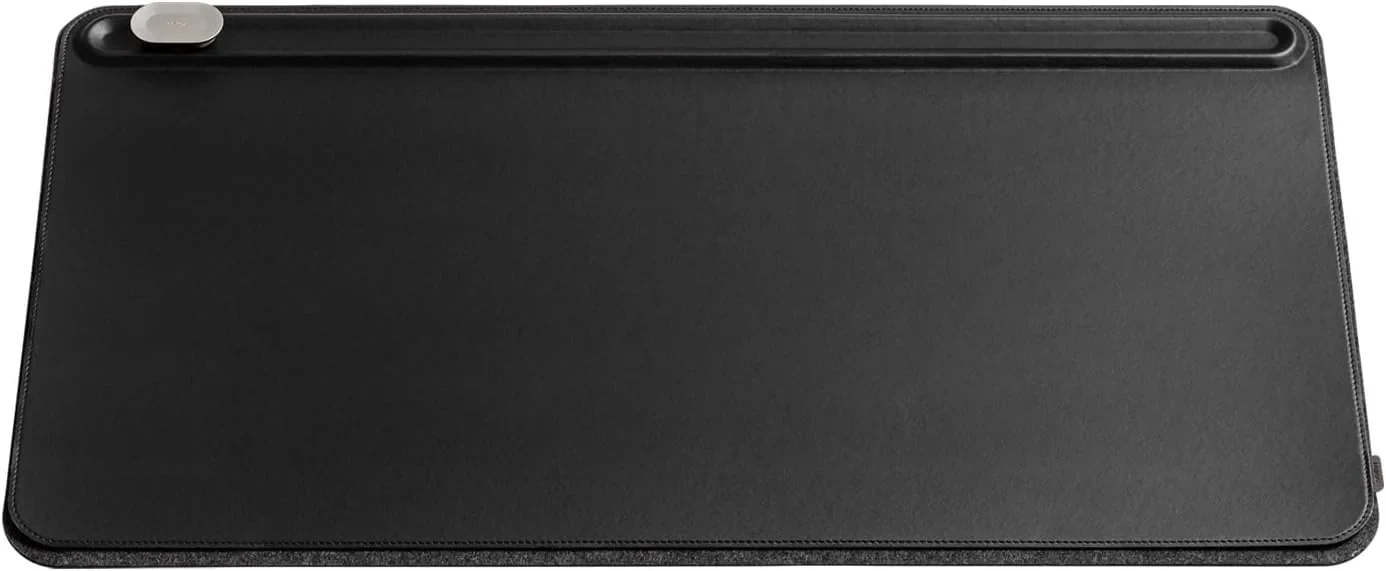
Its most helpful feature on a small desk may be the document hideaway beneath the top layer. Loose notes and papers can slip underneath rather than forming a stack beside the journal. A shallow toolbar runs across the rear for small stationery, and the mat comes with one magnetic cable holder. That keeps the centre open without asking you to remove every useful object from reach.
The construction combines vegan leather with recycled-PET felt. Those materials describe the mat, but they do not establish how your fountain pen will write through a particular notebook placed on top. Your journal’s paper, cover and page stack still determine much of that experience.
There is also a small note of caution if perfect flatness matters to you: Orbitkey customer Eloise B. reported, “It doesn’t quite seem to lay flat despite following the instructions.” The reviewer’s mat size was not identified, so this is an isolated experience rather than a medium-specific finding.
Keep Only the Page Tools You Actually Use
For ruled headings, trackers or columns, the slim TRAVELER’S COMPANY Brass Ruler (Midori listing) adds useful precision without taking over the desk. Its marked metric scale reaches 15cm, while the ruler’s complete body is approximately 160mm long—an important distinction when checking whether it will fit a tray or toolbar.

One long side is slightly raised, making the solid-brass ruler easier to pick up and helping when drawing a line with an ink pen. The brass begins with a brighter golden appearance and develops a duller, changing finish through use. That evolving surface suits a tool intended to stay beside a frequently opened journal rather than remain pristine.
Its purpose is specific: buy it if you genuinely rule pages. Wonder Pens reviewer Jp offers a concise example—“I use this with my bullet journal and to do’s.”
If the larger annoyance is a book or journal that will not stay open, the Kokuyo Campus Portable Book Clip — Green addresses a different interruption. Its mint-green design uses two spring clips connected by a central Campus bar, and its shorter translucent upper jaws cover less of the text at the top of a page.
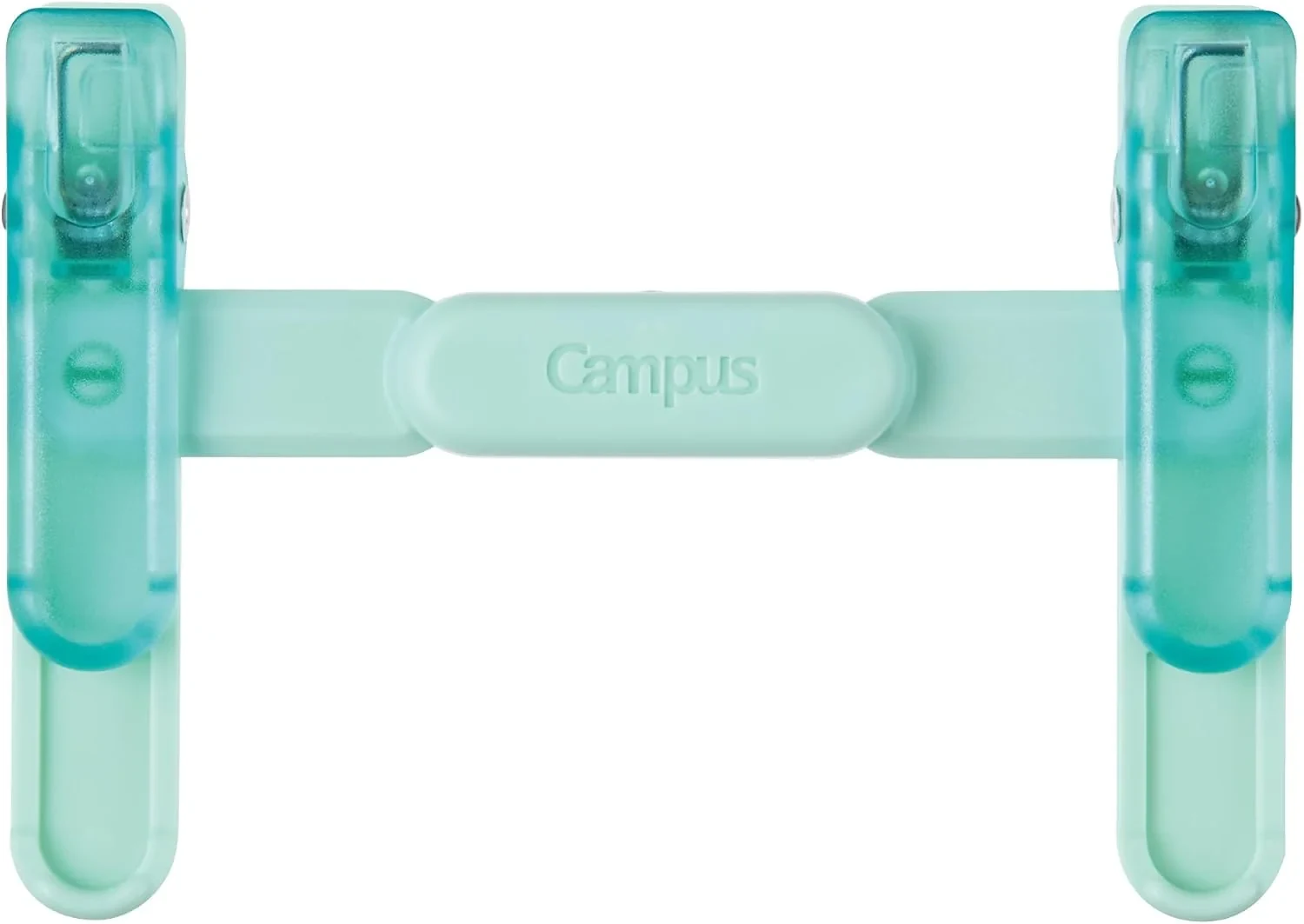
The left and right clips clamp independently, which helps when the page stacks on either side are different thicknesses. Kokuyo gives an approximate maximum clamping thickness of 22mm and warns that exceeding it may damage or deform the clip.
This is not an automatic companion to the ruler. Choose the ruler for page layout; choose the clip when pages spring closed while you write or when you are consulting another book. If neither problem occurs, keep the notebook area empty.
Choose One Nearby Storage Arrangement
The storage choice should reflect what actually gathers beside your journal. These three options provide different kinds of access; they are alternatives, not a three-piece organisation system.
The Yamazaki Tower Desk Bar — White is the most structured choice for mixed items. Its white steel base tray catches small objects, while the raised, divided arm accommodates taller or hanging pieces. The manufacturer gives it a footprint of 24.5 × 9.7cm and a height of 11.3cm, making it relatively narrow but noticeably more vertical than a flat tray.
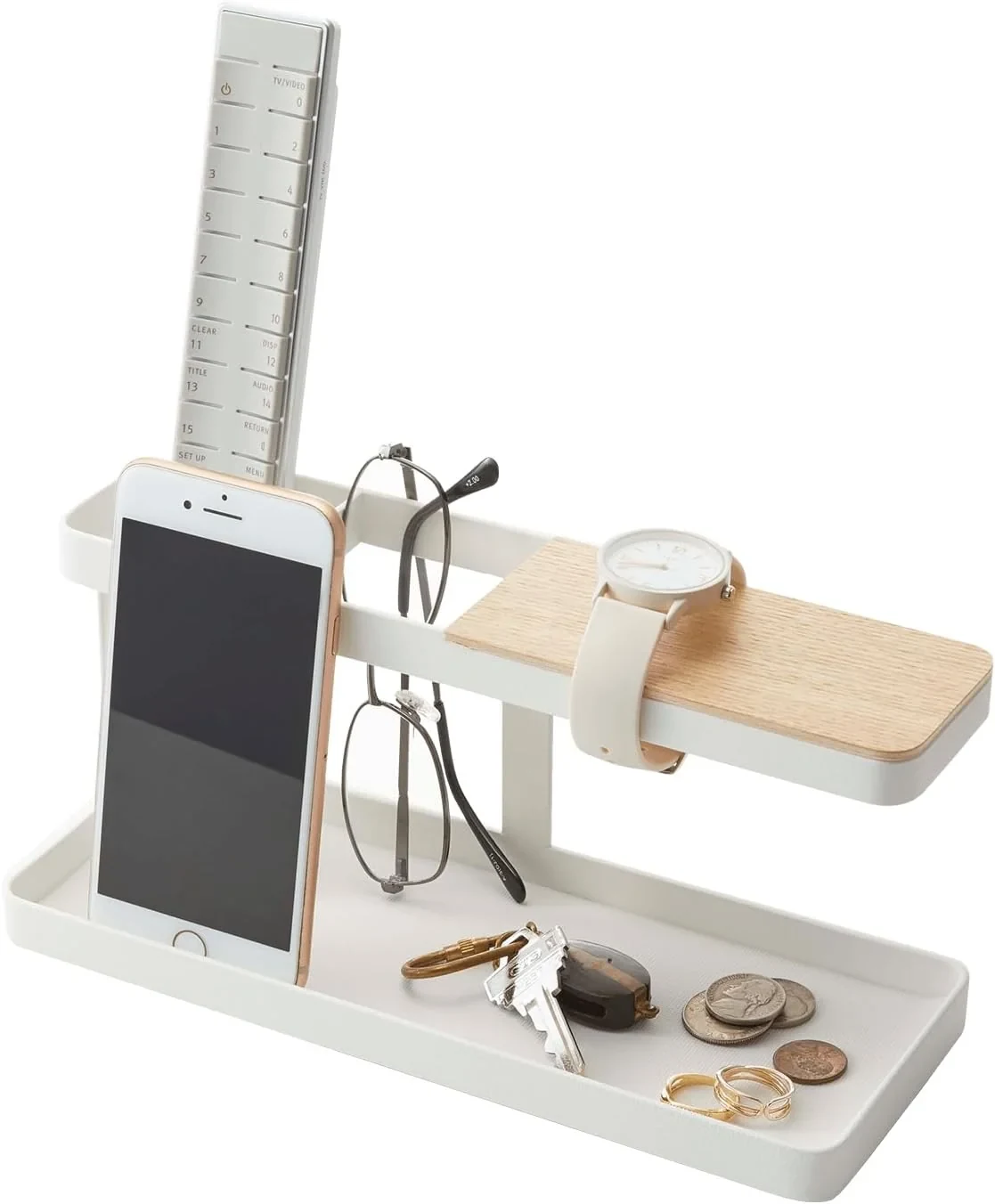
It makes sense when capped pens, a ruler, glasses and a phone tend to mingle at the side of the writing area—the listing specifically suggests those kinds of objects. The phone, remote, glasses, watch, coins and keys shown in the product photograph are usage props, not included accessories.
For tools you prefer to see laid out horizontally, the Yamazaki Tower Large Flat Steel Tray — White is the quieter alternative. Its low sides suit a few capped pens, the brass ruler or small stationery that you want to pick up without searching through compartments.
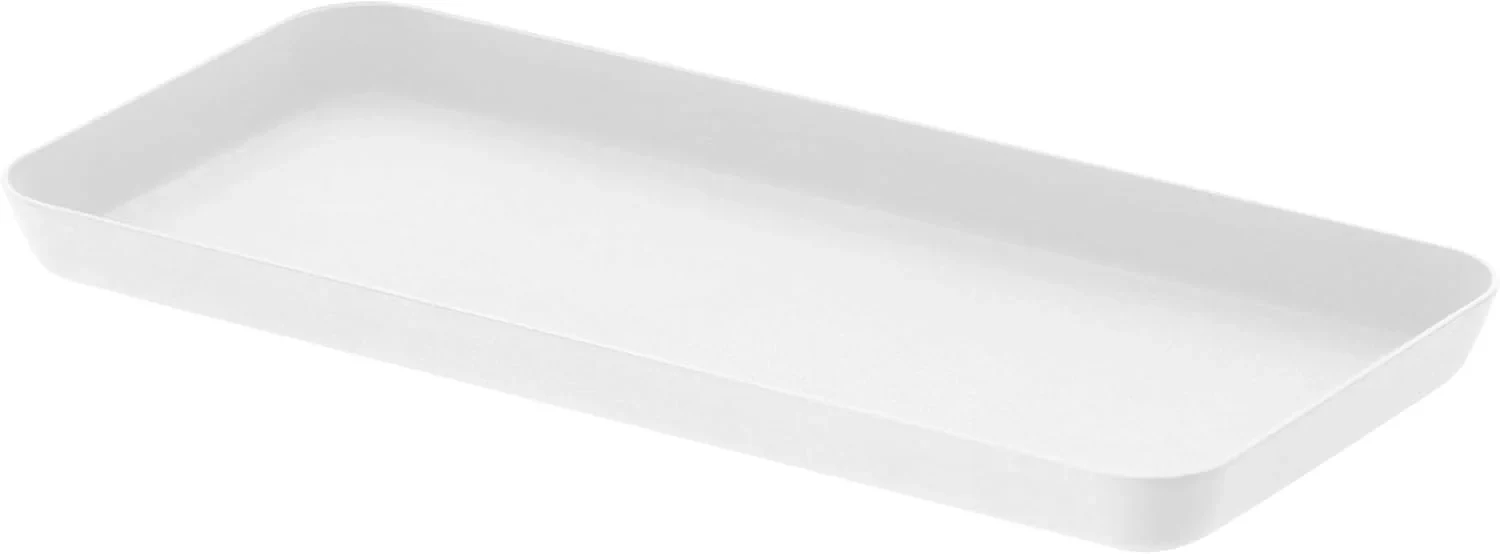
The tray measures 3.94 × 8.66 × 0.59 inches. It is made from powder-coated steel and has silicone cushions underneath to protect the surface on which it rests. Choose it over the Desk Bar when visibility and one-handed access matter more than separating objects by type.
The LIHIT LAB Stand Pen Case — Navy suits a desk that sometimes needs to be cleared completely. Closed, it is a navy cylindrical zip case measuring 60 × 60 × 172mm.
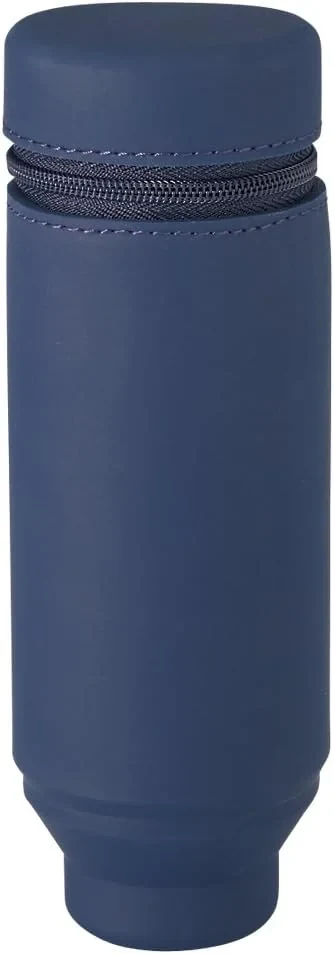
To use it as a stand, press the bottom gently against the desk so the lower section moves inward; pull the bottom out again and close the lid when you want a portable container. LIHIT LAB estimates capacity at about 15 pens, though the practical fit will vary with the thickness of the pens and other tools placed inside.
Pick this instead of an open tray if you value a closeable shared compartment. For a small journaling setup, filling it to maximum capacity may be less useful than keeping only the handful of tools you regularly reach for.
Handle Wet Ink Before Closing the Journal
If fresh writing transfers onto the facing page, the simplest addition is Herbin White Blotting Paper — Ten Sheets. The pack contains ten white blotter sheets. Keep one beside or inside the journal, place it gently over fresh writing and lift away the small amount of excess ink absorbed by the porous paper through capillary action.
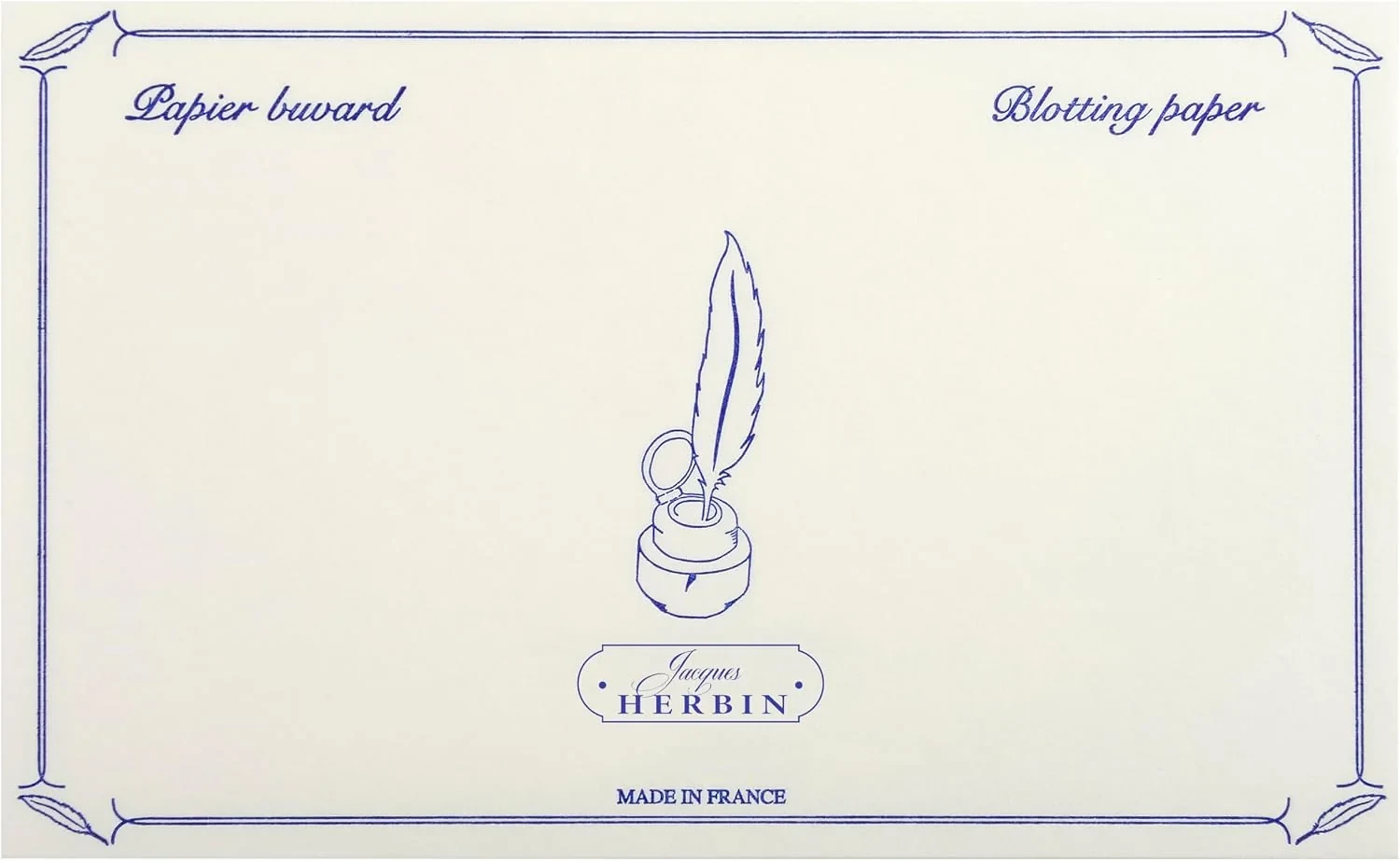
The sheets can also be cut to suit a smaller journal if desired. Goulet customer Gena L. writes, “I cut this and use them in my pocket size planner and journal on the go. Great to prevent transfer.” That is one reader’s experience rather than a promise for every ink-and-paper pairing.
For a more permanent desktop ritual, the Jacques Herbin Wooden Desk Ink Blotter adds a handle and curved rocking base. It is a traditional wooden rocker-style blotter rather than a different kind of ink or paper.
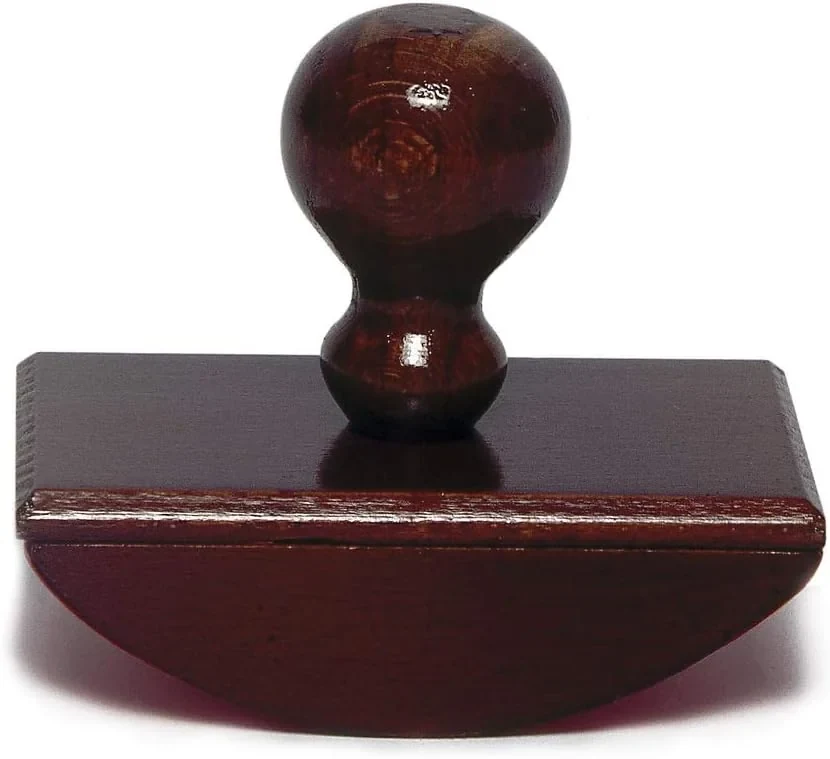
The tool is compact: 82mm long, 47mm wide and 72mm tall. With blotting paper fitted beneath, hold the knob and rock the curved base gently across the fresh writing to absorb excess ink and reduce smearing; the purchase listing includes a paper refill. Do not assume the separate full blotting sheets above are exact pre-cut replacements for it.
Whether the rocker earns its space depends on your ink, paper and writing habits. Goulet reviewer George H. observed, “Most of the time the ink has dried before I can blot,” while adding that some inks take much longer and that the paper also matters. Choose the rocker if slow-drying writing is a recurring problem and you enjoy a handled desk tool; otherwise, a flat blotting sheet is easier to tuck away.
Buy for the Interruption, Not the Scene
Start with the moment that makes you hesitate to sit down. If the journal has no clear home, define its area. If a ruler keeps wandering, give it a small landing place. If the pages spring closed or will not stay open, add the clip. If wet ink delays closing the journal, keep blotting paper within reach.
A coherent small desk may need only a mat and one page tool, or a tray and a blotting sheet. The goal is not to complete the photographed setup. It is to remove the particular interruption between sitting down and beginning the next entry.