On a small desk, an uncapped fountain pen creates a small second object to manage: its cap. It can be easy to set the cap beside a notebook and then cover it with an envelope or move it out of sight while reaching for something else. Give it a place that belongs to the writing session.
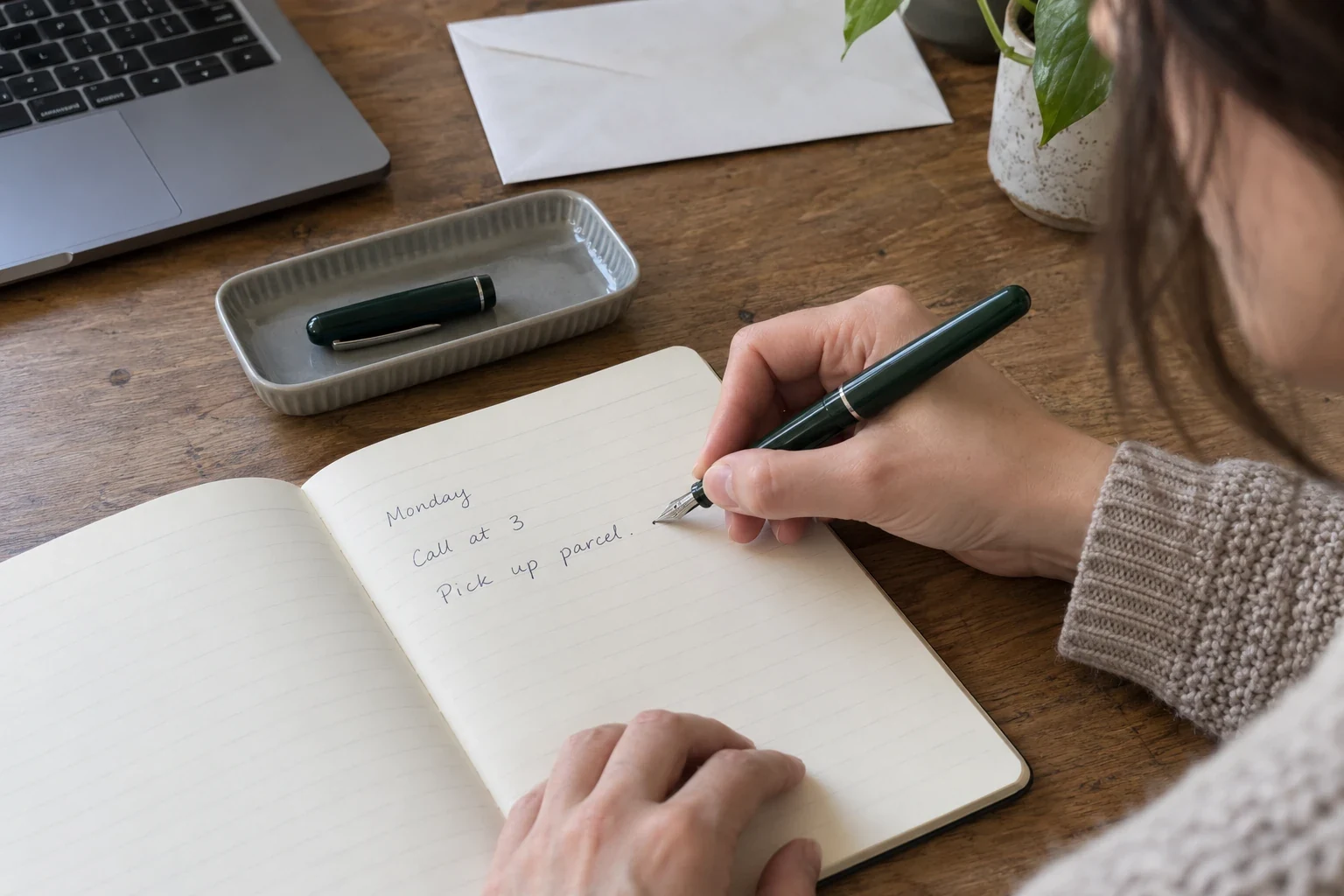
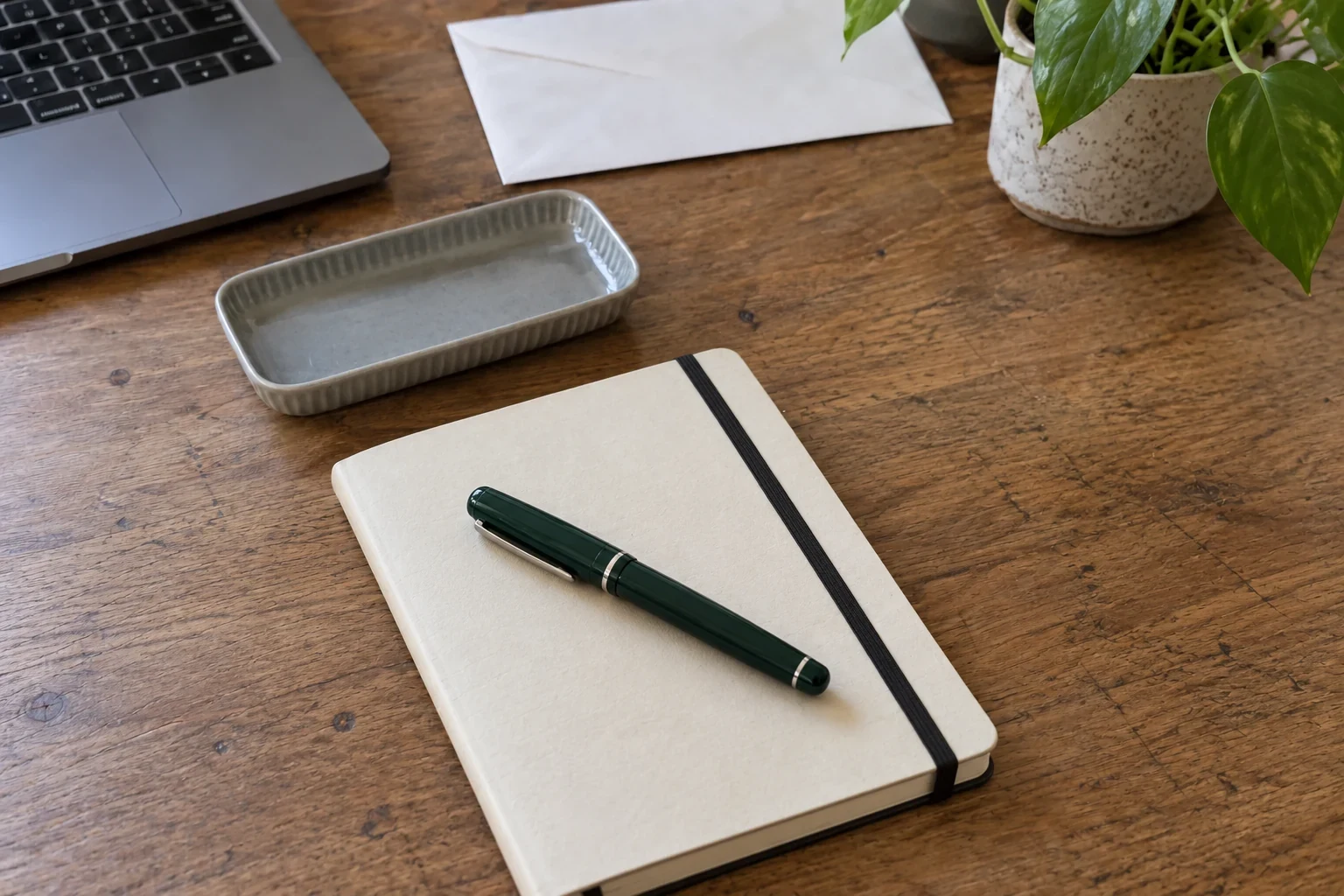
This desk arrangement uses a forest-green fountain pen, its matching clip cap, an A5 notebook and a shallow ribbed ceramic tray. The small tray gives the loose cap an obvious resting place without filling the writing area.
Give the Loose Cap a Place Outside the Writing Area
The cap rests inside the tray just beyond the notebook’s upper edge. The writing hand can move across the page without passing over it. Meanwhile, the cap remains visible as a separate green shape against the grey ceramic, instead of disappearing among the paper edges.
The note itself is short: Monday, a call at three, and a parcel to collect. That leaves the page as an actual working surface rather than a display for the pen. Arrange the cap’s place around the part of the notebook you use; a tray that occupies your writing hand’s route would introduce a new inconvenience.
A small tray can be enough for this one job. Check its occupied footprint with the notebook open and your hand in its usual position. The envelope and laptop still need places too, even when they are not the objects receiving attention.
Let the Stopping Place Suit the Complete Pen
At the stopping point, the cap is back on the pen and the tray is empty. The complete pen lies diagonally on the closed notebook, where its full length fits within the book’s outline. Closing the notebook gives the complete pen a separate temporary resting place.
This makes the end of the session visually easy to understand. There is one capped pen and one empty cap place, rather than a loose cap that might be mistaken for an extra object to carry. Choose a stopping place that lets you find the pen again without searching among loose papers.
Check the Whole Short Session
Try the arrangement through one ordinary note, from removing the cap to closing the notebook. Notice whether the cap stays visible, whether your hand has room and where the complete pen goes afterward. A useful small desk setup gives each of those states a place without filling the desk with more objects.