Start with Where and How You Will Refill
Choose a filling system around your refill routine, not the name of the mechanism. If you usually refill away from a desk, ask whether you would rather carry a replacement cartridge or make time to fill from a bottle. If bottled ink is part of the appeal, think about where you would keep it and when you would refill. Neither method is inherently more convenient: swapping a cartridge may suit one reader’s day, while filling from a bottle may suit another’s.
Then consider what happens between refills. Will the pen sit unused for long stretches? Do you expect to change ink colors often? How much cleaning are you willing to do when you return to the pen or switch inks? Those questions may matter more to your daily experience than the filling mechanism alone.
This guide uses manufacturer guidance, not firsthand testing. The available evidence does not support general promises that one filling system has greater capacity, costs less, or resists leaks better than another.
Choose Between a Cartridge and a Converter
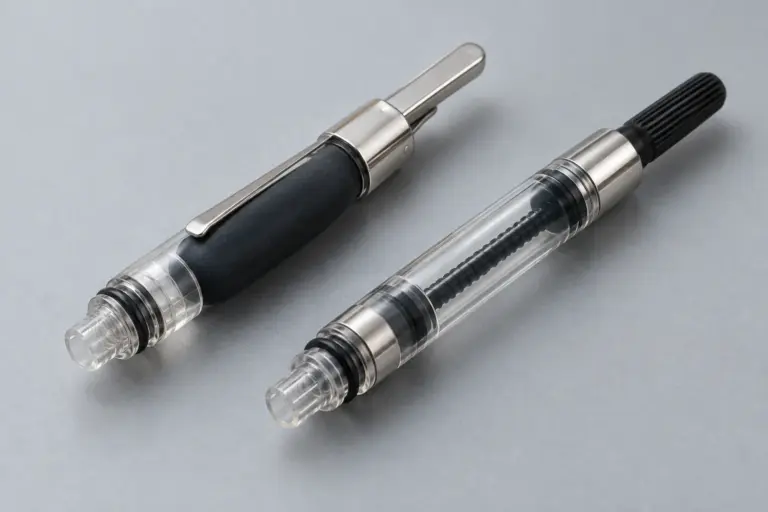
A cartridge and a converter offer two ways to supply ink to a pen designed to accept them. With a cartridge, the refill is the ink container: when it is empty, you replace it with another compatible cartridge. LAMY lists cartridge pens among its filling systems. A converter takes the cartridge’s place and lets you fill the pen from bottled ink; LAMY describes this as an option when the converter is compatible with the pen.
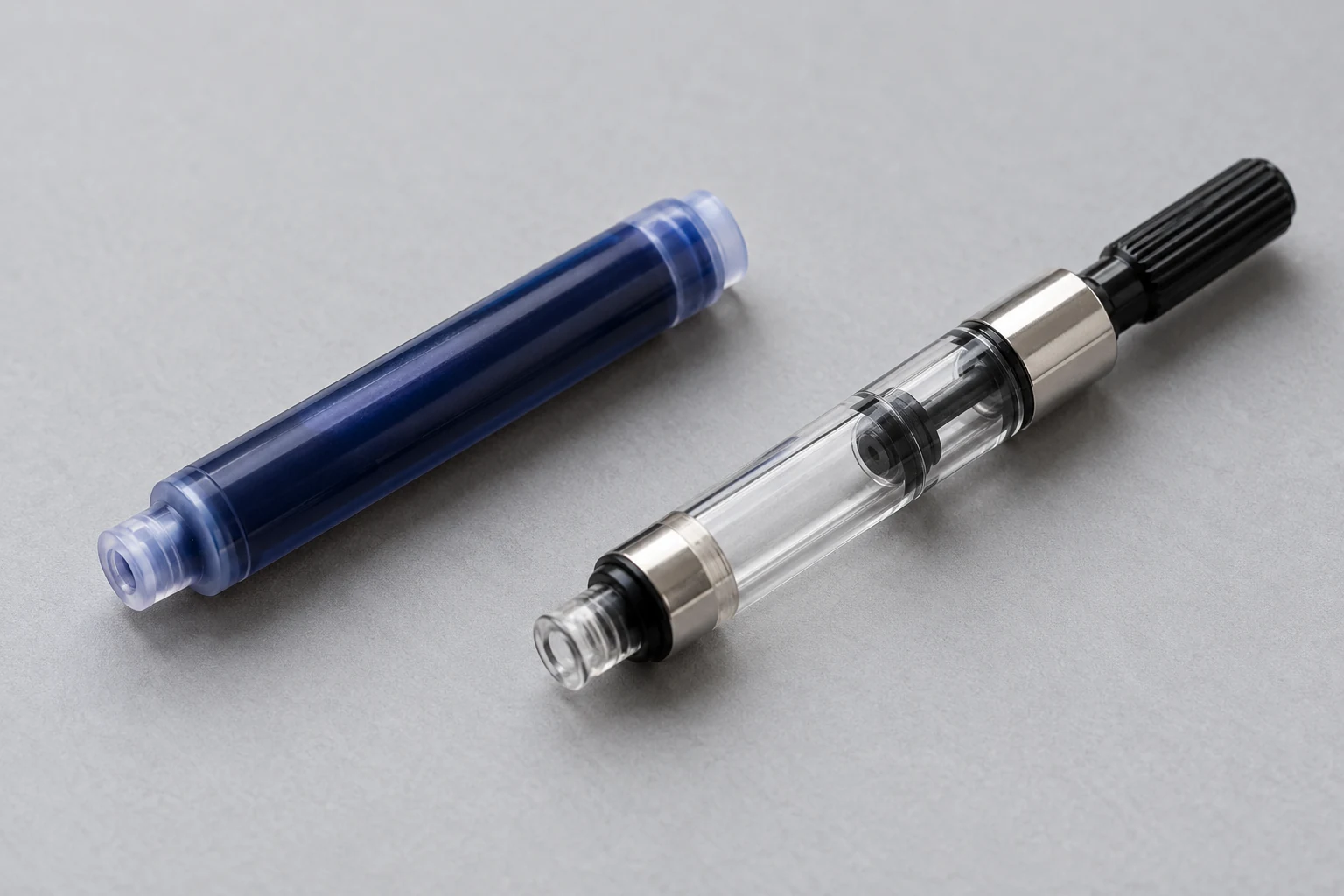
Think about the refill you would actually have on hand. If you plan to carry replacement cartridges, a cartridge change does not require a bottle at the point of refill. If you want to use ink from a bottle, a converter gives a compatible pen that route, but you need the bottle when it is time to fill. Neither arrangement makes the other supply unnecessary by default: choosing cartridges means keeping the right cartridges available, while choosing a converter means having bottled ink available. This is a workflow distinction, not a reason to assume that every cartridge pen also accepts a converter.
Picture where your next refill is likely to happen. If it is away from your ink bottle, a compatible spare cartridge may suit that situation better than a converter you cannot fill there. If you normally refill where you keep bottled ink, a compatible converter lets that bottle supply the pen. You need not decide that one method is more convenient in every setting: the question is which supplies you are willing to keep available where you write. If you want the option to use either method, verify that the exact pen accepts both rather than relying on its general description.
Compatibility is specific enough that the pen’s name matters. For example, LAMY specifies T10 cartridges for its fountain pens except the 2000. That exception makes “it’s a LAMY” an insufficient basis for buying refills. Likewise, LAMY’s description of bottled-ink use calls for a compatible converter, not just any converter that looks as though it might fit. When comparing a pen with the two refill options, identify its exact model and the cartridge and converter specified for that model; treat those as separate questions. A listed cartridge does not, on its own, identify which converter to buy.
The distinction also matters if bottled ink is the reason you are considering a converter. Confirm the converter option before buying the pen and a bottle together, rather than assuming you can add that option later. Conversely, if you expect to use cartridges, confirm their exact designation before stocking up. These checks keep the purchase tied to the refill action you intend to use, instead of to the broader label “cartridge/converter pen.”
Compare Piston and Vacuum/plunger Bottle Filling
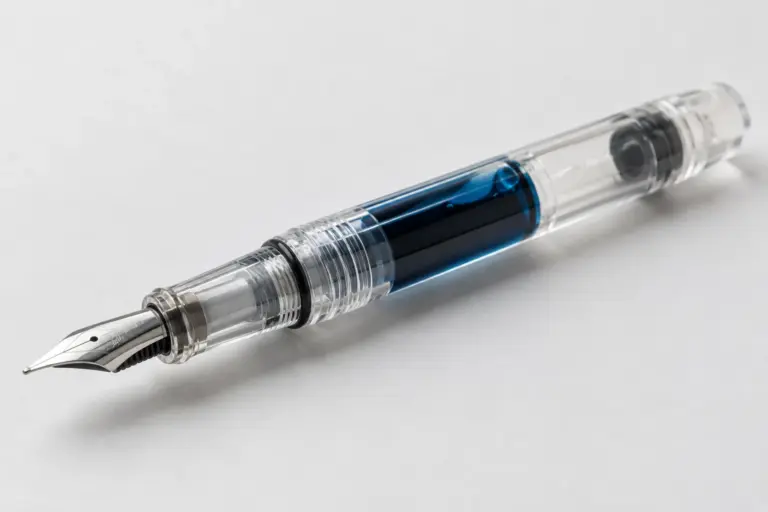
Both of these paths put the filling mechanism in the pen rather than in a removable converter, but they do not work the same way. For the TWSBI ECO, TWSBI instructs the owner to dip the nib in ink and turn the end cap to operate its piston. LAMY likewise describes its piston pen as filling from an ink bottle. These examples establish the bottle-filling workflow, not a single set of directions for every piston pen.
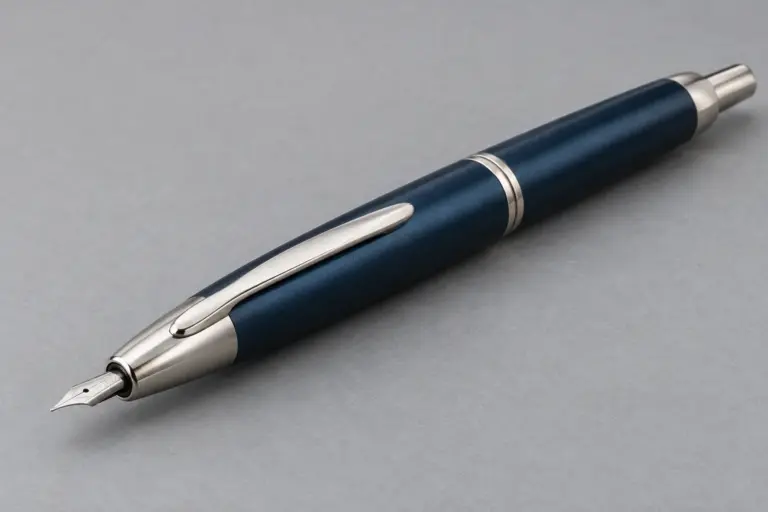
A vacuum/plunger filler uses a different action. Pilot describes its plunger design as creating a vacuum that draws ink into the pen. If you are comparing one with a piston model, the useful question is not simply which has a built-in mechanism: it is which set of filling steps you would be comfortable following at your desk, with an ink bottle open. Turning a piston and operating a plunger are distinct actions, so a description of one is no substitute for the other pen’s instructions.
That distinction becomes practical when you examine a product listing. “Built-in filler” tells you less about the refill action than the model’s instructions do. If you know how to fill the ECO, you know that model’s described end-cap action; you have not learned the steps for an unfamiliar piston pen. Likewise, knowing that Pilot’s plunger creates a vacuum does not tell you the operating sequence for a different plunger model. Find the directions for the exact pen before deciding that its bottle-filling routine suits you.
The difference also matters if you want a fallback when a bottle is inconvenient. Pilot says its plunger pen cannot use a cartridge or converter. That is a property to take seriously for that pen: buying cartridges to carry alongside it would not give you another way to refill it. It does not establish that every vacuum/plunger pen rejects removable refills, just as the TWSBI ECO’s end-cap instructions do not specify how every piston pen operates.
For example, if you expect to refill only where you can open an ink bottle, either mechanism may be worth examining on its own terms. If you instead need the option of a removable refill, Pilot’s stated restriction rules out that option for its plunger pen; check another model’s specifications rather than assuming its mechanism gives the same answer. This is a compatibility question separate from whether you prefer turning an end cap or operating a plunger.
When weighing two actual models, read their filling directions as operating instructions rather than treating “piston” or “vacuum” as a complete specification. Look for where the ink bottle and nib need to be during filling, what action moves ink into the pen, and whether the maker describes any cartridge or converter option. That keeps the comparison tied to what you would do on refill day, instead of assuming that two pens with built-in fillers offer identical workflows.
| Filling system | Refill action |
|---|---|
| Cartridge | Use a compatible ink cartridge; LAMY specifies T10 for its fountain pens except the 2000. |
| Converter | Replace the cartridge with a compatible converter to use bottled ink. |
| Piston | Turn the end cap while the nib is dipped in ink, as instructed for the TWSBI ECO. |
| Vacuum/plunger | Operate the plunger to create a vacuum that draws ink into the pen, as Pilot describes for its plunger pen. |
Let Cleaning and Repair Limits Narrow the Choice
A refill is not the only time a pen needs attention. If you like changing ink colors or brands, allow for cleaning between changes: Platinum advises cleaning the nib and feed when switching either one. That makes your ink habits part of the maintenance decision. A pen kept on one ink may call for cleaning less often than one whose ink you change regularly, though neither routine makes a filling system maintenance-free. Before choosing a pen for frequent ink changes, ask whether you are willing to clean it each time—not just whether you like its refill action.
For a cartridge/converter pen, the converter can also be part of the cleaning process. LAMY describes flushing water through its converter to remove encrusted ink. Its guidance notes that the nib and duct can dry and encrust when exposed to air. Those are reasons to check the maker’s cleaning instructions if a pen has dried, rather than treating resistance as a reason to force parts apart. Replacing a cartridge may be a convenient refill, but it does not substitute for cleaning ink from the nib and feed when a color or brand change calls for it. Likewise, choosing a converter for bottled ink means accepting the flushing work described for that converter when ink becomes encrusted.
Periods without use create a separate decision. Platinum advises removing the cartridge or converter and cleaning the pen before a long stretch of disuse. That is more involved than simply putting the pen away with ink still installed. If your writing comes in bursts, consider what happens at the end of each burst: would you remember to remove the refill and clean the pen before setting it aside? If you regularly change inks as well, the cleaning associated with a switch and the cleaning before storage may both matter to your routine. The point is not that occasional writers must avoid cartridge/converter pens, but that an easy refill does not eliminate storage preparation.
A built-in filling mechanism does not remove that preparation; the documented procedure can differ. Pilot advises filling and draining its plunger pen with clean water several times before storage. Compare that repeated fill-and-drain procedure with LAMY’s documented converter flush and Platinum’s instruction to remove a cartridge or converter and clean the pen before long disuse. These are examples from particular manufacturers, not proof that every pen with one mechanism takes more or less effort than every pen with another. If you expect long gaps between writing sessions, look at the actual storage procedure for the model you want. A procedure you are comfortable repeating is more useful to you than a broad promise that a filling system is “low maintenance.”
Keep cleaning and repair separate, too. The cited guidance gives owner-facing actions—cleaning the nib and feed when changing ink, flushing through a converter, removing a refill before long disuse, or repeatedly filling and draining Pilot’s plunger pen with clean water. It does not make dismantling a resistant mechanism the next cleaning step. In particular, Pilot says the precision parts of its plunger pen should not be repaired by the user. If following that pen’s instructed water-cleaning procedure does not resolve a problem, stop rather than improvising a mechanical fix and seek service. That repair limit applies to the cited Pilot pen; it is not a claim that all plunger pens have identical service rules.
For the buyer, the useful distinction is between work you can plan to do and work the maker says to leave alone. Someone who enjoys changing inks should account for cleaning at each change; someone who often shelves a pen should account for the storage procedure; and someone considering a built-in mechanism should read where its owner instructions end. None of those considerations supplies a universal winner. They show why maintenance tolerance includes both routine rinsing and a willingness to seek service when a problem falls outside the instructed owner procedure.
Make the Choice for Your Routine and Check the Exact Pen
Choose the refill process you would be comfortable repeating. If you want to replace a refill rather than handle an ink bottle, lean toward a cartridge. If bottled ink matters to you and you prefer the converter workflow, consider that path instead. A piston or vacuum/plunger pen puts bottle filling at the center of the routine; choose between them by which filling steps you would rather perform, not by assuming one mechanism is better.
Then consider what happens between fills. If you change inks often or expect the pen to sit unused, make its cleaning instructions part of the buying decision. A filling action that appeals to you is less useful if you would put off the upkeep it requires.
Before buying, check the instructions for the exact pen: which cartridges or converters it accepts, how to fill and clean it, and which problems call for service rather than owner repair. That turns a preference for a filling system into a choice you can live with.
Continue reading
More pen and paper guidance