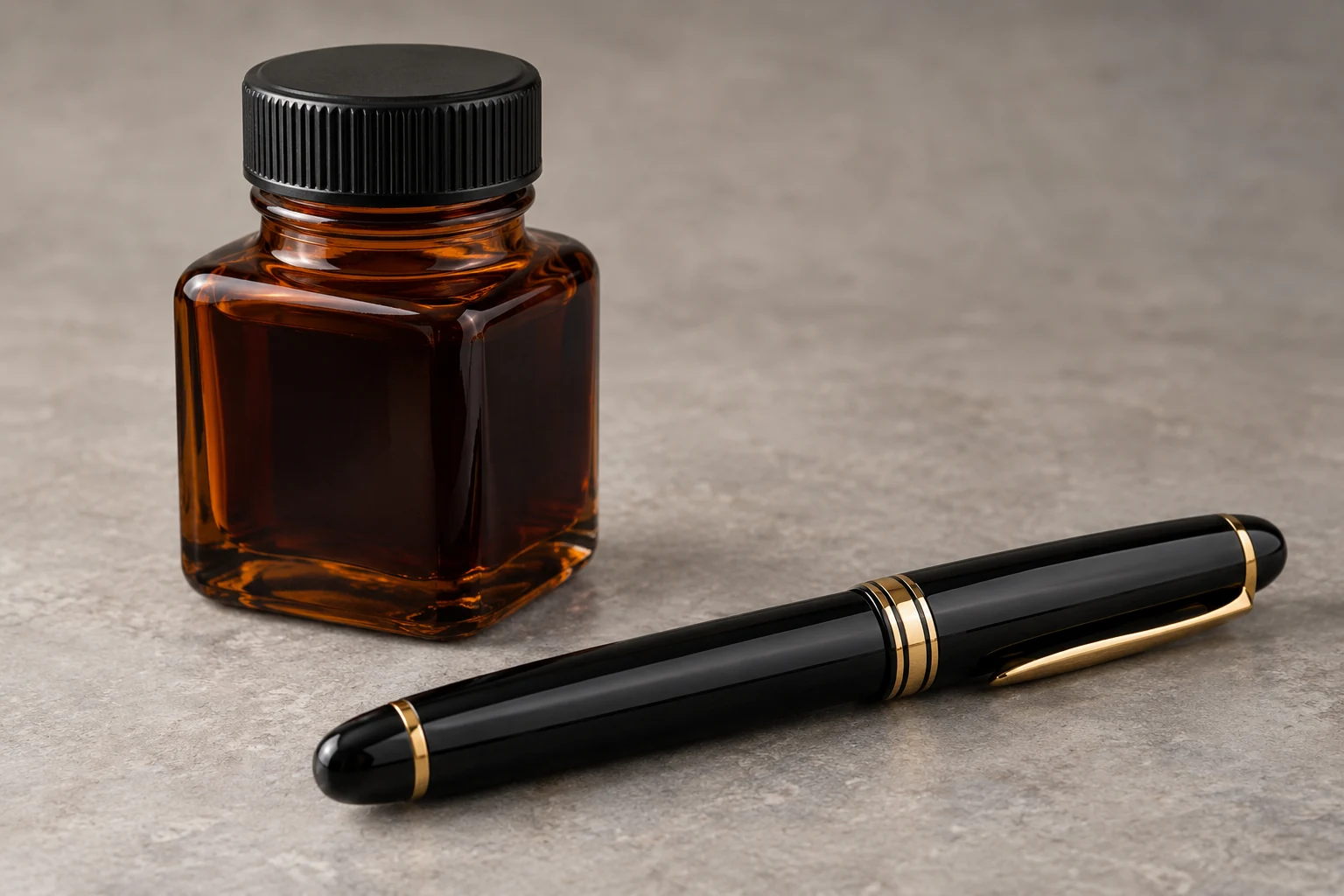
Bottled fountain pen ink has no supported universal expiration period—and opening a bottle does not start a universal countdown. LAMY says its own fountain pen ink generally keeps for many years when the glass bottle is tightly sealed; that is useful guidance, not a lifetime for every brand. Pen Chalet likewise says fountain pen ink does not always have a strict expiration date, but can go bad when contaminated, poorly stored, exposed to heat or sunlight, or left open for long periods.
The practical question is therefore not simply How old is this bottle? It is What ink is it, how has it been kept and handled, and what does it look and behave like now? A well-kept older bottle may still be usable, while a newer bottle with clear warning signs should not go into a pen.
Why Age Alone Cannot Date a Bottle
A purchase date tells you how long you have owned an ink, not everything that has happened to it. An opening date adds context: it tells you when filling from the bottle became possible. Neither date establishes how tightly the cap was closed, whether the bottle sat in sunlight, or what contacted the ink. Pen Chalet identifies contamination, poor storage, heat, sunlight and prolonged opening as ways ink can go bad without supplying a calendar deadline for each one.
Closure matters in more than one way. Pen Chalet explains that a loosely sealed bottle can lose water through evaporation, leaving the ink more concentrated. That is a different observation from finding evidence of contamination. If an old ink seems unusually thick, do not assume you know its cause merely because the cap was loose; nor should you treat concentration as proof that something grew in the bottle. Either way, a changed ink needs a condition-based decision before it goes into a fountain pen.
An unopened bottle has had fewer opportunities for a filling pen or tool to contact its contents. That is a useful inference about its handling history, not a guarantee of condition: storage and closure still matter. Conversely, an opened bottle is not automatically spoiled. Pen Chalet says older ink can often still be used if it was stored properly and looks, smells and performs normally.
Read any date or care directions supplied for the particular ink and follow those rather than substituting an all-brand rule. Keep its name and formulation identifiable, especially if the bottle will sit for years: knowing what belongs in that ink makes a later inspection more meaningful. LAMY’s “many years” statement applies to LAMY fountain pen ink under its stated tightly sealed-bottle guidance. It should not be converted into a number of years for an unidentified bottle.
Store the Bottle and Fill Without Introducing Trouble
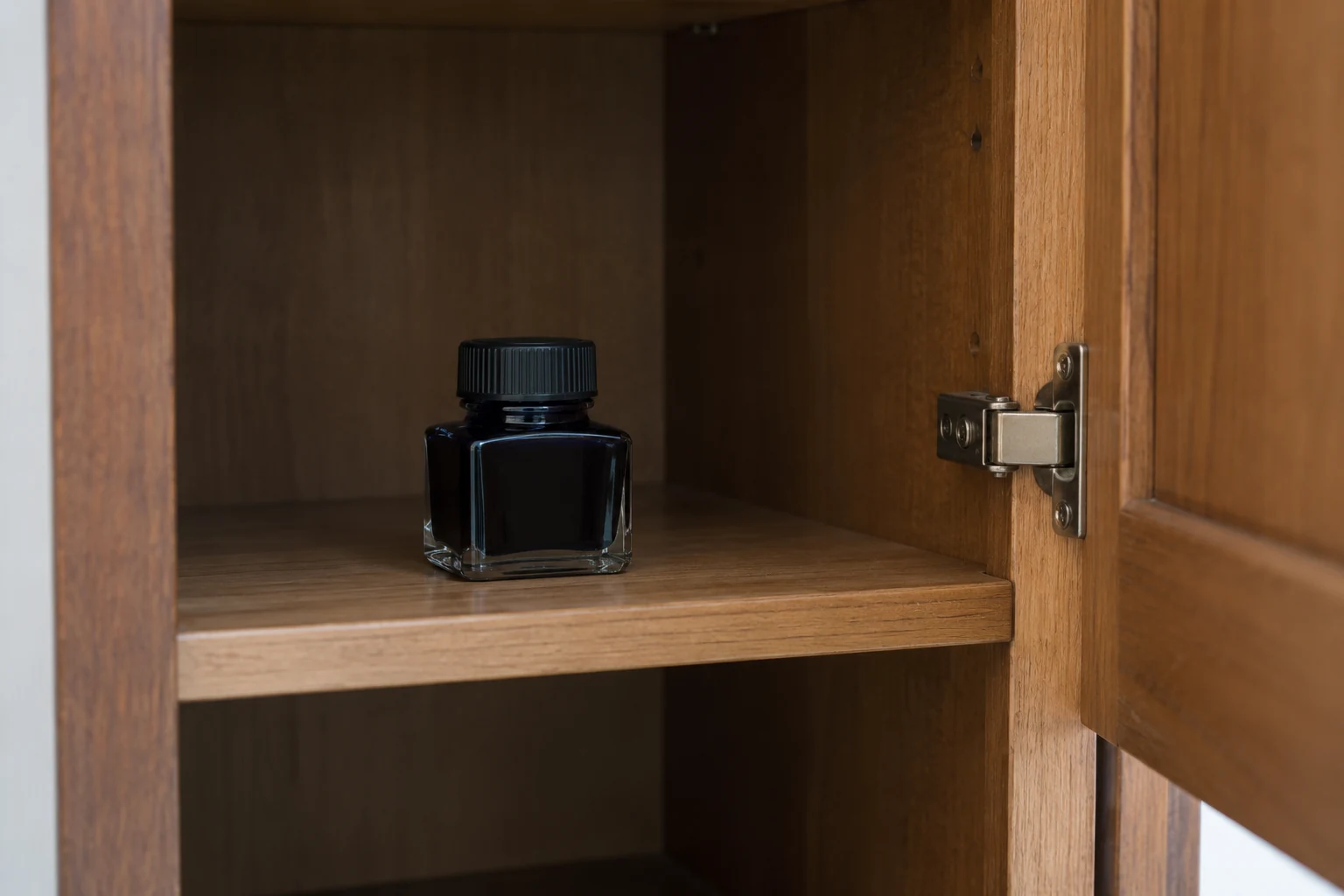
For ordinary storage, make closing the bottle part of finishing a fill, not something to remember afterward. LAMY calls for a tightly sealed glass bottle and a cool location protected from direct sunlight. An upright bottle kept closed, identifiable and away from heat and direct light is a practical way to act on that guidance. Platinum’s directions for its Chou Kuro ink are more product-specific: close the lid tightly and store it at room temperature in a cool, dark place away from direct sunlight. That room-temperature instruction belongs to Chou Kuro; it is not a newly established specification for every bottled ink.
Prompt recapping also addresses the separate problem of water loss. Pen Chalet says water can evaporate through a bottle that is not sealed tightly and leave the ink more concentrated. A cap left off during a long filling session is also prolonged opening of the kind it identifies among conditions under which ink can go bad. These points support a simple habit—open the bottle for the fill, then close it securely—without implying that every thick ink has the same explanation.
The other route into trouble is what touches the ink. Goulet Pens cautions that putting an old, uncleaned pen into a bottle may contaminate it. Pen Chalet names dust, paper fibers, mold spores, dirty converters and leftover ink from pens as possible contaminants. In other words, a bottle’s history includes more than where it stood on a shelf; it includes each filling contact.
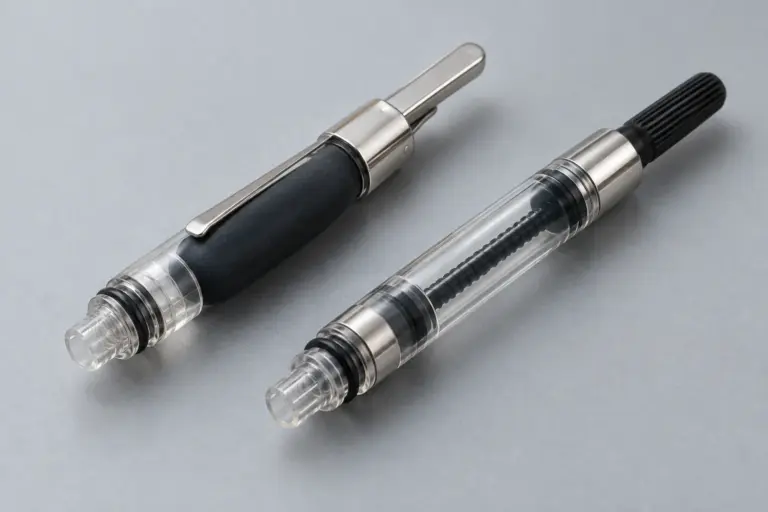
Keep the cap and any compatible filling tool clean, and clean the actual pen before it contacts the bottle when its condition calls for it. If ink remains in a pen after use, do not pour that ink back into the main bottle: Pen Chalet explicitly warns against returning unused ink from a pen. If you choose to work from a small separate amount instead of the main bottle, keep the used portion separate as well. That is a way to limit further contact with the main supply, not a method of making questionable ink safe.
These habits apply whether a bottle was opened last week or years ago. They reduce avoidable exposure and preserve a clearer handling history, but they do not replace looking at the ink before the next fill.
Inspect What Is in the Bottle—Not Just the Date
Start with identity. Can you tell which ink is in the bottle, whether it is a formulation that normally contains visible particles, and what its maker says to do before use? Consider what you know about its closure, storage and filling history. A change can only be called unexpected if you have some basis for knowing what belongs in that particular ink. If the label or formulation is unclear, appearance alone may not settle the question.
Before filling, look for the warning signs Pen Chalet lists: visible mold or floating growth; strange clumps, slime or particles; a major color change; and unexpected thickening or separation. An unusual sour, musty or rotten odor noticed during ordinary handling is another warning. If the ink is already in use, unusual flow problems also belong in the assessment.
Not every item has the same response. Visible growth, slime, unusual clumps or a suspicious odor are reasons to stop filling, not invitations to see whether the ink writes. Pen Chalet advises discarding ink that smells strange, contains growth or appears contaminated. A marked color change or unexplained thickening may be harder to interpret from observation alone; pause, consult the ink maker if the product is identifiable, or replace it rather than improvising a water-dilution fix. Pen Chalet specifically says moldy or thickened ink should not be used in fountain pens.
Particles need particular care in interpretation. Pen Chalet explains that shimmer ink contains reflective particles that may settle normally over time. For such ink, it advises gently rotating or swirling the bottle to redistribute them. Its exception does not override bad smell, mold or unusual clumps, which it says are reasons to avoid the ink.
Different maker instructions can call for a different action. Platinum identifies Chou Kuro as a pigment ink and tells owners to tighten its lid and shake the bottle several times before use. That is an instruction for that named product, not permission to shake every old bottle until an unfamiliar texture disappears. Shaking cannot turn growth into normal particles. Equally, the mere presence of settled material does not make every shimmer or pigment ink spoiled. Check what the identified formulation is meant to do; if you cannot identify it or the texture still seems wrong, agitation cannot resolve that uncertainty.
The aim is an observable comparison, not a definitive diagnosis from one glance. Known, expected settling and an unexplained new clump are different findings. So are normal-looking ink with a trustworthy handling history and normal-looking ink whose history you cannot establish.
Choose Whether to Use, Replace or Discard an Old Bottle
An identified older bottle, properly stored, with no warning signs: age alone is not a discard order. Pen Chalet says old ink can often still be used when it has been stored properly and looks, smells and performs normally. A bottle that meets the visible and history parts of that description is a reasonable candidate for cautious use, subject to any directions for that ink. “Many years old” is not, by itself, a pass or a fail.
Before an expensive fountain pen is involved, Pen Chalet suggests testing older ink carefully with a dip pen or an inexpensive fountain pen. As a practical low-stakes example, take a small amount separately and do a short piece of normal writing on the paper you intend to use. Note whether the color appears as expected, whether the writing behaves ordinarily, and—if you used a compatible inexpensive fountain pen—whether its flow presents a problem. Do not return the working amount to the main bottle.
Keep the result in proportion. A dip pen can show how that sample writes in a dip pen; it cannot establish how the ink will flow through a particular fountain pen. A brief normal-looking trial also cannot prove that a bottle contains no contamination. It is one more observation for an ink that already had a sound identity, history and inspection—not a way to overrule a warning sign. If the writing or handling seems unusual, stop rather than moving the ink into a more valuable pen.
A bottle with little reliable history, even though it looks normal: establish its identity and formulation first and check any maker directions you can find. If you cannot resolve a meaningful doubt about what the ink is or how it was kept, replacement is the more cautious choice before filling a valuable pen. That is a practical decision under uncertainty, not a claim that all unknown-history ink is spoiled. An opening date, if known, helps reconstruct the story; it does not certify the contents.
A bottle with strange odor, visible growth or apparent contamination: stop and discard it rather than pen-testing it. That follows Pen Chalet’s advice for those signs. Moldy or unexpectedly thickened ink should not be used in a fountain pen. For a major color change, unexpected separation or another unresolved change, seek product-specific guidance or choose replacement; do not try to rescue the bottle by adding water, filtering it or treating it with chemicals.
This is why the answer may differ for two bottles of very different ages. An old, identified bottle stored and handled well may pass a cautious assessment. A young bottle showing growth or smelling strange does not become suitable for use merely because it was bought recently. Condition and history change the decision; no universal cutoff substitutes for them.
If Questionable Ink Is Already in a Pen
If you discover a warning sign after filling, stop using the suspect bottle and do not put more of its ink into another pen. Empty ink removed from the filled pen separately, never back into the main bottle. Pen Chalet warns against returning leftover pen ink to a bottle and recommends cleaning a pen thoroughly as soon as possible after it has been filled with questionable ink.
Use the cleaning procedure appropriate to the actual pen and ink, rather than assuming one liquid or method suits every combination. The distinction matters even among the inks discussed here: Platinum says that Chou Kuro must not be washed with anything other than purified water, because using other water can cause the ink to adhere to minerals and become difficult to remove. That is a Chou Kuro restriction, not a universal cleaning recipe or a promise that water will make a contaminated pen safe.
If growth, residue or flow trouble persists, or you are unsure how your pen model should be cleaned, seek guidance from the relevant manufacturer rather than escalating to improvised treatments. Likewise, do not attempt to reclaim a suspect bottle by filtering it, diluting it or adding chemicals. Dispose of ink you decide to discard according to applicable local waste guidance; do not assume a disposal route is permitted everywhere.
If it will help you avoid repeating an uncertain fill, note the ink’s identity, the date and why you stopped using it, then choose fresh ink compatible with your pen. For the next bottle, the routine is modest: keep it identifiable and securely closed, use clean equipment when filling, and check its condition before it contacts the pen.